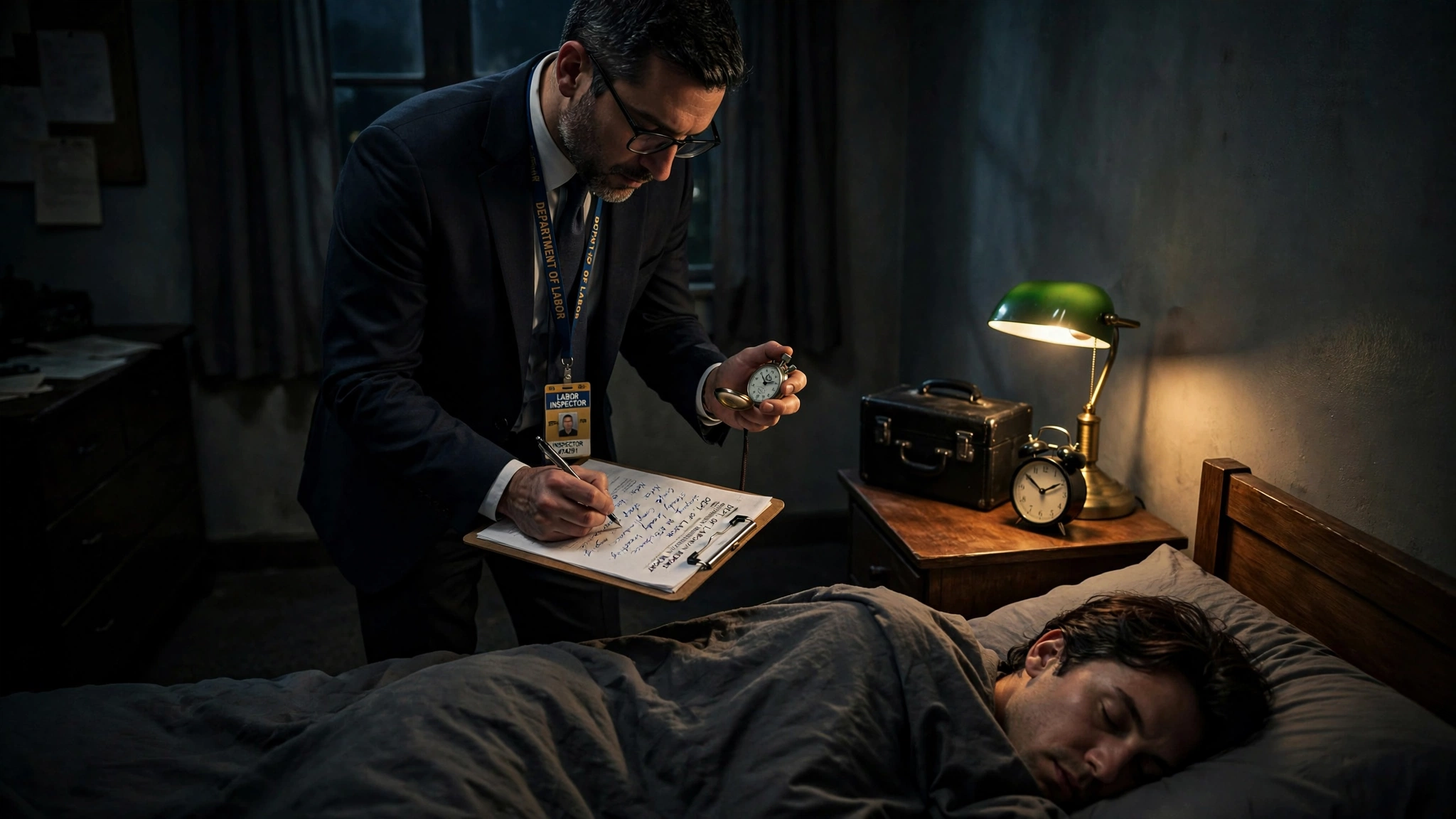
I. The Statutory Framework
The Fair Labor Standards Act was signed into law by President Franklin D. Roosevelt on June 25, 1938. It is the foundational statute of American wage and hour law. Among its provisions, codified across 29 U.S.C. §§ 201–219, the Act establishes a federal minimum wage, mandates overtime compensation, prohibits oppressive child labor, and imposes record-keeping requirements on every covered employer in the United States.1
Section 6(a)(1), codified at 29 U.S.C. § 206(a)(1), sets the current federal minimum wage at $7.25 per hour. This rate has been in effect since July 24, 2009—seventeen years without adjustment, the longest period of minimum wage stagnation in the statute’s eighty-eight-year history.2
Section 7(a)(1), codified at 29 U.S.C. § 207(a)(1), requires that any employee who works in excess of forty hours in a single workweek be compensated at a rate not less than one and one-half times the employee’s regular rate. This overtime provision has never been subject to an exemption for biological processes.3
The critical definitional provision appears at Section 3(g), codified at 29 U.S.C. § 203(g). It states, in its entirety: “‘Employ’ includes to suffer or permit to work.” The Supreme Court has described this as “the broadest definition that has ever been included in any one act.”4 The Department of Labor did not write a narrow definition. Congress did not intend one. The word “includes” is expansive, not limiting. The phrase “suffer or permit” does not require the employer to request the work. It requires only that the employer allow it to occur.
II. The Regulatory Definition of “Hours Worked”
The Department of Labor’s Wage and Hour Division has published an Interpretive Bulletin titled “Hours Worked Under the Fair Labor Standards Act of 1938,” codified at 29 CFR Part 785. This bulletin constitutes the Department’s own official interpretation of what the statute requires employers to count as compensable time.5
Section 785.6 provides the general principle: “An employee who is required to be on duty or to be at a prescribed place of work is, of course, working.”6
Section 785.11 extends this principle to unsolicited work: “Work not requested but suffered or permitted is work time. For example, an employee may voluntarily continue to work at the end of the shift.” The regulation continues: “The reason is immaterial. The employer knows or has reason to believe that he is continuing to work and the time is working time.”7
Section 785.12 confirms the knowledge standard: “If the employer knows or has reason to believe that the work is being performed, he must count the time as hours worked.”8
The Department does not define “work” by reference to the employee’s conscious intent. It does not require that the employee be aware of the effort being exerted. It does not require that the labor be performed with the hands, the mind, or any particular faculty. It requires only three elements: that work be performed, that the employer know or have reason to believe it is being performed, and that the employer suffer or permit it to continue. The biological labor performed during sleep satisfies all three.
III. The Biological Work Product
Sleep is not rest. This is not a rhetorical assertion. It is a finding of neuroscience, immunology, and endocrinology supported by peer-reviewed research published across the most rigorous journals in each field. The human body during sleep is not idle. It is performing continuous, measurable, and metabolically expensive work that produces outputs the employer will consume the following morning.
Metabolic waste clearance. In 2013, Xie and colleagues published a study in Science demonstrating the existence of the glymphatic system, a brain-wide waste clearance pathway that is activated primarily during sleep. The study showed that natural sleep is associated with a 60 percent increase in the interstitial space of the brain, permitting convective exchange of cerebrospinal fluid with interstitial fluid at rates approximately two-fold faster than during wakefulness. The system clears beta-amyloid, a metabolic byproduct whose accumulation is associated with Alzheimer’s disease, along with other neurotoxic waste products generated by the brain’s daytime operations.9 The brain does not perform this clearance voluntarily. It performs it because the alternative is neurodegenerative disease. This is not optional maintenance. It is mandatory remediation of the hazardous waste produced by the workday.
Memory consolidation. Diekelmann and Born, writing in Nature Reviews Neuroscience in 2010, synthesized decades of research demonstrating that sleep plays an active role in memory consolidation. During non-rapid eye movement sleep, the hippocampus replays the neural patterns associated with experiences acquired during the preceding day, transferring them to neocortical long-term storage through a process that strengthens synaptic connections and integrates new information with existing knowledge networks.10 The memories being consolidated include the procedures, facts, and skills acquired during the working hours for which the employer has already paid. The employer pays for the acquisition. The employee’s sleeping brain performs the installation. The employer does not compensate the installation.
Hormonal synthesis. Growth hormone, a 191-amino-acid protein produced by the anterior pituitary gland, is essential for tissue repair, protein synthesis, and the maintenance of muscle and bone mass. Approximately 70 percent of daily growth hormone secretion occurs during slow-wave sleep, the deepest phase of the sleep cycle.11 Van Cauter and Plat, writing in Sleep in 1996, documented that disruption of slow-wave sleep suppressed growth hormone secretion by approximately 70 percent without altering total sleep duration, confirming that the hormone’s release is coupled specifically to the sleep architecture, not merely to the passage of time.12 The body is not resting during slow-wave sleep. It is running a pharmaceutical manufacturing operation.
Immune activation. Besedovsky, Lange, and Haack, writing in Physiological Reviews in 2019, documented that sleep exerts a direct regulatory influence on the adaptive immune system. The production of pro-inflammatory cytokines, including interleukin-1, interleukin-6, and tumor necrosis factor, peaks during nocturnal sleep. T-cell adhesion to target cells increases during sleep. The circulating levels of cortisol, which suppresses immune function, fall to their daily nadir during the first half of the sleep period, creating a permissive window for immune activation.13 The immune system works the night shift. It does so because pathogen elimination is more efficiently conducted while the organism is immobile and energy demands are redistributed from locomotion to defense. The employee reports to work the next morning without a respiratory infection because the immune system resolved it overnight. The employer receives the benefit. The immune system does not receive a paycheck.
IV. The “Engaged to Wait” Doctrine
The Department of Labor’s Interpretive Bulletin addresses waiting time at Sections 785.14 through 785.16. Section 785.15 establishes the foundational distinction: “Facts may show that the employee was engaged to wait (which is work time) or that he waited to be engaged (which is not work time).”14
Section 785.16 provides the operative test: “An employee who is required to remain on call on the employer’s premises or so close thereto that he cannot use the time effectively for his own purposes is working while ‘on call.’”15
The test hinges on a single criterion: whether the employee can use the time effectively for his own purposes. If the employee cannot, the time is compensable regardless of what the employee is doing during it. The employee may be reading, watching television, or sitting in a chair staring at the wall. If the constraints on the employee’s freedom are such that the time cannot be used effectively for personal purposes, it is hours worked.
Consider the sleeping employee. The employee is unconscious. Consciousness is, by any reasonable construction, a prerequisite for using time effectively for one’s own purposes. A sleeping person cannot shop, socialize, recreate, eat, read, exercise, commute, pray, watch a film, tend a garden, call a relative, pursue a hobby, or engage in any of the activities the Department’s own regulations contemplate when evaluating whether time can be used “effectively.” The sleeping employee cannot leave the premises of sleep. The sleeping employee cannot decide to be somewhere else. The sleeping employee is, in the most literal sense the English language permits, unable to use the time for any purpose other than the biological labor the body has unilaterally elected to perform.
The Department of Labor has never acknowledged this. It has not explained how the “engaged to wait” doctrine, which compensates an employee who sits in a firehouse playing cards because he cannot leave, does not also compensate an employee whose own central nervous system has revoked his capacity for voluntary action entirely.
V. The Employer’s Acknowledged Benefit
The RAND Corporation, in a 2016 cross-country comparative analysis titled Why Sleep Matters—The Economic Costs of Insufficient Sleep, quantified the economic losses attributable to sleep deprivation among the American workforce. The study found that the United States loses up to $411 billion per year, equivalent to 2.28 percent of GDP, due to the reduced productivity and increased mortality risk associated with insufficient sleep among workers. The country loses an estimated 1.2 million working days annually to the same cause.16
The study’s finding is unremarkable in its direction. What is remarkable is its implication. If sleep deprivation costs employers $411 billion per year in lost productivity, then sleep itself is the process that prevents that loss. Sleep is not the absence of productivity. Sleep is the manufacturing process that produces the following day’s productivity. The $411 billion is not the cost of sleeping. It is the cost of not sleeping enough. The economic value of adequate sleep, by the RAND Corporation’s own methodology, is at least $411 billion per year. The employers receive this value. They do not pay for it.
American employers have not merely tolerated this arrangement. They have explicitly endorsed it. Google installed nap pods at its Mountain View headquarters, creating dedicated infrastructure for employees to sleep during the workday.17 Nike, Samsung, Zappos, and Ben & Jerry’s have implemented similar programs. The corporate wellness industry, valued at approximately $61 billion in the United States in 2023 according to the Global Wellness Institute, actively promotes employee sleep as a component of workforce optimization.18
The Centers for Disease Control and Prevention, a federal agency, has published guidance stating that “the American Academy of Sleep Medicine recommends at least 7 hours of sleep or more in a 24-hour period for adults.” The CDC’s own 2024 National Health Interview Survey found that 30.5 percent of American adults—approximately 78 million people—obtain less than seven hours of sleep on average.19 The Department of Health and Human Services publishes sleep hygiene recommendations. The Occupational Safety and Health Administration, a division of the Department of Labor itself, has identified worker fatigue as a contributor to workplace injuries and recommends that employers implement fatigue risk management systems. The federal government’s own agencies acknowledge that sleep produces outputs the employer requires. They have not coordinated with the Wage and Hour Division to ensure the labor is compensated.
VI. The Quantification
The Bureau of Labor Statistics publishes the American Time Use Survey, the federal government’s most comprehensive measure of how Americans allocate their daily hours. The 2025 annual averages, released in Table 12 of the ATUS results, report that the average civilian adult in the United States sleeps 9.03 hours per day. On weekdays, the figure is 8.76 hours. On weekends and holidays, it rises to 9.68 hours.20
The Bureau of Labor Statistics also publishes the Employment Situation Summary, which reports that the civilian labor force of the United States comprises approximately 168.5 million persons aged eighteen and over, of whom approximately 163 million are employed.21
The minimum wage calculation is arithmetically straightforward. One hundred and sixty-three million employed workers, sleeping an average of 9.03 hours per day, accumulate 1.472 billion person-hours of biological labor daily. Annualized over 365 days, the total reaches 537.2 billion person-hours of sleep per year. At the federal minimum wage of $7.25 per hour, the annual unpaid wage liability is approximately $3.89 trillion.22
Section 16(b) of the Fair Labor Standards Act, codified at 29 U.S.C. § 216(b), provides that any employer who violates the minimum wage or overtime provisions “shall be liable to the employee or employees affected in the amount of their unpaid minimum wages, or their unpaid overtime compensation, as the case may be, and in an additional equal amount as liquidated damages.”23 Liquidated damages effectively double the recovery. The annual exposure, with liquidated damages, is $7.78 trillion. This exceeds the combined GDP of Japan and Germany.
We have not yet addressed overtime.
VII. The Overtime Violation
Section 7(a)(1) of the FLSA requires compensation at one and one-half times the regular rate for all hours worked in excess of forty in a single workweek. The average American sleeps 9.03 hours per day, or 63.21 hours per week. Sleep alone exceeds the forty-hour overtime threshold by 23.21 hours.24
A typical full-time employee works approximately 40 hours per week in compensated labor and sleeps approximately 63 hours per week in uncompensated biological labor. The combined hours worked, under a consistent application of the Department’s own “suffer or permit” standard, total approximately 103 hours per week. Sixty-three of those hours exceed the overtime threshold. At one and one-half times the federal minimum wage of $7.25, the overtime rate is $10.875 per hour. The weekly overtime liability per employee is $685.13. Across 163 million employed workers over 52 weeks, the annual overtime exposure is $5.81 trillion.
Combined with the base minimum wage liability of $3.89 trillion, the total annual unpaid compensation is $9.70 trillion before liquidated damages. With liquidated damages under Section 16(b), the figure doubles to $19.40 trillion. This exceeds the current gross national debt ceiling. It exceeds the GDP of the United States. It exceeds the GDP of any nation in history.
The Department of Labor has not calculated this figure. No court has been asked to. No employee has filed a complaint. The violation is occurring inside 163 million bodies at this moment, and no one in any federal building has opened a file.
VIII. The Record-Keeping Violation
Section 11(c) of the FLSA, codified at 29 U.S.C. § 211(c), requires every employer subject to the Act to “make, keep, and preserve such records of the persons employed by him and of the wages, hours, and other conditions and terms of their employment.” The implementing regulations at 29 CFR § 516.2 specify that each employer must maintain records showing, for each covered employee, “hours worked each workday and total hours worked each workweek.”25
If sleep is hours worked—as the Department’s own regulatory definitions of “work,” “suffer or permit,” and “engaged to wait” would require under consistent application—then every employer in the United States has failed to record those hours since the record-keeping requirement took effect.
The Bureau of Labor Statistics’ Business Employment Dynamics program reports that the United States contains approximately 10.7 million private-sector employer establishments.26 Not one has ever recorded an employee’s sleep hours on a timesheet. Not one has tracked the duration of an employee’s glymphatic clearance cycle, the onset of slow-wave sleep, the hours of growth hormone secretion, or the overnight production schedule of the adaptive immune system. The compliance rate is zero. It has been zero since 1938. It is zero across every employer establishment in every state, territory, and the District of Columbia.
Section 16(a) of the FLSA provides criminal penalties for willful violations. Section 17 authorizes the Secretary of Labor to seek injunctions in federal court. The Wage and Hour Division conducted approximately 20,000 compliance actions in fiscal year 2023, recovering more than $274 million in back wages for over 163,000 workers.27 None of those actions involved sleep. None of those recoveries compensated biological labor. The Division has deployed its investigative resources to audit restaurants, agriculture, and garment manufacturing. It has not audited a single bedroom.
IX. Conclusion
The Fair Labor Standards Act has been the law of the United States for eighty-eight years. Sleep has been occurring for the entirety of that period. It was occurring before the statute was enacted. It has been occurring during every administration, every Congress, and every Supreme Court term since 1938. The biological labor performed during sleep has never taken a day off, has never filed a grievance, has never organized a union, and has never retained counsel.
The Act defines “employ” as “to suffer or permit to work.” The Department’s own Interpretive Bulletin states that work not requested but suffered or permitted is work time. The Department’s own “engaged to wait” standard holds that time during which the employee cannot use the time effectively for personal purposes is compensable. The employer knows the employee sleeps. Every employer in America knows this. It is among the most widely known facts in all of human experience.
The body works during sleep. This is not contested. It is documented in Science, Nature Reviews Neuroscience, Physiological Reviews, Sleep, and the proceedings of every major medical research institution in the Western world. The glymphatic system clears neurotoxic waste at twice the waking rate. The hippocampus replays and consolidates the workday’s learning. Growth hormone rebuilds the tissue the workday degraded. The immune system eliminates the pathogens the workday introduced. The employer receives the output of all of this labor at 9:00 AM the following morning, in the form of an employee who can think, move, resist infection, and remember what was discussed in yesterday’s meeting. The employer pays for none of it.
One hundred and sixty-three million Americans are performing an average of 9.03 hours of biological labor every day. The minimum wage liability alone exceeds $3.89 trillion per year. With overtime and liquidated damages, the annual exposure approaches $19.40 trillion. The cumulative unpaid wages since the statute’s enactment in 1938, even at historical minimum wage rates and without compounding interest, would produce a figure that has no meaningful precedent in the history of American jurisprudence.
The Wage and Hour Division employs approximately one thousand investigators. They have investigated farms, factories, restaurants, hotels, construction sites, and home health agencies. They have recovered wages for janitors, dishwashers, nurses, and delivery drivers. They have not recovered a single dollar for the nine hours of nightly labor that keeps every worker in America alive and functional.
The statute does not contain a sleep exemption. The regulations do not contain a sleep exemption. The case law does not contain a sleep exemption. The Department of Labor has simply never applied its own rules to the most universal, most continuous, and most economically consequential form of labor performed in the United States.
It should.
Ergo.
Sources
- Fair Labor Standards Act of 1938, 29 U.S.C. §§ 201–219, as amended. law.cornell.edu ↑
- 29 U.S.C. § 206(a)(1), federal minimum wage provision. The current rate of $7.25 per hour took effect on July 24, 2009, pursuant to the Fair Minimum Wage Act of 2007. law.cornell.edu ↑
- 29 U.S.C. § 207(a)(1), overtime compensation provision. law.cornell.edu ↑
- United States v. Rosenwasser, 323 U.S. 360, 363 n.3 (1945), quoting Senator Hugo Black’s description of the “suffer or permit” definition. supreme.justia.com ↑
- 29 CFR Part 785, “Hours Worked Under the Fair Labor Standards Act of 1938.” law.cornell.edu ↑
- 29 CFR § 785.6. law.cornell.edu ↑
- 29 CFR § 785.11. law.cornell.edu ↑
- 29 CFR § 785.12. law.cornell.edu ↑
- L. Xie et al., “Sleep Drives Metabolite Clearance from the Adult Brain,” Science, vol. 342, no. 6156, 2013, pp. 373–377. pubmed.ncbi.nlm.nih.gov ↑
- S. Diekelmann and J. Born, “The Memory Function of Sleep,” Nature Reviews Neuroscience, vol. 11, no. 2, 2010, pp. 114–126. pubmed.ncbi.nlm.nih.gov ↑
- Y. Takahashi, D.M. Kipnis, and W.H. Daughaday, “Growth Hormone Secretion During Sleep,” Journal of Clinical Investigation, vol. 47, no. 9, 1968, pp. 2079–2090. pubmed.ncbi.nlm.nih.gov ↑
- E. Van Cauter and L. Plat, “Physiology of Growth Hormone Secretion During Sleep,” Journal of Pediatrics, vol. 128, no. 5, Pt. 2, 1996, pp. S32–S37. pubmed.ncbi.nlm.nih.gov ↑
- L. Besedovsky, T. Lange, and M. Haack, “The Sleep-Immune Crosstalk in Health and Disease,” Physiological Reviews, vol. 99, no. 3, 2019, pp. 1325–1380. pubmed.ncbi.nlm.nih.gov ↑
- 29 CFR § 785.15. law.cornell.edu ↑
- 29 CFR § 785.16. law.cornell.edu ↑
- M. Hafner et al., “Why Sleep Matters—The Economic Costs of Insufficient Sleep: A Cross-Country Comparative Analysis,” RAND Corporation, 2016. rand.org ↑
- Google’s nap pod program, implemented at the Mountain View campus using MetroNaps EnergyPods, has been documented in multiple corporate wellness reports. Similar installations have been reported at Nike, Samsung, Zappos, and Ben & Jerry’s. ↑
- Global Wellness Institute, “The Global Wellness Economy: Looking Beyond COVID,” 2023 report, workplace wellness market sizing. globalwellnessinstitute.org ↑
- National Center for Health Statistics, “Short Sleep Duration and Sleep Difficulties Among Adults: United States, 2024,” National Health Interview Survey. cdc.gov ↑
- U.S. Bureau of Labor Statistics, American Time Use Survey, Table 12, “Average Hours Per Day Spent in Primary Activities for the Civilian Population, 2025 Annual Averages.” The survey reports average sleep duration of 9.03 hours per day for the civilian population aged 15 and over. bls.gov ↑
- U.S. Bureau of Labor Statistics, “Employment Situation Summary,” 2025. Reports civilian labor force of approximately 168.5 million persons aged 18 and over, with approximately 163 million employed. bls.gov ↑
- Calculation: 163,000,000 employed × 9.03 hours/day × 365 days/year × $7.25/hour = $3,894,988,912,500. Rounded: approximately $3.89 trillion. ↑
- 29 U.S.C. § 216(b), enforcement and remedies provision. law.cornell.edu ↑
- Calculation: 9.03 hours/day × 7 days/week = 63.21 hours/week. Excess over 40-hour overtime threshold: 23.21 hours/week. ↑
- 29 U.S.C. § 211(c) and 29 CFR § 516.2, record-keeping requirements. law.cornell.edu ↑
- U.S. Bureau of Labor Statistics, Business Employment Dynamics program, quarterly census of employer establishments. bls.gov ↑
- U.S. Department of Labor, Wage and Hour Division, fiscal year 2023 enforcement data. dol.gov ↑