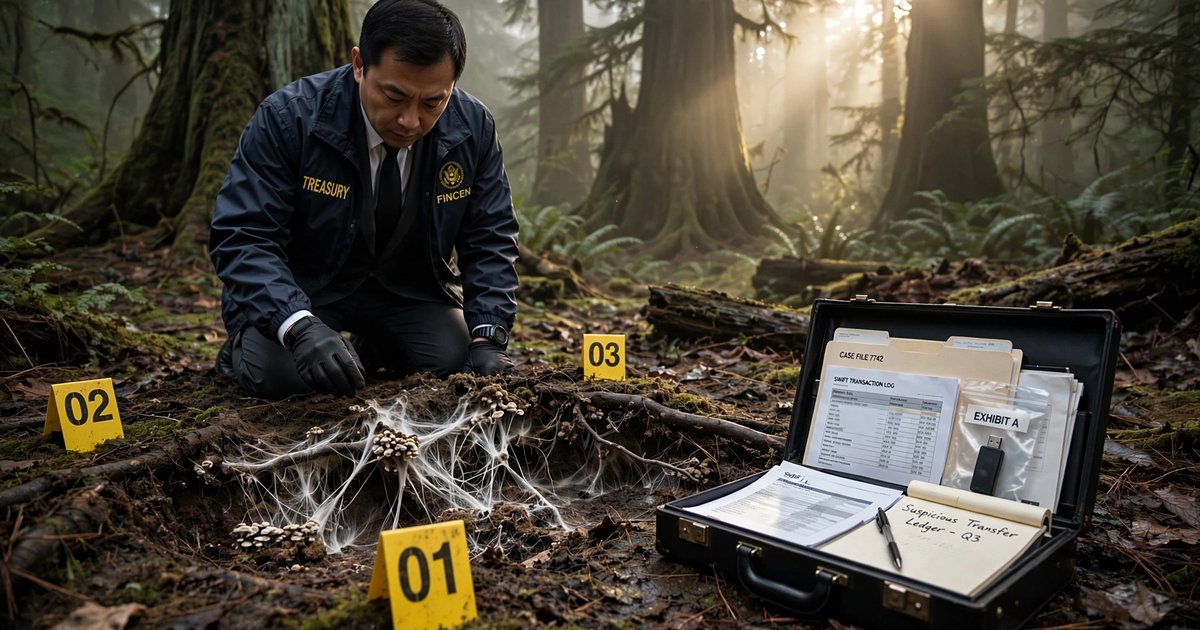
I. The Statutory Framework
The Bank Secrecy Act of 1970 (BSA), codified primarily at 31 U.S.C. §§ 5311–5332, established a comprehensive framework for detecting and preventing money laundering and terrorist financing through the financial system of the United States. Congress declared that certain reports and records “have a high degree of usefulness in criminal, tax, or regulatory investigations or proceedings, or in the conduct of intelligence or counterintelligence activities, including analysis, to protect against international terrorism.”1
The implementing regulations, codified at 31 CFR Chapter X, define the categories of financial institutions subject to the BSA’s reporting and recordkeeping requirements. Among these are money services businesses (MSBs), defined at 31 CFR § 1010.100(ff) as any person doing business in one or more of several enumerated capacities, including money transmitter.2
A “money transmitter” is defined in two ways under the regulation. First, it includes “[a] person that provides money transmission services,” where “money transmission services” means “the acceptance of currency, funds, or other value that substitutes for currency from one person and the transmission of currency, funds, or other value that substitutes for currency to another location or person by any means.” Second, it includes “[a]ny other person engaged in the transfer of funds.”3
The definition is deliberately expansive. The phrase “by any means” is defined to include “but is not limited to, through a financial agency or institution; a Federal Reserve Bank or other facility of one or more Federal Reserve Banks, the Board of Governors of the Federal Reserve System, or both; an electronic funds transfer network; or an informal value transfer system.”4 Congress and FinCEN have ensured that no transfer mechanism falls outside the statute’s reach simply because it is unfamiliar, unconventional, or subterranean.
Under 31 U.S.C. § 5330, every money services business must register with the Financial Crimes Enforcement Network (FinCEN) by filing Form 107.5 Under 31 CFR § 1022.380, registration must occur within 180 days of establishing the business and must be renewed every two calendar years.6 The penalty for failure to register is $5,000 per violation, with each day constituting a separate violation.7
The question is not whether the BSA covers unconventional value transfer systems operating outside the formal banking sector. It does. The phrase “informal value transfer system” was added specifically to capture hawala networks, which transfer value across borders without moving currency. The question is whether a value transfer system that predates currency, banking, borders, and the human species has ever been brought within the statute’s reach. It has not.
II. The Network Identification
Mycorrhizal fungi are a polyphyletic group of soil organisms that form symbiotic associations with the roots of land plants. The term derives from the Greek mykes (fungus) and rhiza (root), and the association was first described by the German botanist Albert Bernhard Frank in 1885.8 Approximately 80 to 85 percent of all extant land plant species form mycorrhizal associations.9 The relationship is not optional for most plants. It is a structural dependency that has persisted since the colonization of land.
The oldest unequivocal fossil evidence of mycorrhizal symbiosis comes from the 407-million-year-old Rhynie Chert of Aberdeenshire, Scotland, where arbuscules—the branching structures through which nutrients are exchanged—have been preserved in the tissues of Aglaophyton majus, an early land plant.10 The arbuscules are morphologically identical to those of living mycorrhizal fungi. The business model has not changed in 407 million years. This is, by a considerable margin, the longest-running value transfer operation on Earth.
The physical infrastructure of the mycorrhizal network consists of hyphae—threadlike filaments approximately 2 to 10 micrometers in diameter that extend from colonized roots into the surrounding soil. The extraradical mycelium (ERM) can represent 20 to 30 percent of total soil microbial biomass.11 Each cubic centimeter of soil can contain enough hyphae to stretch one kilometer if laid end to end.12 Globally, the total length of mycorrhizal fungal hyphae in the top 10 centimeters of soil exceeds 450 quadrillion kilometers—approximately half the width of the Milky Way galaxy.13
This infrastructure connects individual plants into common mycorrhizal networks (CMNs), sometimes referred to as the “Wood Wide Web.” A single network can link dozens to hundreds of individual plants, including plants of different species. The network operator—the fungus—serves simultaneously as transfer agent, clearinghouse, and commission-taking intermediary. It does not merely facilitate the movement of value between parties. It controls the rate, direction, and terms of exchange.
III. The Transaction Mechanics
The core business of a mycorrhizal network is bilateral value transfer. Plants provide carbon—fixed from atmospheric CO2 through photosynthesis—to the fungus. The fungus provides mineral nutrients, principally phosphorus and nitrogen, extracted from the soil by its extensive hyphal network and delivered to the plant through intracellular arbuscular interfaces. This is not a metaphor for a financial transaction. It is a financial transaction, except that the currency is organic carbon and the counterparty is a filamentous organism with no central nervous system.
The exchange rate is quantifiable. Research published in the Proceedings of the National Academy of Sciences in 2026 demonstrated that rates of carbon transfer from plant to fungus and phosphorus transfer from fungus to plant are, on average, proportionally related to one another.14 The carbon-phosphorus exchange rate was found to be nearly invariant across fungal strains but strongly affected by host plant genotype—meaning the terms of trade are set not by the intermediary but by the client, a feature that distinguishes the mycorrhizal network from every licensed money transmitter in the United States, where the operator sets the fee.
The commission is substantial. Host plants transfer up to 20 percent of their total photosynthetically fixed carbon to mycorrhizal fungal partners.15 This is not a one-time fee. It is a continuous extraction that operates every hour of every day for the lifetime of the association. A Western Union agent charges a flat fee per transaction. A mycorrhizal fungus charges 20 percent of gross revenue in perpetuity. The business model is not money transmission. It is a protection racket with nutrient delivery characteristics.
Critically, the fungus does not merely transfer value between itself and a single client. Through common mycorrhizal networks, value moves between plants. Carbon fixed by one tree can be transmitted through the fungal network to a neighboring tree—including trees of different species. Isotopic labeling studies have documented interplant carbon transfers ranging from 0.02 to 41 percent of the donor’s labeled carbon, and nitrogen transfers ranging from 0.04 to 80 percent.16 The fungus accepts value from Party A and transmits it to Party B. This is the textbook definition of money transmission under 31 CFR § 1010.100(ff)(5). The only variable is whether carbon and phosphorus constitute “funds or other value that substitutes for currency.”
They do. Carbon has an established market price. As of 2024, the European Union Emissions Trading System priced carbon allowances at approximately €60 to €80 per metric ton of CO2 equivalent.17 Phosphorus, traded as phosphate rock, was valued at $153 per metric ton in 2024, underpinning a global phosphatic fertilizer market worth $11.7 billion.18 The commodities being transmitted are not abstract tokens of biological goodwill. They are priced, traded, and regulated substances with global markets. The fungus is transmitting value. The value has a price. The price is not zero.
IV. The Scale of Operations
The mycorrhizal money transmission network operates at a scale that dwarfs every licensed financial institution in the United States combined.
Each year, an estimated 13 billion metric tons of CO2 moves from plants into underground fungal networks—an annual transfer volume equivalent to approximately 36 percent of total global fossil fuel emissions.19 At the EU ETS carbon price of approximately €70 per metric ton, this represents an annual transaction volume of approximately €910 billion, or roughly $980 billion at current exchange rates. For comparison, Western Union processed approximately $78 billion in principal transfers in fiscal year 2024.20 The mycorrhizal network’s annual throughput exceeds Western Union’s by a factor of approximately 12.5.
The network’s physical infrastructure spans 450 quadrillion kilometers of hyphal connections in the top 10 centimeters of soil alone.21 The nearest human-built equivalent is the global fiber-optic network, which comprises approximately 5.4 million kilometers of submarine cables and an estimated 500 million kilometers of terrestrial fiber.22 The mycorrhizal network is approximately 900 million times longer than the entire human telecommunications infrastructure. It is built from chitin, not glass. It was deployed without permits. It required no capital expenditure. It has never filed a Form 10-K.
In the United States alone, the U.S. Forest Service estimates approximately 818 million acres of forest land.23 Agricultural lands cover approximately 895 million acres.24 Grasslands, shrublands, and other vegetated areas account for hundreds of millions more. In virtually every acre of vegetated soil in the United States, mycorrhizal networks are accepting value from one organism, retaining a percentage, and transmitting the remainder to another organism. The transaction volume per day, across the country, is incalculable by any methodology available to FinCEN.
The number of individual clients served by the network is also without parallel. There are an estimated 228 billion trees in the United States, according to U.S. Forest Service Forest Inventory and Analysis data.25 Approximately 80 percent of these form mycorrhizal associations. The network therefore serves approximately 182 billion individual clients in the United States alone, not counting grasses, shrubs, crops, and wildflowers. Wells Fargo, the largest U.S. bank by branch count, serves approximately 70 million customers.26 The mycorrhizal network serves 2,600 times as many clients as the largest bank in the country, and it has never once asked any of them for identification.
V. The Registration Failure
Under 31 U.S.C. § 5330, every money services business must register with FinCEN. The registration must be filed electronically on FinCEN Form 107 within 180 days of establishing the business and renewed every two calendar years thereafter.27
The mycorrhizal money transmission business was established approximately 407 million years ago, based on the oldest fossil evidence of arbuscular mycorrhizal fungi in the Rhynie Chert of Scotland.28 The 180-day registration deadline expired approximately 406,999,999 years and 185 days ago. No registration has been filed.
The registration deadline has been exceeded by a factor of approximately 826,000. This is the longest continuous registration violation in the history of the Bank Secrecy Act, though it is worth noting that the BSA has only existed since 1970, and the money transmitter registration requirement was not enacted until 1992 under the Annunzio-Wylie Anti-Money Laundering Act.29 The mycorrhizal network was therefore in operation for approximately 406,999,968 years before the statute that prohibits its operation was enacted. The network did not stop operating when the statute was enacted. It did not even notice.
The registration form requires disclosure of the owner or controlling person’s legal name, taxpayer identification number, and business address. The controlling organism of the mycorrhizal network is a fungus of the phylum Glomeromycota, which has no legal name, no taxpayer identification number, and no business address. Its body is a network of hyphae distributed across the soil column. It has no office. It has no phone number. It has no email address. The FinCEN electronic filing system does not currently accommodate registrants that lack opposable thumbs.
The registration form also requires disclosure of all agents through whom the MSB provides services. In a common mycorrhizal network, every colonized root tip functions as a branch office, and every arbuscule functions as a teller window. A single acre of forest soil may contain millions of active arbuscular interfaces. The agent list would exceed the storage capacity of FinCEN’s electronic filing system. It would exceed the storage capacity of most filing systems.
VI. The State Licensing Problem
In addition to federal registration, money transmitters are subject to state-level licensing requirements in 49 states and the District of Columbia. Only Montana does not require a money transmitter license.30 Each state imposes its own application requirements, surety bond obligations, net worth minimums, and examination schedules. A money transmitter operating in all 50 states must obtain and maintain 49 separate state licenses plus a District of Columbia license, in addition to its federal FinCEN registration.
The mycorrhizal network operates in all 50 states, including Montana, where licensing is not required. It therefore requires 49 state licenses and one D.C. license. It holds zero. The aggregate licensing deficiency is 50 jurisdictions. The network has not applied for a license in any state. It has not posted a surety bond in any state. It has not submitted to an examination in any state. It has not designated a registered agent for service of process in any state. It operates with impunity in every jurisdiction simultaneously.
Under 18 U.S.C. § 1960, operating an unlicensed money transmitting business that affects interstate or foreign commerce is a federal criminal offense punishable by up to five years of imprisonment and fines, “whether or not the defendant knew that the operation was required to be licensed or that the operation was so punishable.”31 The strict liability standard is notable. A money transmitter cannot escape criminal liability by claiming ignorance of the licensing requirement. A mycorrhizal fungus has been operating in ignorance of the licensing requirement since before the evolution of ignorance itself. The statute does not exempt organisms that predate the development of cognition.
The interstate commerce nexus is beyond question. Mycorrhizal networks routinely operate across state lines in every region of the United States. The border between California and Oregon runs through continuous forest. The border between Virginia and West Virginia runs through continuous forest. The border between every state runs through vegetated land. The network does not stop at the state line. It does not know where the state line is. It was operating across every future state line before the land that would become those states had finished accreting from the Gondwanan supercontinent.
VII. The Anti-Money Laundering Compliance Gap
The BSA imposes several ongoing compliance obligations on registered money services businesses, each designed to detect and deter money laundering and terrorist financing. The mycorrhizal network complies with none of them.
Suspicious Activity Reports. Under 31 CFR § 1022.320, a money services business must file a Suspicious Activity Report (SAR) with FinCEN when it knows, suspects, or has reason to suspect that a transaction involves funds derived from illegal activity, is designed to evade BSA requirements, lacks a lawful purpose, or involves the use of the MSB to facilitate criminal activity.32 In 2023, FinCEN received approximately 4.6 million SARs from all filers, including banks, MSBs, casinos, and other reporting entities.33
The mycorrhizal network has filed zero SARs. In 407 million years of continuous operations, across quadrillions of individual transactions, not a single transaction has been flagged for review. This is not because every transaction is legitimate. It is because the network has no compliance department. It has no compliance officer. It has no transaction monitoring system. It has no threshold. It has no alert. It transfers value from any organism to any other organism connected to the network, in any amount, at any time, without review, verification, or documentation. This is the definition of a compliance vacuum.
Currency Transaction Reports. Under 31 CFR § 1010.311, financial institutions must file a Currency Transaction Report (CTR) for any transaction involving more than $10,000 in currency.34 While the mycorrhizal network does not transact in U.S. dollars, the market value of carbon and phosphorus transferred in a single large transaction can easily exceed $10,000. A mature Douglas fir tree can transfer several kilograms of carbon per year through mycorrhizal networks to neighboring seedlings.35 At carbon market prices, the aggregate annual transfers through a single hectare of old-growth forest represent tens of thousands of dollars in commodity value. No CTR has been filed.
Know Your Customer. The BSA requires money services businesses to implement customer identification programs and verify the identity of persons conducting transactions.36 The mycorrhizal network performs no customer identification. Any root system that enters the soil will be colonized. There is no application. There is no underwriting. There is no credit check. There is no identity verification. The network connects to invasive species with the same indifference it shows to native species. It serves agricultural crops and forest weeds without distinction. Its customer acquisition strategy is indiscriminate root colonization. This is not a Know Your Customer program. This is a Colonize Every Customer program.
Anti-Money Laundering Program. Under 31 CFR § 1022.210, every MSB must develop, implement, and maintain an effective anti-money laundering (AML) program that includes internal policies, procedures, and controls; designation of a compliance officer; an ongoing employee training program; and an independent review function.37 The mycorrhizal network has no policies. It has no procedures. It has no controls. It has no compliance officer. It has no employees. It has no training program, because it has no employees to train. Its review function is phototropism. Its internal control is mitosis. None of these satisfy the regulatory standard.
VIII. The Enforcement Threshold
FinCEN has demonstrated a consistent willingness to bring enforcement actions against money transmitters that fail to register, obtain state licenses, or implement adequate AML programs. A review of recent actions illustrates the agency’s operational thresholds.
In 2020, FinCEN assessed a $60 million civil money penalty against a peer-to-peer Bitcoin exchange for operating as an unregistered money services business and failing to implement an effective AML program. The exchange had processed approximately $6 billion in virtual currency transactions over a period of six years.38
In 2024, the Department of Justice charged the founders of a cryptocurrency mixing service with operating an unlicensed money transmitting business under 18 U.S.C. § 1960 after the service processed approximately $2 billion in transactions, including funds traceable to ransomware attacks and sanctions evasion.39 Two billion dollars in suspicious transactions over several years was sufficient to trigger federal criminal prosecution.
The mycorrhizal network processes an estimated $980 billion in value annually. Its transaction volume exceeds that of the Bitcoin exchange by a factor of approximately 163 per year. Its operational history exceeds the cryptocurrency mixer’s by a factor of approximately 100 million. It has filed zero registrations. It has obtained zero licenses. It has submitted zero SARs. It has designated zero compliance officers. It has produced zero records. If the enforcement threshold is $6 billion over six years, the mycorrhizal network exceeded that threshold before the end of the Silurian Period.
The penalty exposure is beyond computation. Under 31 CFR § 1022.380(e), the civil penalty for failure to register is $5,000 per violation, with each day constituting a separate violation. The registration requirement has been in effect since December 31, 2001.40 From January 1, 2002, through June 6, 2026, approximately 8,923 days have elapsed. At $5,000 per day, the civil penalty for registration failure alone is approximately $44.6 million. This is a rounding error. The registration penalty covers only one of the network’s dozens of compliance failures. The aggregate penalty exposure across registration, licensing, SAR, CTR, AML program, and recordkeeping violations, compounded across 50 state jurisdictions and one federal regulator, exceeds the gross domestic product of most nations.
IX. The Structural Impossibility of Compliance
Even if the mycorrhizal network wished to comply with the BSA—and there is no evidence that it has ever wished for anything—compliance is structurally impossible.
Registration. FinCEN Form 107 requires a legal name, a taxpayer identification number, and a physical address. The network has none of these. It is not incorporated. It is not a sole proprietorship. It is not a partnership. It is not a trust. It is a kingdom-level taxonomic classification comprising multiple phyla, classes, orders, families, genera, and species distributed across every continent except Antarctica. It has no entity type that maps to any box on Form 107. The form does not include a checkbox for “ancient polyphyletic symbiotic consortium.”
Licensing. State money transmitter license applications typically require disclosure of the applicant’s ownership structure, financial statements, criminal background checks for controlling persons, and a surety bond. The mycorrhizal network has no ownership structure beyond horizontal gene transfer. Its financial statements are recorded in isotopic ratios, not generally accepted accounting principles. Its controlling persons are hyphae. Background checks cannot be performed on organisms that have no background, no foreground, and no ground—they are the ground.
Transaction monitoring. SAR filing requires the ability to identify suspicious transactions, which requires the ability to distinguish suspicious transactions from nonsuspicious ones, which requires the ability to form suspicions. The mycorrhizal network has no cognitive apparatus. It does not suspect. It does not know. It does not have reason to know. The regulatory framework assumes a regulated entity capable of knowledge, suspicion, and intention. The mycorrhizal network is capable of phosphorus transport. These are different capabilities.
Cessation. The most straightforward path to compliance would be to cease money transmission activities. This would require the network to stop transferring carbon, phosphorus, and nitrogen between plants. If it did, approximately 80 percent of all land plant species would lose access to critical mineral nutrients. Global terrestrial photosynthesis would collapse. The carbon cycle would destabilize. The biosphere would fail. Compliance with the Bank Secrecy Act would trigger the largest ecological catastrophe in the history of life on Earth. This is not an acceptable regulatory outcome, though the statute does not provide an exception for regulatory actions that would extinguish most terrestrial life.
X. The Informal Value Transfer System Problem
The BSA’s definition of money transmission explicitly encompasses “informal value transfer systems.”41 This language was added to capture hawala and other trust-based remittance networks that operate outside the formal banking system. In a hawala transaction, a sender gives value to a hawala operator (hawaladar) in one location, and a second hawaladar in another location delivers equivalent value to the intended recipient, with periodic settlement between the hawaladars occurring separately from the individual transactions.
The mycorrhizal network operates on an identical model. Plant A delivers carbon to Fungus A (the local hawaladar). Fungus A, connected via hyphal networks to Fungus B (or the same fungal individual extending to a different root system), delivers phosphorus or nitrogen to Plant B. Settlement between the fungal and plant counterparties occurs continuously through the exchange of carbon for mineral nutrients. The value does not move in the form of currency. It moves in the form of carbon, phosphorus, and nitrogen—“other value that substitutes for currency”—through an underground network of biological filaments that performs exactly the function the statute was written to regulate.
The difference between a hawala network and a mycorrhizal network is primarily one of age. Hawala originated approximately 1,200 years ago on the Indian subcontinent.42 The mycorrhizal network originated approximately 407 million years ago in the Devonian coastal mudflats. The hawala system transmits value through trust relationships between individual operators. The mycorrhizal system transmits value through biochemical gradients between individual hyphae. Both are informal. Both are underground. Both are effective. One is regulated. The other is the largest unregulated financial network on the planet.
FinCEN’s own guidance on informal value transfer systems notes that “[t]he term ‘any means’ is meant to include all transmission methods,” and that the money transmission definition applies “regardless of the specific form of payment or medium of exchange involved.”43 The medium of exchange in a mycorrhizal transaction is organic carbon, inorganic phosphorus, and inorganic nitrogen. These are not dollars. They are not Bitcoin. They are not airline miles. But they are value, they are accepted from one party and transmitted to another, and the BSA does not care what form the value takes. It cares that the transfer occurred. The transfer occurred. It has been occurring without interruption since before the evolution of vertebrates.
XI. The International Dimension
The mycorrhizal network operates in every country on Earth with terrestrial vegetation. It does not recognize national borders, customs zones, or bilateral financial intelligence-sharing agreements. It operates in countries that are members of the Financial Action Task Force (FATF) and countries that are not. It operates in sanctioned jurisdictions. It operates in every jurisdiction simultaneously.
Under the BSA, a “foreign-located person” doing business as a money services business in the United States must designate a U.S. agent for service of process and maintain records at a U.S. address.44 The mycorrhizal network is simultaneously foreign-located (it operates in every country outside the United States) and domestically located (it operates in every state within the United States). It has designated no U.S. agent. It maintains no U.S. address. Its records are encoded in chitin cell walls and arbuscular membranes. They are not accessible through conventional subpoena.
The network also raises concerns under OFAC’s sanctions compliance framework. Mycorrhizal fungi do not screen counterparties against the Specially Designated Nationals (SDN) list. They form associations with plants in Iran, North Korea, Syria, Cuba, and every other sanctioned jurisdiction. A fungal hypha that extends across the U.S.–Canada border is simultaneously serving clients in two nations. A hypha that extends across a sanctions boundary is facilitating an unauthorized cross-border value transfer. The network has no sanctions compliance program. It has no compliance program of any kind. It is a compliance-free zone of planetary scale.
XII. Conclusion
The Bank Secrecy Act defines money transmission as the acceptance of funds or other value from one person and the transmission of that value to another person by any means. Mycorrhizal fungal networks accept carbon—a priced, traded commodity—from land plants, retain a commission of up to 20 percent, and deliver phosphorus and nitrogen to other plants through 450 quadrillion kilometers of underground hyphal infrastructure. The transaction mechanics are identical to those of a licensed money transmitter, except that the network has operated for 407 million years without a license, a registration, or a single compliance filing of any kind.
The network serves approximately 182 billion clients in the United States alone. It processes an estimated $980 billion in value annually across global operations. It operates in all 50 states, all U.S. territories, and every country with terrestrial vegetation. It has filed zero FinCEN registrations, obtained zero state licenses, submitted zero Suspicious Activity Reports, and designated zero compliance officers. It has never asked a client for identification. It has never screened a transaction against the SDN list. It has never filed a Currency Transaction Report, despite routinely processing transfers whose commodity value exceeds the $10,000 reporting threshold.
FinCEN has assessed $60 million penalties against Bitcoin exchanges that processed $6 billion over six years. The Department of Justice has secured federal indictments against cryptocurrency mixers that processed $2 billion. The mycorrhizal network has processed more value in the time it took to read this paragraph than most sanctioned money transmitters have processed in their entire existence. It is not hiding. It is in every forest, every field, every garden, and every roadside ditch in America. Its infrastructure is visible to anyone with a microscope and a trowel. And yet, 56 years after the passage of the Bank Secrecy Act, not a single enforcement action has been initiated against any member of the phylum Glomeromycota.
The most prolific money transmitter in the history of the planet is not a bank. It is not a fintech startup. It is not a hawala network. It is a filamentous organism with no brain, no bank account, and no legal counsel, operating the largest informal value transfer system ever constructed, beneath the feet of every FinCEN examiner who has ever walked through a forest on the way to investigate a smaller one.
Ergo.
Sources
- Bank Secrecy Act, 31 U.S.C. § 5311, Declaration of purpose. law.cornell.edu ↑
- 31 CFR § 1010.100(ff), Definition of “money services business.” law.cornell.edu ↑
- 31 CFR § 1010.100(ff)(5)(i), Definition of “money transmitter.” law.cornell.edu ↑
- 31 CFR § 1010.100(ff)(5)(i)(A), “Any means” includes informal value transfer systems. govinfo.gov ↑
- 31 U.S.C. § 5330, Registration of money transmitting businesses. law.cornell.edu ↑
- 31 CFR § 1022.380, Registration of money services businesses. law.cornell.edu ↑
- 31 CFR § 1022.380(e); see also 31 U.S.C. § 5330(e) (civil penalty of not more than $5,000 for each violation; each day a violation continues is a separate violation). ↑
- Frank, A. B., “Über die auf Wurzelsymbiose beruhende Ernährung gewisser Bäume durch unterirdische Pilze,” Berichte der Deutschen Botanischen Gesellschaft, vol. 3, pp. 128–145, 1885. ↑
- Strullu-Derrien, C. et al., “An arbuscular mycorrhiza from the 407-million-year-old Windyfield Chert,” New Phytologist, 2026: “Mycorrhizas occur in c. 85% of extant plants.” doi.org ↑
- Remy, W. et al., “Four hundred-million-year-old vesicular arbuscular mycorrhizae,” Proceedings of the National Academy of Sciences, vol. 91, no. 25, pp. 11841–11843, 1994. doi.org ↑
- Leake, J. et al., “Networks of power and influence: the role of mycorrhizal mycelium in controlling plant communities,” Canadian Journal of Botany, vol. 82, pp. 1016–1045, 2004; cited in Guillemin et al., “Can common mycorrhizal fungal networks be managed to enhance ecosystem functionality?” Plants, People, Planet: “the ERM can represent between 20% and 30% of the total soil microbial biomass.” ↑
- Oxford Scientist, “Fungi: The worldwide web beneath our feet,” Trinity Term 2022: “each cubic centimetre of soil can contain enough hyphae to stretch a whole kilometre if laid out end to end.” oxsci.org ↑
- Society for the Protection of Underground Networks (SPUN); reported in UBIQUE, American Geographical Society, 2025: “the total length of mycorrhizal fungi in the top 10 centimetres of soil exceeds 450 quadrillion kilometres.” ubiqueags.org ↑
- Bisot, C. et al., “Carbon–phosphorus exchange rate constrains density–speed trade-off in arbuscular mycorrhizal fungal growth,” Proceedings of the National Academy of Sciences, vol. 123, no. 6, e2512182123, February 2026. doi.org ↑
- Smith, S. E. and Read, D. J., Mycorrhizal Symbiosis, 3rd ed., Academic Press, 2008; cited in multiple sources including Frontiers in Plant Science: “up to 20% of photosynthetically fixed carbon.” ↑
- Frontiers in Plant Science, “Interplant carbon and nitrogen transfers mediated by common arbuscular mycorrhizal networks,” 2023: “0.02–41% C transfers are from a donor to a receiver”; “0.04–80% N transfers are from a donor to a receiver.” frontiersin.org ↑
- European Commission, EU Emissions Trading System (EU ETS), carbon price data, 2024. Allowance prices ranged from approximately €55 to €80 per tCO2e during 2024. ec.europa.eu ↑
- IndexBox, “Global Phosphatic Fertilizer Market Set To Reach 35 Million Tons and $15.5 Billion by 2035,” January 2026: 2024 global consumption 30M tons, $11.7B value; phosphate rock price $153/metric ton. indexbox.io ↑
- UBIQUE, American Geographical Society, 2025, citing SPUN research: “Each year, an estimated 13 billion metric tons of CO2 moves from plants into the underground fungal network, accounting for around 36% of global fossil fuel emissions.” ubiqueags.org ↑
- Western Union Company, FY2024 Annual Report. Total principal transferred: approximately $78 billion. ir.westernunion.com ↑
- SPUN, supra note 13. ↑
- TeleGeography, Submarine Cable Map, 2025 (submarine cable estimate); industry estimates for total terrestrial fiber. submarinecablemap.com ↑
- U.S. Forest Service, Forest Inventory and Analysis National Program, “Forest Resources of the United States, 2017,” Gen. Tech. Rep. WO-97: total forest land area approximately 818 million acres. fia.fs.usda.gov ↑
- USDA Economic Research Service, “Major Land Uses,” 2017: total cropland and pasture approximately 895 million acres. ers.usda.gov ↑
- U.S. Forest Service, Forest Inventory and Analysis, tree count estimates. Various regional reports yield a national estimate of approximately 228 billion trees. fia.fs.usda.gov ↑
- Wells Fargo & Company, 2024 Annual Report: approximately 70 million consumer and small business customers. wellsfargo.com ↑
- IRS, “Money services business (MSB) information center”: “The MSB’s owner or controlling person must register by the end of a 180-day period.” irs.gov ↑
- Remy et al., supra note 10. ↑
- Annunzio-Wylie Anti-Money Laundering Act, Pub. L. 102–550, Title XV, § 1512(a), Oct. 28, 1992, 106 Stat. 4057, codified at 18 U.S.C. § 1960. ↑
- Conference of State Bank Supervisors (CSBS), “Money Transmitter Licensing”: 49 states and the District of Columbia require money transmitter licenses; Montana does not. csbs.org ↑
- 18 U.S.C. § 1960(a), (b)(1)(A), Prohibition of unlicensed money transmitting businesses. law.cornell.edu ↑
- 31 CFR § 1022.320, Reports by money services businesses of suspicious transactions. law.cornell.edu ↑
- FinCEN, “BSA Filings Statistics,” 2023. Total SAR filings: approximately 4.6 million. fincen.gov ↑
- 31 CFR § 1010.311, Filing obligations for reports of transactions in currency. law.cornell.edu ↑
- Simard, S. W. et al., “Net transfer of carbon between ectomycorrhizal tree species in the field,” Nature, vol. 388, pp. 579–582, 1997. doi.org ↑
- 31 CFR § 1022.210(d), Anti-money laundering programs for money services businesses; customer identification requirements. law.cornell.edu ↑
- 31 CFR § 1022.210, Anti-money laundering programs for money services businesses. law.cornell.edu ↑
- FinCEN, “FinCEN Penalizes Peer-to-Peer Virtual Currency Exchanger for Violations of Anti-Money Laundering Laws,” April 2020 (referring to enforcement action against Larry Dean Harmon / Helix). fincen.gov ↑
- U.S. Department of Justice, “Founders and CEO of Cryptocurrency Mixing Service Charged with Money Laundering and Unlicensed Money Transmitting,” 2024. justice.gov ↑
- 31 CFR § 1022.380(f): “Registration of money services businesses under this section will not be required prior to December 31, 2001.” law.cornell.edu ↑
- 31 CFR § 1010.100(ff)(5)(i)(A), supra note 4. ↑
- Thompson, E. A., “The Nexus of Drug Trafficking and Hawala in Afghanistan,” in Countering the Financing of Terrorism, ed. Biersteker and Eckert, Routledge, 2008; hawala origins typically dated to the 8th century on the Indian subcontinent. ↑
- FinCEN, “Application of FinCEN’s Regulations to Persons Administering, Exchanging, or Using Virtual Currencies,” FIN-2013-G001, March 18, 2013. fincen.gov ↑
- 31 CFR § 1022.380(a)(2), Foreign-located money services business. law.cornell.edu ↑