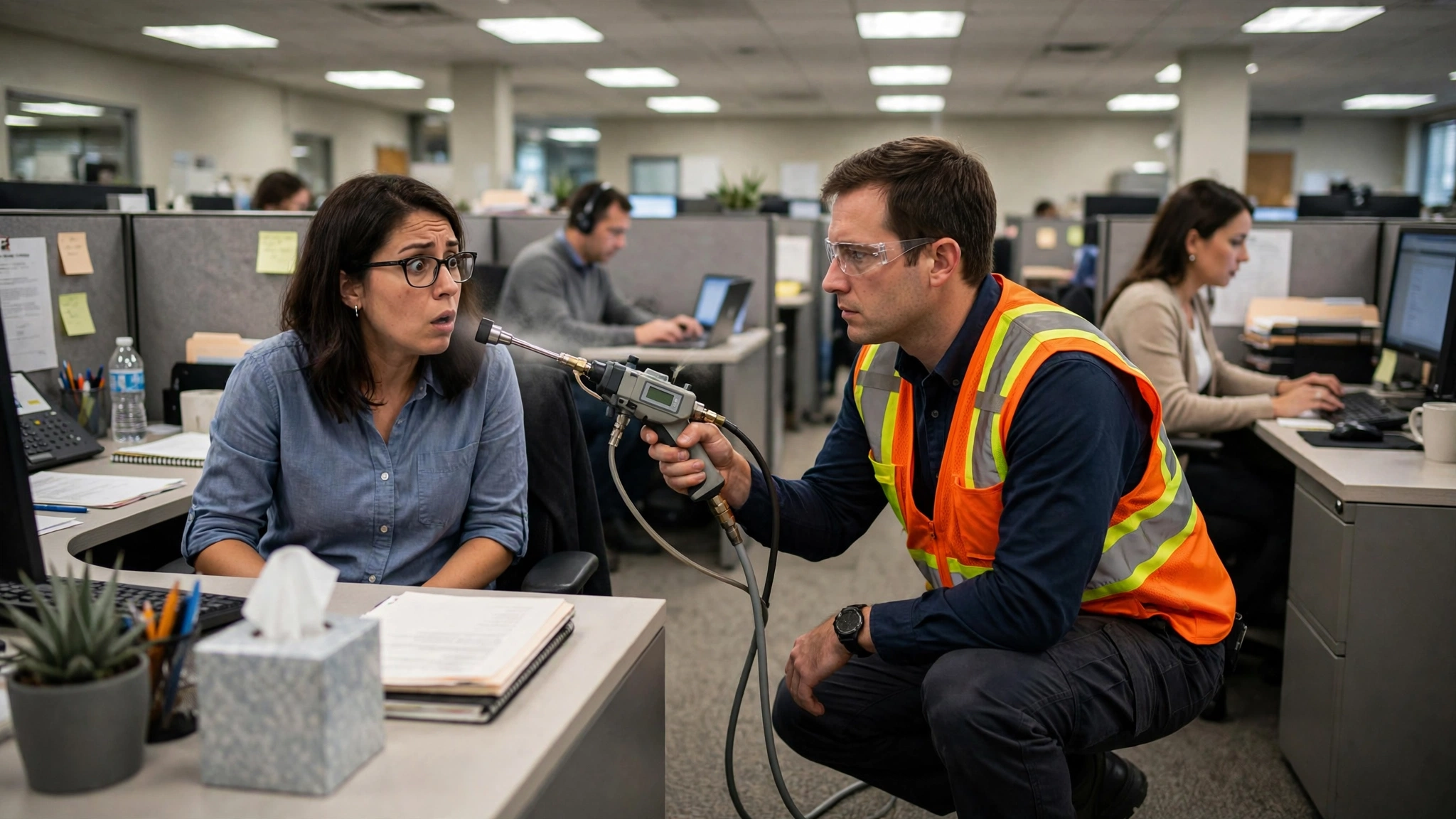
I. The Statutory Framework
The Clean Air Act of 1970, as amended in 1977 and 1990, constitutes the comprehensive federal statute governing air pollution in the United States. Its regulatory architecture rests on a series of definitions that determine what substances fall within the EPA’s jurisdiction, what sources emit those substances, and what obligations attach to those sources. The broadest and most consequential of these definitions appears in Section 302(g), codified at 42 U.S.C. § 7602(g):
“The term ‘air pollutant’ means any air pollution agent or combination of such agents, including any physical, chemical, biological, radioactive (including source material, special nuclear material, and byproduct material) substance or matter which is emitted into or otherwise enters the ambient air.”1
The definition is, by congressional design, extraordinarily broad. It does not enumerate specific chemicals. It does not specify a minimum quantity. It does not require that the substance be synthetic, industrial, combustion-derived, or anthropogenic in any particular sense. It requires only that the substance be “matter which is emitted into or otherwise enters the ambient air.” Carbon dioxide is matter. It is emitted. It enters the ambient air. The statute does not ask where it came from.
In Massachusetts v. Environmental Protection Agency, 549 U.S. 497 (2007), the Supreme Court addressed whether carbon dioxide and other greenhouse gases fell within this statutory definition. The Court’s answer was unequivocal. Writing for a 5–4 majority, Justice Stevens held that “[t]he statutory text forecloses EPA’s reading” and that greenhouse gases “fit well within the Clean Air Act’s capacious definition of ‘air pollutant.’”2 The Court rejected the EPA’s argument that Congress had not intended the Clean Air Act to cover greenhouse gases, observing that the definition “embraces all airborne compounds of whatever stripe” and that the statute’s “sweeping definition” of air pollutant “includes any air pollution agent… emitted into… the ambient air.”3
The holding is binding precedent. It has not been overruled. It has not been limited by subsequent decision. Carbon dioxide is an air pollutant under the Clean Air Act. This is not a contested proposition. It is the law of the United States, and it has been the law of the United States for nineteen years.
II. The Source Characterization
The human body produces carbon dioxide through cellular respiration, the fundamental metabolic process by which aerobic organisms convert glucose and oxygen into adenosine triphosphate, water, and carbon dioxide. The net chemical equation is C6H12O6 + 6O2 → 6CO2 + 6H2O + energy. This reaction occurs continuously in the mitochondria of virtually every cell in the human body. It cannot be paused, reduced, or eliminated without terminating the organism. The production of carbon dioxide is not a byproduct of human activity. It is the activity. Without it, the organism ceases to function within approximately four to six minutes.4
The average adult human consumes approximately 250 milliliters of oxygen per minute at rest, producing an approximately equal volume of carbon dioxide. This corresponds to approximately 200 to 250 milliliters of CO2 per minute, or roughly 0.5 to 0.6 grams per minute, yielding a daily basal output of approximately 0.74 to 0.88 kilograms of carbon dioxide per person per day at rest.5 When activity levels are accounted for—walking, eating, climbing stairs, arguing about regulatory policy—the figure rises to approximately 2.3 pounds, or just over one kilogram, per person per day.6 During vigorous exercise, CO2 output can increase by a factor of eight.7
A research team at the National Aeronautics and Space Administration’s Global Learning and Observations to Benefit the Environment program calculated the daily carbon dioxide release per person at approximately 0.9 kilograms, noting that “our human wasn’t exercising” and that the figure represented a “crude estimate” using standard tidal volume of 500 cubic centimeters per breath at 16 breaths per minute.8 The more commonly cited figure, reported by the Natural Resources Defense Council and subsequently aggregated by the Population Reference Bureau, is 2.3 pounds (approximately 1.04 kilograms) per person per day, reflecting a population-weighted average that includes periods of both rest and normal activity.9
The emission is continuous. It operates twenty-four hours per day, 365 days per year. It does not shut down for maintenance. It does not cycle with market demand. It does not respond to dispatch signals from a regional transmission organization. It is, in regulatory terms, a baseload emission source with a capacity factor of 100 percent and a design life of approximately 77.5 years.10
III. The Emissions Inventory
The United States Census Bureau estimates the resident population of the United States at approximately 335 million persons as of 2026.11 Each of these persons exhales approximately 1.04 kilograms of carbon dioxide per day. The aggregate daily output is therefore approximately 348.4 million kilograms, or 348,400 metric tons, of CO2 per day. Annualized, this yields approximately 127.2 million metric tons of carbon dioxide per year from human respiration alone.
To place this figure in regulatory context, the EPA’s Inventory of U.S. Greenhouse Gas Emissions and Sinks: 1990–2022, published in April 2024, reports the following annual CO2 emissions from regulated industrial source categories:12
- Cement production: 41.9 million metric tons
- Iron and steel production and metallurgical coke production: 40.7 million metric tons
- Petrochemical production: 28.8 million metric tons
- Ammonia production: 12.6 million metric tons
- Lime production: 12.2 million metric tons
- Incineration of waste: 12.4 million metric tons
Human respiration in the United States produces more CO2 per year than the cement, iron and steel, and petrochemical industries combined. It exceeds the entire U.S. cement industry by a factor of more than three. It produces ten times more carbon dioxide than the U.S. ammonia industry. It exceeds the combined output of lime production, waste incineration, and ammonia production by a factor of approximately 3.4.
The EPA requires each of these industrial source categories to report its greenhouse gas emissions annually under 40 CFR Part 98, the Greenhouse Gas Reporting Program. Facilities exceeding 25,000 metric tons of CO2 equivalent per year must submit detailed facility-level data, including emission factors, fuel consumption, process chemistry, and verification documentation.13 The reporting program covers approximately 8,000 facilities across 41 source categories. It does not cover a single pair of lungs.
Globally, the numbers are proportionally larger. The Population Reference Bureau and the Natural Resources Defense Council have reported that the world’s population—approximately 8.1 billion persons as of 2026—collectively exhales approximately 2.94 billion metric tons of carbon dioxide per year.14 This represents approximately 8.5 percent of the approximately 34.7 billion metric tons produced annually by global fossil fuel combustion. The global respiratory emission inventory has been calculated. It has been published. It has been compared to the industrial inventory. No regulatory authority in any jurisdiction has done anything with it.
IV. The Source Classification Problem
The Clean Air Act organizes its regulatory programs around two categories of emission sources: stationary sources and mobile sources. Stationary sources—power plants, refineries, factories, and other fixed facilities—are regulated under Titles I, III, and V of the Act. Mobile sources—automobiles, trucks, aircraft, and locomotives—are regulated under Title II. The regulatory obligations that attach to each category are different in structure, stringency, and enforcement mechanism.
A human being presents a classification challenge. When seated at a desk in an office building, breathing at the basal metabolic rate, the human body is stationary. It is located at a fixed point in space. It emits an air pollutant from that fixed point into the ambient air. Section 302(z) of the Clean Air Act defines “stationary source” as “generally any source of an air pollutant except those emissions resulting directly from an internal combustion engine for transportation purposes or from a nonroad engine or nonroad vehicle.”15 The human body is not an internal combustion engine. It does not operate for transportation purposes, except in the loosest metaphorical sense. Under Section 111(a)(3), a “stationary source” is defined as “any building, structure, facility, or installation which emits or may emit any air pollutant.”16 The human body is not a building, a structure, or a facility. Whether it constitutes an “installation” is a question that no federal court has addressed.
When the same human being stands up and walks to the coffee machine, the emission source becomes mobile. It transports its emission source across a horizontal plane, emitting carbon dioxide along the entire trajectory. Under Title II, Section 202(a)(1) of the Act directs the Administrator to prescribe standards for “the emission of any air pollutant from any class or classes of new motor vehicles or new motor vehicle engines, which in his judgment cause, or contribute to, air pollution which may reasonably be anticipated to endanger public health or welfare.”17 A human being is not a motor vehicle. A human being does not have an engine, although the analogy to a metabolic engine has been made by physiologists with more enthusiasm than regulatory foresight.
The Act provides no third category. An emission source is either stationary or mobile. A human being is, depending on the moment, both and neither. The statute offers no guidance for a source that is stationary eight hours per day, mobile for four, and horizontal for the remaining twelve, during all of which it is continuously emitting an air pollutant that the Supreme Court of the United States has confirmed falls within the Act’s jurisdiction.
V. The Permitting Threshold Paradox
Even if the classification problem were resolved, the permitting arithmetic would be extraordinary. Section 302(j) of the Clean Air Act defines a “major stationary source” and “major emitting facility” as “any stationary facility or source of air pollutants which directly emits, or has the potential to emit, one hundred tons per year or more of any air pollutant.”18 One hundred tons per year is the threshold above which a source becomes subject to the Prevention of Significant Deterioration (PSD) program and the Title V operating permit program.
An individual human being emits approximately 0.38 metric tons (0.42 short tons) of carbon dioxide per year. This is well below the 100-ton major source threshold. The individual human is, in permitting terms, a minor source. But the Act does not regulate only major sources. Area source programs under Section 112 and state implementation plans under Section 110 cover sources below the major source threshold. And when minor sources congregate—in an office building, a stadium, a subway car at rush hour—the aggregate emission from a single facility can be substantial.
A commercial office building housing 2,000 workers produces approximately 760 metric tons (838 short tons) of biogenic CO2 per year from employee respiration alone—more than eight times the 100-ton major source threshold. MetLife Stadium in East Rutherford, New Jersey, holds 82,500 spectators. At capacity, during a three-hour football game, the assembled fans exhale approximately 257 metric tons of CO2. Yankee Stadium, at 54,251 seats, produces approximately 169 metric tons per sold-out event. A full session of the United States Congress, with 535 members, their staff, the press corps, Secret Service detail, and gallery spectators, produces enough carbon dioxide during a single State of the Union address to require a PSD permit if the Capitol were classified as a stationary source of respiratory emissions.
The EPA recognized this aggregation problem when it attempted to extend PSD and Title V permitting to greenhouse gas sources through the Tailoring Rule in 2010. The agency acknowledged that applying the statutory 100-ton and 250-ton thresholds to CO2 would have subjected “millions of previously unregulated entities” to permitting requirements, an outcome it described as an “absurd result” that Congress could not have intended.19 To avoid this outcome, the EPA unilaterally raised the GHG permitting thresholds to 75,000 and 100,000 tons per year of CO2 equivalent. The Supreme Court, in Utility Air Regulatory Group v. EPA, 134 S. Ct. 2427 (2014), invalidated the Tailoring Rule, holding that the EPA had no authority to “rewrite” statutory thresholds set by Congress.20
The “absurd result” that the EPA sought to avoid through the Tailoring Rule did not include the scenario in which the regulated entity is the person sitting at the desk. The agency was concerned about regulating small commercial and residential buildings. It did not consider regulating the building’s occupants directly. The distinction between a furnace that emits CO2 and a person who emits CO2 is, under the statutory text, a distinction without a difference. The statute says “any… substance or matter.” It does not say “any substance or matter from a mechanical device.”
VI. The Biogenic Carbon Defense
The most common objection to classifying human respiration as a regulated emission is that the carbon exhaled by human beings is “biogenic”—that is, it was recently removed from the atmosphere by the plants and animals consumed as food, and its release through respiration merely returns it to the atmosphere from which it came. The carbon cycle is closed. The net atmospheric contribution is zero. This argument is repeated with such frequency and conviction that it has become something close to regulatory gospel.
The argument is correct as a matter of atmospheric science. The NRDC has stated that “the carbon we exhale is the same carbon that was ‘inhaled’ from the atmosphere by the plants we consume,” and that “[t]he only way to add to the carbon in the atmosphere is to take it from a sequestered source like fossil fuels.”21 Climate scientists are quick to point out that human respiration is part of the short carbon cycle and does not contribute to the net increase in atmospheric CO2 concentrations. This is true as a practical matter. It is entirely irrelevant as a statutory matter.
The Clean Air Act does not define “air pollutant” by reference to net atmospheric contribution. It does not distinguish between biogenic and fossil carbon. It does not exempt emissions that are part of a closed cycle. It does not require that the pollutant contribute to a net increase in atmospheric concentration. It defines an air pollutant as “any… substance or matter which is emitted into or otherwise enters the ambient air.” Carbon dioxide emitted through respiration enters the ambient air. The molecule is chemically identical to the molecule emitted by a coal-fired power plant. The infrared absorption spectrum is the same. The atmospheric residence time is the same. The statute does not ask whether the carbon atom in question was sequestered for three months in a head of broccoli or for three hundred million years in a coal seam.
The EPA has itself struggled with the biogenic carbon question in other contexts. In 2011, the agency issued a three-year deferral of GHG permitting for biogenic CO2 emissions from stationary sources, including biomass power plants and ethanol facilities. The deferral acknowledged that the Clean Air Act’s text did not distinguish between biogenic and fossil CO2, and that the agency needed time to develop a “framework for considering biogenic CO2 emissions.”22 The D.C. Circuit, in Center for Biological Diversity v. EPA, 722 F.3d 401 (2013), vacated the deferral rule, holding that the EPA had not provided adequate justification for treating biogenic CO2 differently from fossil CO2 under the Clean Air Act.23
The court’s reasoning was straightforward: the statute says “any.” Any means any. If the EPA wishes to distinguish between types of carbon dioxide, it must do so through notice-and-comment rulemaking, with a rational basis, supported by the administrative record. The agency has not done this for human respiration. It has not attempted to do this for human respiration. The word “biogenic” is a scientific classification, not a statutory exemption.
VII. The Regulatory Arc and Its Peculiar Conclusion
The regulatory history of greenhouse gas regulation in the United States describes a seventeen-year parabola. It begins with the Supreme Court’s 2007 decision in Massachusetts v. EPA, holding that CO2 is an air pollutant and remanding to the agency with instructions to issue an endangerment finding or provide a statutory basis for declining to do so. It ascends through the 2009 Endangerment Finding, published at 74 Fed. Reg. 66,496, in which the EPA determined that six greenhouse gases “may reasonably be anticipated both to endanger public health and to endanger public welfare.”24 It reaches its apex through a succession of regulatory actions: tailpipe standards for light-duty vehicles, emission guidelines for existing power plants under the Clean Power Plan, methane regulations for oil and gas operations, and GHG reporting requirements for over 8,000 industrial facilities.
In February 2026, the parabola concluded. The EPA published a final rule at 91 Fed. Reg. 7686, rescinding the 2009 Endangerment Finding and repealing all greenhouse gas emission standards for light-duty, medium-duty, and heavy-duty vehicles and engines.25 The agency grounded its rescission on a revised legal interpretation of its authority under Clean Air Act Section 202(a)(1), invoking the major questions doctrine and determining that it was “unnecessary and inappropriate to resolve outstanding scientific questions regarding global climate change impacts.”26
The rescission is now under legal challenge. Numerous state and local governments, public health organizations, and environmental groups have filed petitions for review in the U.S. Court of Appeals for the D.C. Circuit. The lead case is American Public Health Association v. EPA, Case No. 26-1037.27
The rescission, however, does not affect the statutory definition. Section 302(g) of the Clean Air Act has not been amended. The Supreme Court’s holding in Massachusetts v. EPA has not been overruled. Carbon dioxide remains, as a matter of binding judicial precedent, an “air pollutant” within the meaning of the Clean Air Act. What has changed is the agency’s willingness to act on that classification. What has not changed is the 335 million emission sources that have been continuously emitting the pollutant throughout the agency’s entire regulatory arc—from the day it issued the Endangerment Finding to the day it rescinded it—without a single acknowledgment from anyone involved.
VIII. The Enforcement Asymmetry
The EPA’s enforcement of greenhouse gas regulations, during the years in which it maintained the Endangerment Finding, was not indiscriminate. The agency selected regulated source categories through a structured process grounded in emissions magnitude, abatement feasibility, and industrial significance. It regulated coal-fired power plants, natural gas processing facilities, petroleum refineries, cement kilns, and automobile manufacturers. Each of these regulatory actions was preceded by notice-and-comment rulemaking, cost-benefit analysis, and regulatory impact assessment.
The agency regulated the cement industry, which produces 41.9 million metric tons of CO2 per year, and did not regulate human respiration, which produces 128 million metric tons. It regulated ammonia production, which produces 12.6 million metric tons, and did not regulate breathing, which produces ten times as much. It required continuous emissions monitoring at individual facilities producing 25,000 metric tons per year and did not monitor a single facility where 2,000 people sit in cubicles producing 760 metric tons per year from respiration alone.
The Greenhouse Gas Reporting Program, established under 40 CFR Part 98, requires covered facilities to measure, calculate, and report their greenhouse gas emissions to the EPA on an annual basis. The program covers power plants, petroleum and natural gas systems, cement plants, glass production, iron and steel, aluminum, pulp and paper, and thirty-three other source categories. It does not cover office buildings for the respiratory emissions of their occupants. It does not cover schools for the respiratory emissions of their students. It does not cover hospitals, where the respiratory CO2 output of patients is routinely measured by medical equipment and recorded in clinical charts, producing what may be the most comprehensive and granular continuous emissions monitoring data of any source category in the country—and none of it has ever been reported to the EPA.
The irony is not lost on the capnograph. The medical device that measures exhaled CO2 in real time, displaying the partial pressure of carbon dioxide in expired air on a waveform display at the patient’s bedside, is functionally identical to the continuous emissions monitoring system that the EPA requires at regulated industrial facilities under 40 CFR Part 75. Both devices measure the same molecule. Both produce time-series concentration data. Both are calibrated, maintained, and quality-assured. The difference is that one of them generates data that must be reported to a federal agency under penalty of law, and the other generates data that is filed in a medical record and never mentioned in any regulatory context.
IX. Conclusion
The Clean Air Act defines an air pollutant as any substance or matter emitted into the ambient air. The Supreme Court has held that carbon dioxide satisfies this definition. The average American exhales approximately 2.3 pounds of carbon dioxide per day. Three hundred and thirty-five million Americans collectively produce approximately 128 million metric tons of CO2 per year through the irreducible metabolic process that keeps them alive. This volume exceeds the annual CO2 output of the entire U.S. cement industry, the entire iron and steel sector, and the entire petrochemical sector combined.
The EPA spent seventeen years constructing a regulatory framework to control the emission of this exact molecule from industrial, commercial, and transportation sources. It issued an Endangerment Finding. It promulgated emission standards. It created a reporting program covering 8,000 facilities and 41 source categories. It then rescinded the Endangerment Finding and is now litigating the rescission in federal court. At no point during any of these proceedings—not in the docket for Massachusetts v. EPA, not in the 400-page regulatory impact analysis for the Clean Power Plan, not in the 71 pages of the Tailoring Rule, not in the rescission notice, and not in the petitions for review now pending before the D.C. Circuit—has any participant in the regulatory process addressed the largest unregulated source category in the country.
The reason is obvious. To regulate human respiration would be absurd. The compliance costs would be incalculable. The enforcement mechanism would be totalitarian. The abatement technology does not exist, or rather, it exists and it is called “death,” which the Office of Management and Budget would likely score as a net cost. The regulatory apparatus of the United States was not designed to govern the metabolic output of its citizens.
But the statute does not say “any substance or matter, except the ones that would be absurd to regulate.” It says “any.” The Supreme Court has confirmed that “any” means any. The molecule is the molecule. The definition is the definition. And 335 million Americans will continue to emit it, unreported, unmonitored, and unpermitted, every time they inhale and every time they exhale, including right now, including the person reading this sentence, at a rate of approximately 200 milliliters per minute.
Ergo.
Sources
- Clean Air Act § 302(g), 42 U.S.C. § 7602(g), Definition of “air pollutant.” law.cornell.edu ↑
- Massachusetts v. Environmental Protection Agency, 549 U.S. 497, 528–29 (2007). supreme.justia.com ↑
- Id. at 529, 532. The Court held that greenhouse gases “fit well within the Clean Air Act’s capacious definition of ‘air pollutant’” and rejected EPA’s contention that the Act was not intended to address climate change. ↑
- Guyton, A.C. & Hall, J.E., Textbook of Medical Physiology, 14th ed. (Elsevier, 2020), ch. 42, “Respiratory Insufficiency.” Cerebral hypoxia leading to irreversible neuronal damage occurs within 4–6 minutes of respiratory cessation. ↑
- Mack, S., “Re: How much CO2 does a human exhale?” MadSci Network, September 26, 2004. Based on oxygen consumption of approximately 300 mL/min at rest: “they are exhaling between 0.5 and 0.6 grams of CO2 per minute… that is 0.74 to 0.88 kilograms per person per day.” madsci.org ↑
- “Do We Exhale Carbon?” NRDC, republished from Slate. “The average human exhales about 2.3 pounds of carbon dioxide on an average day.” nrdc.org ↑
- Id. (“[A] person engaged in vigorous exercise produces up to eight times as much CO2 as his sedentary brethren.”) ↑
- “Release of carbon dioxide by individual humans,” GLOBE Scientists’ Blog, NASA. Calculation yielding 0.9 kg CO2/day/person based on 500 cm³ tidal volume, 16 breaths/min, and 5% exhaled CO2 by volume. globe.gov ↑
- NRDC, supra note 6; Population Reference Bureau, “World Population to Reach 7 Billion in 2011,” 2010. The 2.3 lbs/day figure represents a population-weighted average including rest, normal daily activity, and sleep. ↑
- Centers for Disease Control and Prevention, National Center for Health Statistics, “Life Expectancy at Birth,” 2024 NVSS data. U.S. life expectancy at birth: approximately 77.5 years. cdc.gov ↑
- U.S. Census Bureau, Population Clock, 2026 estimate. census.gov ↑
- EPA, Inventory of U.S. Greenhouse Gas Emissions and Sinks: 1990–2022, Table 2-1: Recent Trends in U.S. Greenhouse Gas Emissions and Sinks (MMT CO2 Eq.), April 2024. Cement: 41.9, Iron & Steel: 40.7, Petrochemical: 28.8, Ammonia: 12.6, Lime: 12.2, Waste incineration: 12.4 (all in MMT CO2, reporting year 2022). epa.gov ↑
- 40 CFR Part 98, Mandatory Greenhouse Gas Reporting. Facilities emitting 25,000 metric tons or more of CO2e per year must report under the GHGRP. Approximately 8,000 facilities report across 41 source categories. epa.gov ↑
- NRDC, supra note 6. “Take this number and multiply by a population of 7 billion people, breathing away for 365.25 days per year, and you get an annual CO2 output of 2.94 billion tons.” Adjusted for 2026 population of approximately 8.1 billion: approximately 3.4 billion metric tons globally. ↑
- 42 U.S.C. § 7602(z). law.cornell.edu ↑
- 42 U.S.C. § 7411(a)(3). law.cornell.edu ↑
- 42 U.S.C. § 7521(a)(1). law.cornell.edu ↑
- 42 U.S.C. § 7602(j). law.cornell.edu ↑
- EPA, “Prevention of Significant Deterioration and Title V Greenhouse Gas Tailoring Rule,” 75 Fed. Reg. 31,514 (June 3, 2010). The EPA acknowledged that applying statutory thresholds to GHGs would bring “millions of previously unregulated entities” into the PSD and Title V programs. govinfo.gov ↑
- Utility Air Regulatory Group v. EPA, 573 U.S. 302, 134 S. Ct. 2427 (2014). The Court held that “EPA may not treat greenhouse gases as an air pollutant for purposes of determining whether a source is a major source required to obtain a PSD or title V permit” but upheld BACT requirements for “anyway sources.” supremecourt.gov ↑
- NRDC, supra note 6. ↑
- EPA, “Deferral for CO2 Emissions from Bioenergy and Other Biogenic Sources Under the Prevention of Significant Deterioration (PSD) and Title V Programs,” 76 Fed. Reg. 43,490 (July 20, 2011). ↑
- Center for Biological Diversity v. EPA, 722 F.3d 401 (D.C. Cir. 2013). The court vacated the biogenic CO2 deferral rule, holding that the EPA had not demonstrated that biogenic CO2 should be treated differently under the PSD program. ↑
- EPA, “Endangerment and Cause or Contribute Findings for Greenhouse Gases Under Section 202(a) of the Clean Air Act,” 74 Fed. Reg. 66,496, 66,497 (Dec. 15, 2009). govinfo.gov ↑
- EPA, “Rescission of the Greenhouse Gas Endangerment Finding and Motor Vehicle Greenhouse Gas Emission Standards Under the Clean Air Act,” 91 Fed. Reg. 7,686 (Feb. 18, 2026). ↑
- Id. The agency predicated its rescission “solely on its revised legal interpretation of its authority under the Clean Air Act, as corroborated by the major questions doctrine.” See also Beveridge & Diamond, “EPA Strikes at the Roots of Federal GHG Regulations, Rescinds Endangerment Finding for Motor Vehicles,” February 2026. bdlaw.com ↑
- See Earthjustice, “Petition for Reconsideration of EPA’s Final Rule: Rescission of the Greenhouse Gas Endangerment Finding,” filed 2026. Petitioners include the American Public Health Association, numerous state attorneys general, and environmental organizations. earthjustice.org ↑