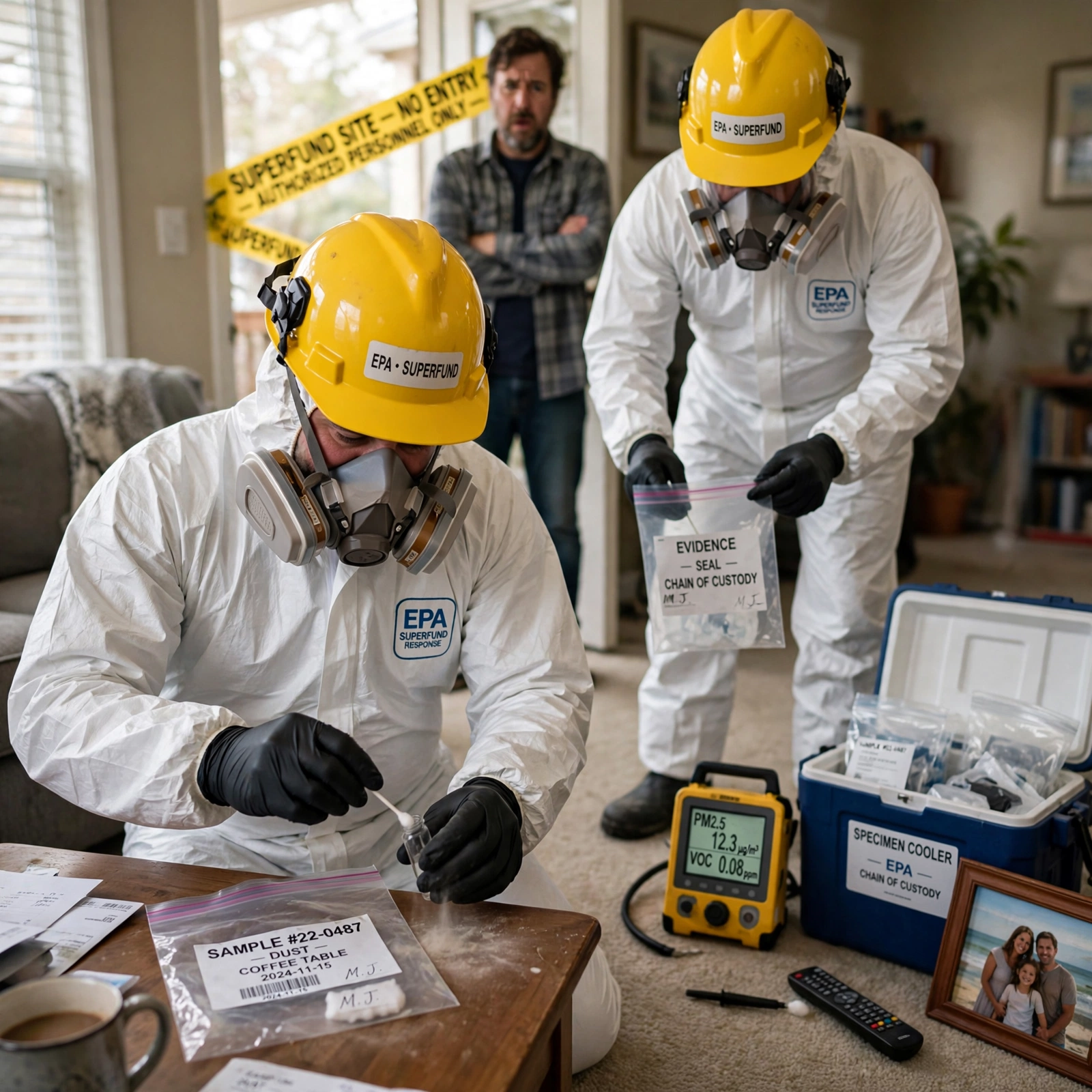
I. The Statutory Definition
The Comprehensive Environmental Response, Compensation, and Liability Act of 1980, known colloquially as Superfund and codified at 42 U.S.C. §§ 9601–9675, was enacted in the aftermath of Love Canal. President Carter signed the law on December 11, 1980, establishing a federal program to identify and clean up sites contaminated with hazardous substances. The Superfund Amendments and Reauthorization Act of 1986 strengthened the program and replenished its trust fund. Together, these statutes have produced one of the most aggressive environmental enforcement regimes in the history of American law.1
The breadth of that regime begins with its definitions. CERCLA § 101(9), codified at 42 U.S.C. § 9601(9), defines the term “facility” to mean:
(A) any building, structure, installation, equipment, pipe or pipeline (including any pipe into a sewer or publicly owned treatment works), well, pit, pond, lagoon, impoundment, ditch, landfill, storage container, motor vehicle, rolling stock, or aircraft, or (B) any site or area where a hazardous substance has been deposited, stored, disposed of, or placed, or otherwise come to be located; but does not include any consumer product in consumer use or any vessel.2
This definition has two prongs. The first lists specific categories of physical structures and conveyances. The second is a residual clause that captures any location where a hazardous substance has ended up, regardless of how it got there. The disjunctive “or” between prongs (A) and (B) means that satisfying either one is sufficient. A home qualifies under prong (A) as a building. It qualifies under prong (A) as a structure. It qualifies under prong (A) as an installation. It qualifies under prong (B) as a site or area where hazardous substances have come to be located. It qualifies four times, which is three more than the statute requires.
The EPA itself has confirmed this reading. In its guidance on CERCLA release reporting requirements, the agency states that “CERCLA section 101(9) defines facility broadly to include any site or area where a hazardous substance is located.”3 The EPA did not add qualifiers. It did not limit the definition to industrial properties. It did not exclude residences. It stated that the definition is broad, and it moved on.
The statute contains exactly two exclusions from the definition of “facility.” The first is “any consumer product in consumer use.” The second is “any vessel.” A home is not a consumer product. A home is not a vessel. The exclusions do not apply.
The consumer product exclusion does, however, illuminate a doctrinal question the statute itself refuses to answer. The hazardous substances in household dust arrived via consumer products in consumer use: couches, cookware, flooring, shower curtains. At what moment does a molecule of TDCIPP cease to be part of a “consumer product in consumer use” and become a free-standing contaminant at a CERCLA facility? When it migrates through the upholstery fabric? When it settles onto the floor? When the couch is donated to Goodwill? The statute does not say. What it does say is that the couch is excluded and the house is not. The molecule started in one and ended in the other. The legal transition occurred somewhere in the six inches of air between the cushion and the carpet. The statute provides no guidance for that journey. It provides only a destination.
II. The Hazardous Substances
CERCLA § 101(14), codified at 42 U.S.C. § 9601(14), defines “hazardous substance” by reference to five other environmental statutes. A substance is hazardous under CERCLA if it is designated under Section 311(b)(2)(A) of the Clean Water Act, designated under Section 102 of CERCLA itself, listed as hazardous waste under Section 3001 of RCRA, listed as a toxic pollutant under Section 307(a) of the Clean Water Act, or listed as a hazardous air pollutant under Section 112 of the Clean Air Act.4 The resulting list, codified at 40 CFR § 302.4, contains hundreds of substances.
In 2016, Mitro et al. published a quantitative meta-analysis of indoor dust contamination in the journal Environmental Science & Technology. The study, conducted at the Milken Institute School of Public Health at George Washington University, pooled data from 26 peer-reviewed studies of household dust collected in homes across the United States. The researchers identified 45 toxic chemicals that are routinely present in the dust of American homes.5
The findings were not ambiguous. Ten of the 45 chemicals were detected in more than 90 percent of all dust samples across multiple studies. These included TDCIPP (tris(1,3-dichloro-2-propyl) phosphate), a chlorinated flame retardant used in furniture, baby products, and electronics that the State of California has listed as a known carcinogen under Proposition 65. They included DEHP (di(2-ethylhexyl) phthalate), a plasticizer used in vinyl flooring, food packaging, and medical devices that the EPA has classified as a probable human carcinogen under its Integrated Risk Information System. They included PFOA (perfluorooctanoic acid), the Teflon chemical, which the EPA designated as a hazardous substance under CERCLA itself in April 2024.6
The study found four classes of chemicals at consistently high concentrations in household dust. Phthalates dominated, with a mean concentration of 7,682 nanograms per gram of dust. Phenols were second. Flame retardants were third. Highly fluorinated chemicals, including PFOA and PFOS, were fourth.7
A separate body of research has documented lead in household dust for decades. The EPA itself promulgated the Renovation, Repair, and Painting Rule under 40 CFR Part 745, which establishes dust-lead action levels of 10 micrograms per square foot on floors and 100 micrograms per square foot on window sills in housing built before 1978.8 Lead is a CERCLA hazardous substance. It is present in the dust of millions of American homes. The EPA knows this because the EPA wrote the rule that measures it.
The Dutch National Institute for Public Health and the Environment, in a comprehensive screening commissioned by the Netherlands’ Ministry of Housing, Spatial Planning and the Environment, confirmed the same categories of contaminants: lead, arsenic, cadmium, phthalates, brominated flame retardants, pesticides, and polycyclic aromatic hydrocarbons, all present in ordinary household dust, all entering the body primarily through hand-to-mouth contact, and all entering homes through the wear of consumer products, the residue of cooking, and the soles of shoes that have contacted contaminated soil.9
Each of these substances falls within CERCLA’s definition of a hazardous substance. Each of them has been “deposited, stored, disposed of, or placed, or otherwise come to be located” inside an American home. The statute does not ask how they arrived. It asks only whether they are there.
III. The Screening Level Paradox
The EPA uses Regional Screening Levels, or RSLs, to evaluate whether contamination at a given site warrants further investigation. RSLs are risk-based concentrations derived from standardized exposure assumptions and toxicity values. They represent the threshold below which the agency considers contamination unlikely to pose a significant health risk and above which formal site assessment may be triggered. The EPA publishes RSL tables for residential and industrial soils, tapwater, and ambient air, and updates them semiannually.10
The Natural Resources Defense Council, in an analysis published alongside the Mitro et al. meta-analysis, performed a comparison that the EPA itself has never undertaken. Because no federal screening levels exist specifically for chemicals in household dust, and because exposure to dust is toxicologically analogous to exposure to soil—both involve dermal contact, incidental ingestion, and inhalation of resuspended particles—the researchers compared the concentrations of chemicals found in household dust to the EPA’s RSLs for contaminated soils.11
The results were, in the NRDC’s word, “shocking.” The average concentrations of certain phthalates and flame retardants in ordinary American household dust exceeded the EPA’s own soil screening levels for those same chemicals. The maximum concentrations documented in individual studies exceeded the screening levels by orders of magnitude.
This means that the dust on the bookshelf in a suburban living room contains certain chemicals at concentrations that, if found in the soil beneath an abandoned industrial site, would trigger a formal EPA investigation under the Superfund program. The EPA would dispatch a site assessment team. It would score the site using the Hazard Ranking System. If the HRS score reached 28.50 or above, the site would be proposed for the National Priorities List. A remedial investigation and feasibility study would follow. A Record of Decision would be issued. Cleanup would begin.
When the same chemicals are found at the same concentrations on the same planet but inside a house rather than beneath a factory, the EPA does nothing. Not because the statute exempts it. Not because the contamination is below the agency’s own screening thresholds. But because no one has ever thought to look.
IV. The Liability Framework
CERCLA § 107(a), codified at 42 U.S.C. § 9607(a), establishes four categories of potentially responsible parties, or PRPs, who may be held liable for response costs at a facility where hazardous substances have been released or threaten to be released. The categories are: (1) the current owner and operator of the facility; (2) any person who owned or operated the facility at the time hazardous substances were disposed of; (3) any person who arranged for disposal or treatment of hazardous substances at the facility; and (4) any person who transported hazardous substances to the facility.12
A homeowner is the current owner of a facility. Under § 107(a)(1), the homeowner is a PRP. The previous owner of the home, who lived there while flame retardant–treated furniture off-gassed TDCIPP into the dust, is a past owner who operated the facility at the time hazardous substances were disposed of. Under § 107(a)(2), the previous owner is also a PRP.
The chain does not stop at the property line. The furniture manufacturer that applied TDCIPP to the couch cushions and shipped them to a retail showroom arranged for the disposal of a hazardous substance at an address it had never visited, on a carpet it had never seen, in a home whose owner it would never meet. Under § 107(a)(3), the manufacturer is a PRP. Under § 107(a)(4), so is every delivery driver who selected the facility—the home—at which the substance was deposited. The twenty-three-year-old in the box truck who carried a couch from a warehouse in New Jersey to a living room in Connecticut is a potentially responsible party at a CERCLA facility. The truck did not need to be carrying drums of trichloroethylene. It needed to be carrying a sofa.
The liability that attaches to each of these parties is, under decades of federal case law, strict, joint and several, and retroactive.13
Strict liability means that fault is irrelevant. The homeowner does not need to have known that the couch contained flame retardants. The homeowner does not need to have acted negligently. The homeowner does not need to have violated any regulation. If the homeowner owns a facility at which hazardous substances have come to be located, the homeowner is liable. The EPA’s own enforcement guidance states that “strict liability means that ‘fault’ is not required in order to establish a party’s liability under section 107 of the statute. The liability of a party is independent of motive, without regard to whether its conduct was negligent, intentional, or in compliance with industry standards.”14
Joint and several liability means that any single PRP may be held responsible for the entire cost of cleanup, regardless of that party’s proportional contribution to the contamination. A homeowner who contributed 0.01 percent of the hazardous substances in the dust—say, by purchasing a single vinyl shower curtain—could theoretically be held liable for the full remediation of the home’s indoor environment. The Congressional Research Service has confirmed that “one or more of the liable parties can be held responsible for the full cost of the cleanup at a site, regardless of the degree of involvement in the contamination.”15
Retroactive liability means that parties may be held liable for contamination that occurred before CERCLA was enacted in 1980. A home built in 1965 with lead-based paint that has been generating lead-contaminated dust for six decades is not exempt because the contamination predates the statute. The federal courts have uniformly upheld CERCLA’s retroactive application.16
This is the liability framework that produced the most consequential environmental cleanups in American history. Under this framework, General Electric was compelled to spend approximately $1.7 billion dredging PCBs from the Hudson River. Under this framework, the federal government spent $200 million relocating the entire town of Times Beach, Missouri. Under this framework, Occidental Petroleum’s subsidiary was held liable for Love Canal. The standard does not bend for good intentions, ignorance, or the size of the defendant’s bank account. It bends for nothing. It is the reason that the owner of a split-level in Naperville whose living room carpet has not been vacuumed since the Super Bowl is, under the same body of law that bankrupted chemical companies, a potentially responsible party at a CERCLA facility—and will remain one until someone vacuums.
V. The Release
CERCLA § 101(22), codified at 42 U.S.C. § 9601(22), defines “release” to mean “any spilling, leaking, pumping, pouring, emitting, emptying, discharging, injecting, escaping, leaching, dumping, or disposing into the environment.”17 Congress listed twelve verbs. It would have been easier to list what does not constitute a release. It chose not to.
The word “emitting” alone captures the off-gassing of volatile and semi-volatile organic compounds from consumer products into indoor air, which qualifies as “ambient air within the United States” under CERCLA’s definition of “environment” at § 101(8).18
The mechanism by which hazardous substances enter household dust has been thoroughly characterized in the environmental health literature. Flame retardants migrate from treated furniture foam through the fabric covering and adsorb onto dust particles. Phthalates volatilize from vinyl flooring, shower curtains, and food packaging, then condense onto surfaces and incorporate into settled dust. PFAS compounds shed from nonstick cookware, stain-resistant textiles, and food-contact paper into the indoor environment. Lead paint deteriorates into dust through friction, impact, and weathering. Pesticides are tracked indoors on shoes and pet paws from treated lawns and soils.19
Each of these pathways constitutes a release within the meaning of CERCLA § 101(22). When a flame retardant molecule migrates from a polyurethane foam cushion through a fabric cover and settles into the dust on a hardwood floor, it has been “emitted” and has “escaped” from a consumer product into the indoor environment. When a phthalate molecule volatilizes from a vinyl floor tile into the air column of a child’s bedroom, it has been “discharged” into the environment. When pesticide residue on the sole of a running shoe is transferred to a kitchen floor, the hazardous substance has been “disposed” into the environment.
The EPA requires facilities to report releases of hazardous substances above reportable quantities under CERCLA § 103. The reportable quantity for lead compounds is one pound. The reportable quantity for many listed phthalates is one hundred pounds. These thresholds were established for industrial operations. They were not established for living rooms. But the statute does not contain a residential exemption from the definition of “release.” The releases are occurring. They are occurring continuously. They are occurring in every home that contains a couch, a carpet, a vinyl floor, a can of nonstick cooking spray, or a pair of shoes.
VI. The Scale of the Problem
The United States Census Bureau reports approximately 140 million housing units in the United States.20 Each of these units contains dust. The Mitro et al. meta-analysis did not identify a single home, in 26 studies spanning multiple regions of the country, that was free of the 45 toxic chemicals the researchers cataloged. The contamination is not localized. It is not episodic. It is universal.
Compare this to the National Priorities List, the EPA’s official inventory of the most contaminated sites in the country. As of May 12, 2026, the NPL contains 1,343 active sites, of which 1,186 are non-federal general sites and 157 are federal facilities.21 Since the program’s inception, 460 sites have been cleaned up and deleted from the list. The current list represents over four decades of identification, scoring, investigation, remediation, and long-term monitoring.
The ratio of NPL sites to American housing units is approximately 1 to 104,000. For every site the EPA has determined is contaminated enough to warrant federal Superfund intervention, there are 104,000 homes containing the same categories of hazardous substances—in some cases at concentrations exceeding the EPA’s own soil screening levels—that the agency has never evaluated.
The Superfund program has spent enormously on its 1,343 sites. As of the end of fiscal year 2025, the EPA reported 870 sites under active cleanup through 1,467 enforcement agreements and orders valued at approximately $25 billion in estimated cleanup costs.22 Congressional testimony has estimated total Superfund expenditures since 1980 at over $30 billion in federal appropriations and at least $30 billion in private-sector spending, for a combined investment exceeding $60 billion.23
Extrapolating remediation costs from NPL sites to 140 million homes is an exercise in arithmetic that produces numbers usually reserved for discussions of the national debt or the defense budget. It is also an exercise the statute does not prohibit.
VII. The Innocent Landowner Defense and Its Inapplicability
CERCLA does provide certain defenses to liability. Section 107(b) establishes three: an act of God, an act of war, and the acts or omissions of an unrelated third party, provided the defendant exercised due care and took precautions against foreseeable acts of the third party. The Superfund Amendments and Reauthorization Act of 1986 added the “innocent landowner” defense, codified at § 101(35), which protects a property owner who acquired the facility after contamination occurred, provided the owner undertook “all appropriate inquiries” into previous ownership and uses of the property before acquisition.24
The innocent landowner defense is unavailing for the typical homeowner for two reasons. First, the contamination in household dust is not a legacy condition inherited from a previous owner. It is ongoing. The current homeowner’s own furniture is emitting flame retardants into the dust. The current homeowner’s own vinyl flooring is releasing phthalates. The current homeowner is not an innocent purchaser of a previously contaminated facility. The current homeowner is an active operator of a facility that is generating new releases of hazardous substances every day.
Second, the “all appropriate inquiries” standard, codified at 40 CFR Part 312, requires a prospective purchaser to conduct an environmental site assessment before acquisition. The standard Phase I Environmental Site Assessment, governed by ASTM E1527-21, involves a review of historical records, a site reconnaissance, and interviews with current and past owners. It does not involve testing the dust on the kitchen counter for phthalates. No homebuyer in the history of American real estate has commissioned a Phase I ESA that included a wipe sample of the living room bookshelf. The defense requires inquiry. The inquiry has never been made. The defense therefore fails.
VIII. The Remedial Options
Under CERCLA § 104, the EPA has authority to undertake response actions at facilities where hazardous substances have been released or threaten to be released. Response actions include both removal actions, which are short-term measures to address immediate threats, and remedial actions, which are long-term measures designed to achieve permanent cleanup. The National Contingency Plan, codified at 40 CFR Part 300, establishes the procedures and standards for response actions.25
For a household dust contamination site, the remedial investigation would likely identify the following exposure pathways: ingestion (hand-to-mouth contact with dust-contaminated surfaces), inhalation (resuspension of settled dust particles into the breathing zone), and dermal absorption (skin contact with contaminated surfaces). The UC Davis EPA-funded study, awarded $1.35 million in federal grant funding, specifically focused on quantifying children’s ingestion of chemicals through household dust, recognizing that young children’s play behavior and hand-to-mouth frequency make them particularly susceptible to this exposure route.26
The feasibility study would evaluate remedial alternatives. The most straightforward is source removal—the elimination of all consumer products that are releasing hazardous substances into the indoor environment. This would require the removal of all upholstered furniture containing flame-retardant-treated foam, all vinyl flooring, all carpeting (which serves as a reservoir for settled contaminants), all nonstick cookware, all stain-resistant textiles, and all personal care products containing phthalates. The homeowner would be left with the walls, the plumbing, and a structure that the EPA could then reclassify as remediated.
The alternative is containment, which in the context of household dust means continuous and permanent dust control. HEPA vacuuming, wet mopping, and air filtration would be implemented on a schedule determined by the Record of Decision. Operations and maintenance would continue for the life of the structure. The GAO has estimated that Superfund operations and maintenance costs at existing NPL sites will total approximately $32 billion through fiscal year 2040.27 The per-site cost of perpetual dust management at 140 million homes would be modest on a per-unit basis and catastrophic in the aggregate.
IX. Conclusion
The evidence does not require interpretive acrobatics. CERCLA defines “facility” to include any building where a hazardous substance has come to be located. A home is a building. Household dust contains hazardous substances. The home is a facility.
CERCLA defines “hazardous substance” by reference to lists maintained under five federal environmental statutes. Lead, DEHP, TDCIPP, PFOA, arsenic, and cadmium are on those lists. Each of them is in household dust. Each of them has been documented there by peer-reviewed research, by EPA-funded studies, and by the agency’s own regulatory actions.
CERCLA imposes strict, joint and several, and retroactive liability on current owners of facilities where hazardous substances have been released. Every homeowner in the United States is the current owner of a facility at which ongoing releases of hazardous substances are occurring. The liability attaches regardless of fault, regardless of intent, and regardless of whether the homeowner has ever heard of the Comprehensive Environmental Response, Compensation, and Liability Act.
The concentrations of certain chemicals in the dust of ordinary American homes exceed the EPA’s own Regional Screening Levels for contaminated soils. If these concentrations were found in the ground beneath an abandoned factory, the EPA would score the site, propose it for the NPL, and commence a remedial investigation. Because these concentrations are found instead in the particulate layer on top of a Pottery Barn end table, the EPA has taken no action.
There are 1,343 sites on the National Priorities List. The EPA’s cleanup program has invested over $60 billion in federal and private-sector spending across these sites since 1980. Approximately 140 million housing units in the United States contain the same categories of hazardous substances, documented at comparable or higher concentrations, in a medium—dust—that the agency’s own researchers have identified as a primary exposure pathway for children.
The NPL is not full. It has been accepting new sites for 43 years. The most recent addition was the Gelman Sciences Inc. site in Ann Arbor, Michigan, listed on March 13, 2026. There is room for 140 million more.
The average American spends approximately 90 percent of their time indoors. They are spending it inside a CERCLA facility, breathing the air of an unremediated site, touching surfaces contaminated with substances the EPA has classified as hazardous, and trusting an agency that has written the definitions, published the screening levels, funded the research, identified the exposure pathways, and then declined to connect them.
The dust is there. The substances are listed. The statute is on the books. The liability is strict.
Ergo.
Sources
- Comprehensive Environmental Response, Compensation, and Liability Act of 1980, Pub. L. 96-510, 94 Stat. 2767, codified at 42 U.S.C. §§ 9601–9675; Superfund Amendments and Reauthorization Act of 1986, Pub. L. 99-499, 100 Stat. 1613. law.cornell.edu ↑
- 42 U.S.C. § 9601(9), CERCLA § 101(9), definition of “facility.” rosap.ntl.bts.gov ↑
- U.S. Environmental Protection Agency, “Facilities or Vessels Covered Under CERCLA Release Reporting Requirements,” updated April 10, 2026. epa.gov ↑
- 42 U.S.C. § 9601(14), CERCLA § 101(14), definition of “hazardous substance.” See also 40 CFR § 302.4 (list of hazardous substances and reportable quantities). law.cornell.edu ↑
- S.D. Mitro et al., “Consumer Product Chemicals in Indoor Dust: A Quantitative Meta-analysis of U.S. Studies,” Environmental Science & Technology, vol. 50, no. 19, 2016, pp. 10661–10672. publichealth.gwu.edu ↑
- U.S. Environmental Protection Agency, “EPA Designates PFOA and PFOS as CERCLA Hazardous Substances,” Final Rule, 89 FR 37756, April 19, 2024. ↑
- Mitro et al. (2016), cited above at note 5; see also Natural Resources Defense Council, “Potentially Harmful Chemicals Widespread in Household Dust,” September 14, 2016. nrdc.org ↑
- 40 CFR Part 745, Subpart E, “Residential Property Renovation”; EPA Lead Dust Hazard Standards, revised January 6, 2021 (86 FR 983), lowering dust-lead action levels to 10 μg/ft² on floors and 100 μg/ft² on window sills. ↑
- A. Dusseldorp et al., “Exposure to Chemicals via House Dust,” RIVM Report, National Institute for Public Health and the Environment, The Netherlands. ncbi.nlm.nih.gov ↑
- U.S. Environmental Protection Agency, “Regional Screening Levels (RSLs),” updated semiannually, providing risk-based screening concentrations for residential and commercial/industrial soil, tapwater, and air. ↑
- Natural Resources Defense Council, “Toxic Dust: The Dangerous Chemical Brew in Every Home,” Veena Singla, 2016. nrdc.org ↑
- 42 U.S.C. § 9607(a)(1)–(4), CERCLA § 107(a), categories of potentially responsible parties. congress.gov ↑
- See, e.g., United States v. Northeastern Pharmaceutical & Chemical Co. (NEPACCO), 810 F.2d 726 (8th Cir. 1986) (strict and retroactive liability); United States v. Chem-Dyne Corp., 572 F. Supp. 802 (S.D. Ohio 1983) (joint and several liability). ↑
- U.S. Environmental Protection Agency, “What Kind of Liability Is There for Polluters Under Superfund?” epa.gov ↑
- Congressional Research Service, “Comprehensive Environmental Response, Compensation, and Liability Act: A Summary of Superfund Cleanup Authorities and Related Provisions of the Act,” R41039. congress.gov ↑
- United States v. Olin Corp., 107 F.3d 1506 (11th Cir. 1997); see also Harvard Environmental Law Review, “Reinstating CERCLA as the ‘Polluter Pays’ Statute,” 2018 (surveying circuit court decisions uniformly upholding retroactive application). journals.law.harvard.edu ↑
- 42 U.S.C. § 9601(22), CERCLA § 101(22), definition of “release.” ↑
- 42 U.S.C. § 9601(8), CERCLA § 101(8), defining “environment” to include “any other surface water, ground water, drinking water supply, land surface or subsurface strata, or ambient air within the United States.” ↑
- UC Davis, “EPA-Funded Study Will Look at Children’s Exposure to Chemicals in Household Dust,” describing mechanisms of chemical migration from consumer products into dust. ucdavis.edu ↑
- U.S. Census Bureau, American Housing Survey, total housing unit estimates. The 2020 Decennial Census reported 140,498,736 housing units; more recent ACS estimates indicate approximately 142–144 million. ↑
- U.S. Environmental Protection Agency, “NPL Site Totals by Status and Milestone,” as of May 12, 2026: 1,343 NPL Sites (1,186 non-federal, 157 federal), 37 proposed, 460 deleted. epa.gov ↑
- U.S. Environmental Protection Agency, “Enforcement and Compliance Assurance Annual Results for FY 2025: Superfund Cleanup Enforcement,” reporting 870 sites under 1,467 enforcement agreements valued at approximately $25 billion. epa.gov ↑
- U.S. Senate, Committee on Environment and Public Works, “Superfund Program: Cleanups and Funding Issues,” S. Hrg. 107-996, testimony estimating “over $30 billion in EPA appropriations alone since 1980, and at least $30 billion more in private sector spending.” congress.gov ↑
- 42 U.S.C. § 9601(35)(A), CERCLA § 101(35)(A) (innocent landowner defense); 40 CFR Part 312 (All Appropriate Inquiries rule); ASTM E1527-21, “Standard Practice for Environmental Site Assessments: Phase I Environmental Site Assessment Process.” ↑
- 42 U.S.C. § 9604, CERCLA § 104 (response authorities); 40 CFR Part 300 (National Oil and Hazardous Substances Pollution Contingency Plan). ↑
- UC Davis, “EPA-Funded Study Will Look at Children’s Exposure to Chemicals in Household Dust,” describing $1.35 million EPA grant for dust exposure research. ucdavis.edu ↑
- U.S. Government Accountability Office, “Superfund: Operations and Maintenance Activities Will Require Billions of Dollars,” GAO/RCED-95-259, estimating approximately $32 billion in O&M costs through fiscal year 2040. govinfo.gov ↑