I. The Statutory Framework
Section 2(a)(1) of the Securities Act of 1933, codified at 15 U.S.C. § 77b(a)(1), defines the term “security” to include, among other instruments, any “investment contract.”1 Congress did not define “investment contract.” It left the task to the courts, which accepted it in the manner courts typically accept tasks from Congress: slowly, expensively, and with results that satisfied no one completely.
The definitive interpretation arrived in 1946, when the Supreme Court decided SEC v. W.J. Howey Co., 328 U.S. 293. Howey operated a citrus grove in Lake County, Florida, and offered purchasers the opportunity to buy strips of that grove along with a service contract under which Howey’s affiliates would cultivate, harvest, and market the fruit. The purchasers did no farming. They received profits. The Court held that this arrangement constituted an investment contract, and articulated a four-part test that has governed securities analysis for eighty years.2
Under the Howey test, an investment contract exists when there is (1) an investment of money, (2) in a common enterprise, (3) with a reasonable expectation of profits, (4) derived primarily from the efforts of others.3
The Court intended this test to be applied flexibly, noting that the definition should “embody a flexible rather than a static principle, one that is capable of adaptation to meet the countless and variable schemes devised by those who seek the use of the money of others on the promise of profits.” The Court did not specify that the schemes must be devised by humans. It did not require that the money be denominated in dollars. It required only that the economic reality of the transaction satisfy the four elements.
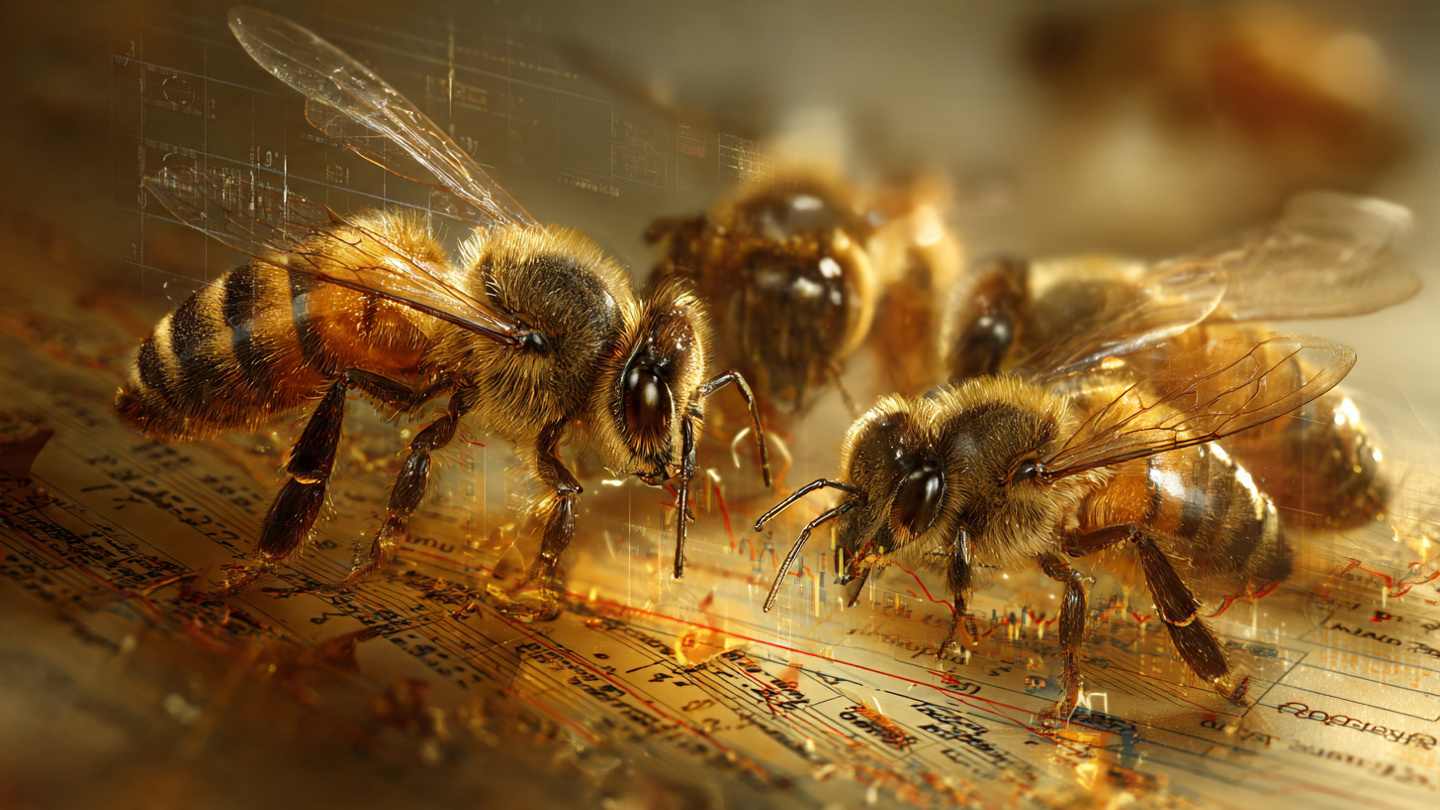
We applied the test to a honeybee colony. It passed on all four prongs. The economic reality was unambiguous.
II. The Investment of Money
The first prong of the Howey test requires an investment of money. Subsequent case law has expanded this element beyond cash payments. In International Brotherhood of Teamsters v. Daniel, 439 U.S. 551 (1979), the Supreme Court acknowledged that “the investment of ‘money’” can encompass the exchange of value, not merely currency.4 Lower courts have recognized contributions of labor, services, and goods as satisfying this element when the contributor parts with something of definable value in exchange for a stake in the enterprise.
A worker honeybee invests everything she has. A foraging bee consumes metabolic energy at rates that Nachtigall et al. quantified in their 1989 study of honeybee flight energetics, published in the Journal of Comparative Physiology B, at roughly 100 milliwatts of metabolic power during sustained flight.5 A typical foraging trip covers 1 to 6 kilometers one way, requiring the expenditure of caloric reserves that the bee accumulated during her previous career as a nurse bee. She carries approximately 40 milligrams of nectar per trip, which she deposits into the hive’s communal storage system.6
This caloric expenditure is not trivial. A worker bee in summer lives approximately five to six weeks, largely because foraging literally wears her to death. Research by Neukirch (1982) demonstrated that worker bees have a finite flight capacity of approximately 800 kilometers before their wing muscles fail irreversibly.7 Each foraging trip, therefore, represents a measurable drawdown of a non-renewable biological capital reserve. If the Department of Labor can assign a dollar value to an hour of human labor for purposes of the Fair Labor Standards Act, the caloric expenditure of a foraging bee is no less quantifiable.
At the colony level, the aggregate investment is substantial. A healthy colony contains 20,000 to 60,000 workers, each making 10 to 12 foraging trips per day during peak season.8 This represents, conservatively, 200,000 to 720,000 individual investment transactions per colony per day. No brokerage in the country processes more orders per capita relative to its workforce.
III. The Common Enterprise
The second Howey prong requires that the investment be made in a common enterprise. Federal circuits have adopted varying formulations of this requirement. Horizontal commonality, favored by the majority of circuits, requires that investors’ funds be pooled and that each investor’s returns depend on the success of the overall venture.9
A honeybee colony is, by any standard the courts have articulated, a common enterprise of extraordinary purity. Every worker deposits her foraged nectar into communal honeycomb cells. The nectar is processed collectively: house bees add enzymes, fan the cells with their wings to reduce moisture content from approximately 70 percent to below 18 percent, and cap the finished honey with beeswax secreted from their own abdominal glands.10 No individual bee retains a private reserve. No individual bee has a segregated account. Every calorie of investment is pooled into a shared storage medium from which all members of the colony draw sustenance.
This pooling arrangement is not optional. A lone worker bee cannot survive. She cannot thermoregulate, cannot defend herself against predators, and cannot store food in sufficient quantities to survive more than a few hours of adverse conditions. Her investment in the common enterprise is not a choice. It is a biological imperative enforced by 80 million years of hymenopteran evolution.11
Vertical commonality, favored by some circuits, requires that the fortunes of investors be tied to the fortunes of the promoter or a third party. In the hive, all fortunes are tied to all other fortunes. When the colony fails, every member dies. When the colony thrives, every member overwinters. The correlation coefficient between individual return and enterprise return is not merely positive. It is 1.0. No pooled investment fund in the history of American finance has achieved this level of commonality. Most actively try to avoid it.
IV. The Reasonable Expectation of Profits
A honeybee colony generates profit with a consistency that would be the envy of any publicly traded company. A healthy colony in the United States produces, on average, 51.7 pounds of surplus honey per year, according to the USDA National Agricultural Statistics Service’s 2024 Honey Report.12 The operative word is “surplus.” This figure represents production above and beyond what the colony consumes for its own maintenance. It is net income.
Total U.S. honey production in 2024 was 134 million pounds, generated by 2.60 million colonies.13 At a weighted average price of approximately $2.72 per pound, as reported by USDA for 2024, the gross value of domestic honey production exceeded $364 million.14 But this figure dramatically understates the colony’s total economic output, because it counts only the honey.
Honeybee pollination contributes more than $14 billion annually to U.S. agricultural output, according to research conducted by Cornell University and cited by the USDA Agricultural Research Service.15 Approximately one-third of all food consumed in America depends directly or indirectly on honeybee pollination. Almonds, apples, blueberries, cherries, cranberries, and melons are among the crops that require managed bee colonies for commercial viability. The almond industry alone rents approximately 2 million colonies each February for California’s almond bloom, at pollination fees ranging from $200 to $300 per colony.16
The expectation of profit is not speculative. It is actuarial. A beekeeper who places a colony in an almond orchard in February and harvests surplus honey in July is executing a diversified investment strategy with two revenue streams, both of which have positive expected values documented across decades of USDA production data. The colony is the fund. The beekeeper is the limited partner. The foragers are the portfolio managers. No Form D has ever been filed.
V. Derived from the Efforts of Others
The fourth prong of the Howey test is where the analysis becomes inescapable. Profits must be derived primarily from the efforts of others. In a honeybee colony, the division of labor is not merely pronounced. It is absolute.
A worker bee progresses through a series of specialized roles determined by age, a phenomenon documented extensively in the entomological literature and known as temporal polyethism. Research by Robinson (1992), published in the Annual Review of Entomology, established the canonical sequence: a worker spends her first three days cleaning cells, then transitions to brood care (nursing) from days 3 to 12, wax production from days 12 to 18, and finally foraging from approximately day 18 until death, which typically occurs around day 35 to 42 in summer.17
At any given moment, therefore, the majority of the colony’s workforce is engaged in activities other than foraging. Nurse bees, wax builders, guards, undertakers, and temperature regulators all contribute to the maintenance of the enterprise but do not directly generate the revenue stream. Their profits come from the foragers. Simultaneously, the foragers depend entirely on the nurses, builders, and processors to raise the next generation, construct the storage infrastructure, and convert raw nectar into shelf-stable honey.
This is a textbook common enterprise in which each participant’s return depends on the specialized efforts of others. A nurse bee cannot eat the brood she tends. A forager cannot process her own nectar into honey while airborne. A wax builder cannot pollinate an almond flower. Each class of worker invests her labor in the collective and receives returns generated by labor she did not perform.
The queen, meanwhile, performs no labor associated with honey production, nectar collection, comb construction, or colony defense. Her sole contribution is reproduction, laying up to 2,000 eggs per day at peak output.18 She is, in securities terms, a passive investor who contributes the initial capital structure (the colony’s workforce) and receives returns in the form of lifelong care, feeding, and protection. Her caloric compensation is royal jelly, a substance produced exclusively by nurse bees and distributed exclusively to her. In any other context, the selective distribution of a premium nutritional product to a single insider who contributes no productive labor would attract the immediate attention of the Division of Enforcement.
VI. The Waggle Dance as Material Non-Public Information
In 1973, Karl von Frisch shared the Nobel Prize in Physiology or Medicine for his discovery that honeybees communicate the location, distance, and quality of food sources through a stereotyped movement pattern known as the waggle dance.19 Von Frisch demonstrated that a returning forager performs a figure-eight dance on the vertical surface of the comb. The angle of the waggle run relative to vertical encodes the direction of the food source relative to the sun. The duration of the waggle run encodes the distance. The vigor and repetition of the dance encode the quality and abundance of the source.20
Subsequent research by Seeley (1995) in The Wisdom of the Hive established that the waggle dance functions as an information-sharing mechanism that directs the colony’s foraging workforce toward the most profitable food sources. Bees that observe the dance fly to the indicated location, assess its profitability, and upon return either recruit additional foragers through their own dances or cease dancing if the source has declined.21 This is a price discovery mechanism. It aggregates decentralized information about resource quality and availability and transmits it to market participants in real time.
Under Regulation Fair Disclosure (Reg FD), adopted by the SEC in 2000, when an issuer or person acting on behalf of an issuer discloses material non-public information to certain securities market professionals or shareholders, it must simultaneously disclose that information to the public.22 The purpose of Reg FD is to prevent selective disclosure that gives certain market participants an informational advantage over others.
The waggle dance violates Reg FD in every particular. A returning forager discloses the location of a high-quality nectar source to the bees present on the dance floor at that moment. She does not notify bees in other sections of the hive. She does not file a Form 8-K. She does not issue a press release. Bees that happen to be cleaning cells on the opposite side of the comb receive no information. They are, in regulatory terms, unsophisticated retail investors excluded from a material disclosure event.
Research by Grüter and Farina (2009), published in Animal Behaviour, found that experienced foragers sometimes ignore the waggle dance entirely and return to previously known food sources, effectively trading on private information while others act on publicly disclosed data.23 This is the behavioral equivalent of a hedge fund manager attending an earnings call and then disregarding it in favor of proprietary channel checks. In the human securities market, this is legal only if the private information was not obtained through a breach of duty. In the hive, the duty runs in all directions simultaneously, and the breach is continuous.
VII. The Swarm as an Unregistered Initial Public Offering
When a honeybee colony reaches sufficient size, typically in late spring, it reproduces through a process called swarming. Approximately half the workers, along with the old queen, leave the hive and establish a new colony elsewhere. The original hive retains the other half of the workforce, raises a new queen from existing larvae, and continues operating as a separate entity.24
In corporate terms, this is a spinoff. The parent entity divides its assets, splits its workforce, and creates a new entity that operates independently. Under Section 5 of the Securities Act of 1933, the offer and sale of securities must be registered with the SEC unless an exemption applies.25 When a colony swarms, it distributes equity interests (proportional claims on future honey production) to a new class of investors (the departing workers) without filing a registration statement. No prospectus is issued. No risk factors are disclosed. The departing swarm has no audited financial statements, no board of directors, and no registered agent for service of process.
Research by Seeley, Visscher, and Passino (2006) documented the swarm’s process for selecting a new nest site. Scout bees evaluate potential cavities, return to the swarm cluster, and perform waggle dances advocating for their preferred location. Through a process of competitive recruitment, the swarm reaches a quorum decision, typically when approximately 80 percent of scouts have converged on a single site.26
This is a shareholder vote conducted without a proxy statement. Rule 14a-9 under the Securities Exchange Act of 1934 prohibits solicitations of proxies containing materially false or misleading statements.27 Scout bees that perform vigorous dances for suboptimal nest sites are making the apian equivalent of a false or misleading proxy solicitation. They may not be acting with scienter. The statute does not require that they be.
VIII. Colony Collapse as Securities Fraud
Between 2006 and 2023, U.S. beekeepers reported annual colony loss rates ranging from 22 percent to 45 percent, according to the Bee Informed Partnership’s annual surveys conducted in conjunction with the USDA.28 In 2025, the USDA Agricultural Research Service identified viruses transmitted by Varroa destructor mites as a primary driver of recent colony collapses.29
In securities law, when an enterprise collapses and investors lose their entire investment, the question is whether the loss resulted from fraud, mismanagement, or unforeseeable circumstances. Colony Collapse Disorder, in which workers abandon the hive leaving behind the queen and immature brood, bears structural similarities to the kind of catastrophic enterprise failure that triggers SEC enforcement.
Consider the factual parallels to SEC v. Madoff. Investors deposited funds into a pooled vehicle. Returns appeared consistent and above market. The underlying assets were insufficient to cover obligations. When confidence broke, the enterprise collapsed rapidly and investors lost everything. In Colony Collapse Disorder, workers deposit caloric investments into a pooled vehicle (the hive), returns appear consistent (honey stores accumulate), the underlying workforce proves insufficient to maintain obligations (Varroa-weakened bees cannot sustain foraging rates), and when the tipping point arrives, the colony collapses within days.
We are not suggesting that a parasitic mite constitutes a securities violation. We are observing that the structural dynamics of colony collapse satisfy every element of the SEC’s enforcement framework for investment scheme failures, and that the Commission has demonstrated no interest in examining whether the Howey test applies to organisms that have been operating pooled investment enterprises since the Eocene epoch, approximately 34 million years before the first human exchanged anything for anything.
IX. Regulatory Exposure
The scale of the violation, if it is one, is considerable. The USDA reported 2.60 million managed honeybee colonies in the United States in 2024.30 Each colony, under the analysis presented here, constitutes an unregistered investment scheme. Section 5 of the Securities Act provides that any person who offers or sells a security without an effective registration statement is subject to civil liability under Section 12(a)(1), which entitles the purchaser to rescission or damages.31 Criminal penalties under Section 24 of the Securities Act include fines of up to $10,000 and imprisonment of up to five years for willful violations.32
At 2.60 million colonies, each operating as a separate unregistered offering, the aggregate penalty exposure at $10,000 per violation is $26 billion. This figure assumes each colony is a single violation, which significantly understates the case: each foraging trip is arguably a separate transaction in an unregistered security, and at 200,000 or more trips per colony per day during peak season, the daily violation count per colony alone exceeds the total number of SEC enforcement actions filed in fiscal year 2025 by a factor of approximately 438.
Add the pollination contracts. When a beekeeper rents colonies to an almond grower for $200 to $300 per colony, the transaction has all the hallmarks of a managed investment product. The grower is investing money. The investment is in a common enterprise (pollination of the grower’s orchard). The profit (a viable almond crop) is expected from the efforts of others (the bees). No registration exemption under Regulation D, Regulation A, or Regulation Crowdfunding has ever been claimed for a pollination contract. The California almond industry alone rents approximately 2 million colonies each February. At $250 per colony, that represents $500 million in annual transactions in what appears, under the Howey analysis, to be an unregistered securities market operating in plain sight in the Central Valley.
X. Conclusion
The Howey test asks four questions. Every honeybee colony in America answers all four affirmatively. Workers invest caloric capital that has quantifiable metabolic value. They invest it in a common enterprise from which no individual can withdraw. They expect, and receive, a return in the form of stored honey and overwintering survival. That return is derived from the specialized efforts of other colony members performing different roles in an obligate division of labor.
The waggle dance is a selective disclosure mechanism that would violate Regulation Fair Disclosure if performed by any entity registered under the Exchange Act. Swarming is a corporate spinoff executed without a registration statement, prospectus, or proxy solicitation that complies with Rule 14a-9. Colony collapse is an enterprise failure with structural parallels to the investment scheme collapses the SEC routinely investigates and prosecutes.
In fiscal year 2025, the Securities and Exchange Commission filed 456 enforcement actions and obtained $17.9 billion in monetary relief. It investigated market manipulation, insider trading, and offering fraud. It did not investigate a single apiary, despite the fact that 2.60 million pooled investment schemes were operating continuously across 48 states, conducting hundreds of thousands of unregistered transactions per day, and selectively disclosing material non-public information through a Nobel Prize-winning communication protocol that the Commission has never reviewed.
Karl von Frisch decoded the waggle dance in the 1940s. The SEC was established in 1934. Both institutions have been operating concurrently for ninety-two years. In that time, the Commission has brought enforcement actions against citrus groves, chinchilla ranches, and cryptocurrency exchanges. It has not brought a single action against an organism that has been running the same investment scheme, without modification or registration, since the late Cretaceous period.
The bees are not going to register voluntarily. They have been operating outside the regulatory framework for approximately 100 million years, and their compliance department consists of guard bees whose enforcement mechanism is a barbed stinger and a willingness to die.
The Commission should consider its options carefully.
Ergo.
Sources
- 15 U.S.C. § 77b(a)(1), Securities Act of 1933, § 2(a)(1) (definition of “security”). law.cornell.edu ↑
- SEC v. W.J. Howey Co., 328 U.S. 293 (1946). supreme.justia.com ↑
- Howey, 328 U.S. at 298–299 (articulating the four-part test for investment contracts). ↑
- International Brotherhood of Teamsters v. Daniel, 439 U.S. 551 (1979). supreme.justia.com ↑
- W. Nachtigall, U. Hanauer-Thieser, and M. Mörz, “Flight of the Honey Bee. VII. Metabolic Power Versus Flight Speed Relation,” Journal of Comparative Physiology B, vol. 158, no. 6, 1989, pp. 729–737 (metabolic power during sustained flight). springer.com ↑
- T.D. Seeley, The Wisdom of the Hive: The Social Physiology of Honey Bee Colonies, Harvard University Press, 1995, pp. 38–42 (nectar load per foraging trip). ↑
- A. Neukirch, “Dependence of the Life Span of the Honeybee (Apis mellifica) upon Flight Performance and Energy Consumption,” Journal of Comparative Physiology B, vol. 146, no. 1, 1982, pp. 35–40. springer.com ↑
- M.L. Winston, The Biology of the Honey Bee, Harvard University Press, 1987, pp. 113–130 (colony population dynamics and foraging rates). ↑
- S.J. Choi, “Common Enterprise Test in Securities Fraud,” in Securities Regulation: Cases and Analysis, 4th ed., Foundation Press, 2015, ch. 2 (discussing horizontal and vertical commonality). ↑
- J.W. White, “Composition of Honey,” in Honey: A Comprehensive Survey, ed. E. Crane, Heinemann, 1975, pp. 157–206 (moisture reduction process and enzymatic conversion). ↑
- B.N. Danforth et al., “The History of Early Bee Diversification Based on Five Genes Plus Morphology,” Proceedings of the National Academy of Sciences, vol. 103, no. 41, 2006, pp. 15118–15123. pubmed.ncbi.nlm.nih.gov ↑
- USDA National Agricultural Statistics Service, “Honey,” March 2025 (2024 production data: 51.7 pounds per colony average yield). nass.usda.gov ↑
- USDA NASS, “Honey,” March 2025 (134 million pounds total production, 2.60 million colonies). ↑
- USDA NASS, “Honey,” March 2025 (weighted average price data for 2024). ↑
- USDA Agricultural Research Service, “Honey Bees and Colony Collapse Disorder,” citing Cornell University research on pollination economic value. ars.usda.gov ↑
- B.R. Sumner and J. Boriss, “Bee-conomics and the Leap in Pollination Fees,” Agricultural and Resource Economics Update, Giannini Foundation of Agricultural Economics, UC Davis, vol. 9, no. 3, 2006. ↑
- G.E. Robinson, “Regulation of Division of Labor in Insect Societies,” Annual Review of Entomology, vol. 37, 1992, pp. 637–665. pubmed.ncbi.nlm.nih.gov ↑
- M.L. Winston, The Biology of the Honey Bee, Harvard University Press, 1987, pp. 55–58 (queen egg-laying rates). ↑
- Nobel Prize in Physiology or Medicine, 1973, jointly awarded to Karl von Frisch, Konrad Lorenz, and Nikolaas Tinbergen. nobelprize.org ↑
- K. von Frisch, The Dance Language and Orientation of Bees, Harvard University Press, 1967 (comprehensive description of the waggle dance communication system). ↑
- T.D. Seeley, The Wisdom of the Hive, Harvard University Press, 1995, pp. 149–173 (dance-based recruitment and foraging allocation). ↑
- Securities and Exchange Commission, “Selective Disclosure and Insider Trading,” Release No. 33-7881, Final Rule, August 15, 2000 (Regulation FD). sec.gov ↑
- C. Grüter and W.M. Farina, “The Honeybee Waggle Dance: Can We Follow the Steps?” Trends in Ecology & Evolution, vol. 24, no. 5, 2009, pp. 242–247. pubmed.ncbi.nlm.nih.gov ↑
- T.D. Seeley, Honeybee Democracy, Princeton University Press, 2010, pp. 1–28 (swarming process and colony reproduction). ↑
- 15 U.S.C. § 77e, Securities Act of 1933, § 5 (registration requirement for offers and sales of securities). law.cornell.edu ↑
- T.D. Seeley, P.K. Visscher, and K.M. Passino, “Group Decision Making in Honey Bee Swarms,” American Scientist, vol. 94, no. 3, 2006, pp. 220–229. ↑
- 17 C.F.R. § 240.14a-9 (prohibiting false or misleading statements in proxy solicitations). law.cornell.edu ↑
- Bee Informed Partnership, “Colony Loss and Management Survey,” annual reports 2006–2023. beeinformed.org ↑
- USDA Agricultural Research Service, “USDA Researchers Find Viruses from Miticide Resistant Parasitic Mites are Cause of Recent Honey Bee Colony Collapses,” 2025. ars.usda.gov ↑
- USDA NASS, “Honey,” March 2025, cited above at note 12. ↑
- 15 U.S.C. § 77l(a)(1), Securities Act of 1933, § 12(a)(1) (civil liability for unregistered offerings). law.cornell.edu ↑
- 15 U.S.C. § 77x, Securities Act of 1933, § 24 (criminal penalties for willful violations). law.cornell.edu ↑