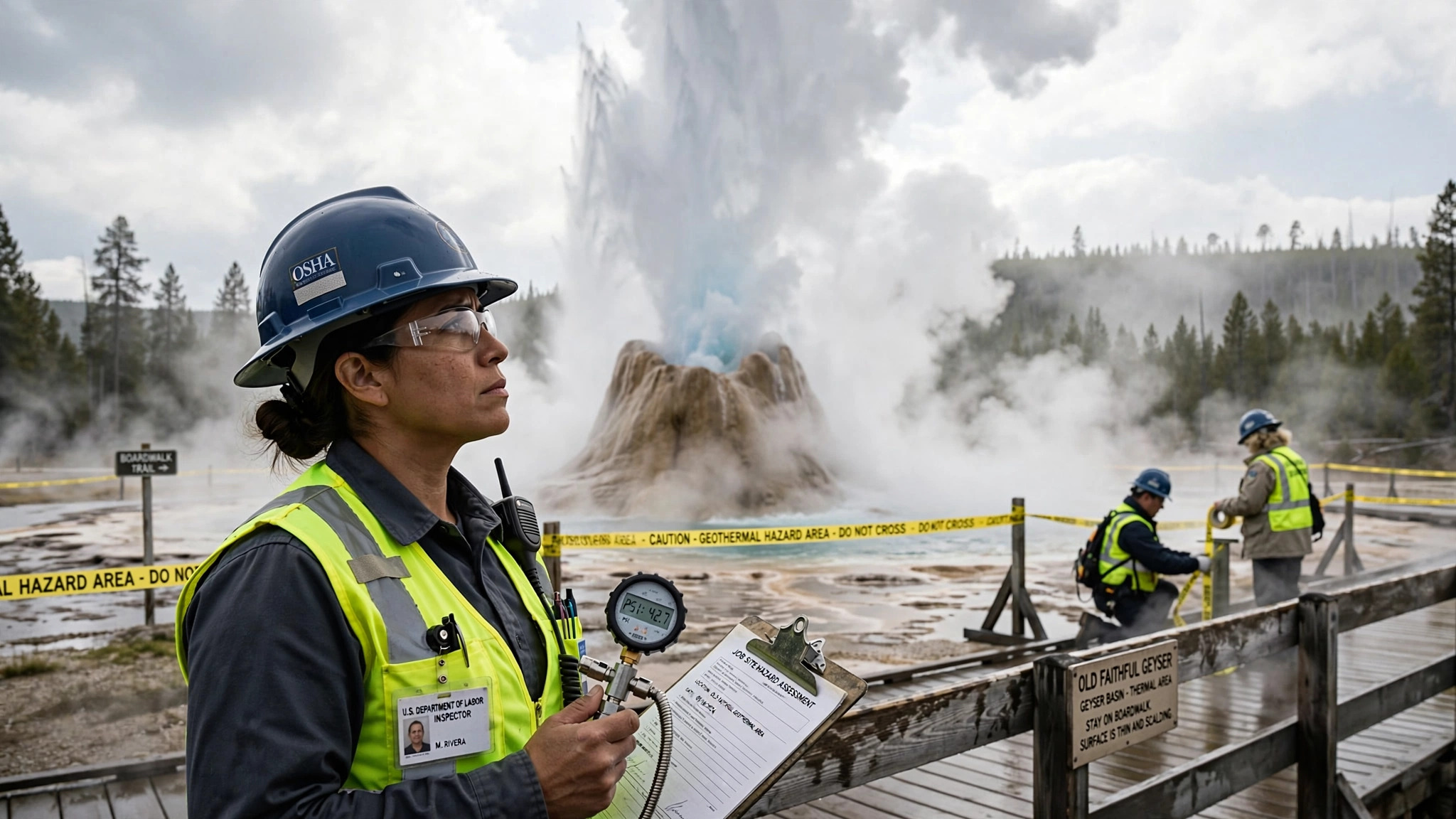
I. The Code
The ASME Boiler and Pressure Vessel Code is the most widely adopted safety standard for pressure-containing equipment in the world. First published in 1914 in response to a series of catastrophic boiler explosions that killed hundreds of workers in the late nineteenth and early twentieth centuries, it has been updated continuously for 112 years. More than 100,000 copies are in use across 100 countries.1
Section VIII of the Code, “Rules for Construction of Pressure Vessels,” provides requirements applicable to the design, fabrication, inspection, testing, and certification of pressure vessels operating at either internal or external pressures exceeding 15 psig. The scope includes vessels made from metallic and nonmetallic materials, used in applications including storage, transport, and processing of fluids. The Code does not specify that the vessel must be manufactured. It does not require that the vessel be commercial in purpose. It specifies operating conditions. If the vessel exceeds 15 psig, Section VIII applies.2
The Occupational Safety and Health Administration has incorporated the ASME BPVC by reference at 29 CFR 1910.169, which mandates that all air receivers and pressure vessels in the workplace be constructed, inspected, and maintained in accordance with the Code.3 Forty-nine of the fifty states have enacted their own boiler and pressure vessel safety laws, nearly all of which adopt the ASME BPVC as the minimum standard and require periodic inspection by a certified inspector holding a National Board commission. The National Board of Boiler and Pressure Vessel Inspectors, founded in 1919, maintains the registry of all jurisdictional pressure vessels and the credentials of all authorized inspectors.4
The system is comprehensive. It is compulsory. It covers every hospital autoclave, every industrial air receiver, every chemical processing tank, and every espresso machine that operates above the 15 psig threshold. It does not, at present, cover any geyser.
II. What Constitutes a Pressure Vessel
The State of Indiana, whose administrative code provides one of the more explicit codifications of the standard definition, defines an unfired pressure vessel as “a closed vessel in which internal pressure is generated from an external source or from an indirect application of heat.”5 The ASME Code applies to any such vessel operating above 15 psig. The definition has three operative elements: (1) a closed vessel, (2) internal pressure, and (3) generation of that pressure by an external heat source or an indirect application of heat.
A geyser satisfies all three.
The U.S. Geological Survey describes the mechanism with precision. Rainwater and snowmelt seep downward through rock layers. Magma below the surface heats the water. The weight of the water column above creates pressure that raises the boiling point of the water at depth. A constriction in the plumbing system prevents the heated water from circulating freely to the surface. Pressure builds. When the pressure exceeds the confining capacity of the constriction, the superheated water flashes to steam and the contents discharge explosively through the vent.6
The subsurface reservoir is a closed vessel. It is enclosed by rock on all sides, with a single constrictive outlet. The internal pressure is generated by an external heat source: magmatic intrusion several kilometers below the surface. The pressure exceeds 15 psig by, as we shall demonstrate, a considerable margin. The mechanism is, in the language of the Indiana administrative code, an indirect application of heat to a closed vessel. In the language of a mechanical engineer, it is a boiler.
III. The Operating Parameters
Section VIII of the ASME BPVC applies to vessels operating at pressures exceeding 15 psig. The regulatory threshold is not high. Fifteen psig is approximately the pressure inside a bicycle tire. It is exceeded by the air compressor tank in a suburban garage. The Code sets the bar at 15 psig because even modest pressurization of a vessel represents a potential energy source capable of catastrophic release.
The operating pressures inside Yellowstone’s geysers are not modest.
Measurements conducted inside the conduit of Old Faithful Geyser by Birch and Kennedy in 1972, and confirmed by subsequent investigations through 1993, recorded maximum water temperatures of 118°C at the deepest accessible level of approximately 21 meters.7 At 21 meters depth, the hydrostatic pressure of the water column alone is approximately 30 psig, already double the ASME regulatory threshold, before accounting for any additional steam pressure generated by the superheated water. Geochemical analysis of silica concentrations by USGS researchers indicates that the deeper reservoir feeding Old Faithful and the other geysers of the Upper Geyser Basin contains water at temperatures of approximately 190 to 210°C.8
At the Norris Geyser Basin, conditions are considerably more extreme. A drill hole approximately 300 meters deep recorded a temperature of 237°C (459°F).9 At that depth, the hydrostatic pressure alone exceeds 400 psig. The saturated steam pressure corresponding to 237°C is approximately 460 psia, or roughly 445 psig. This is not marginally above the regulatory threshold. It exceeds it by a factor of approximately thirty.
For comparison, a standard commercial air compressor tank operates at 150 to 200 psig and requires an ASME stamp, a National Board registration number, a safety relief valve, a pressure gauge, a drain valve, and periodic inspection. Yellowstone’s subsurface reservoirs operate at pressures more than double that of a commercial compressor. They contain no manufactured safety equipment of any kind.
IV. The Safety Equipment Deficit
The ASME BPVC and its state-law implementations mandate specific safety equipment for every jurisdictional pressure vessel. The requirements, drawn from Section VIII Division 1 and from OSHA’s 29 CFR 1910.169, include at minimum: a pressure relief device (either a safety valve or a rupture disc) set to relieve at or below the maximum allowable working pressure; a pressure-indicating gauge readable by the operator; a drain at the lowest point of the vessel for removal of accumulated liquids; and periodic inspection by a commissioned inspector at intervals specified by the jurisdictional authority, typically annually for external inspection and at intervals of two to five years for internal inspection.10
Yellowstone’s geysers have none of these.
They have no pressure relief valves. The only pressure relief mechanism is the eruption itself, which is the pressure vessel equivalent of catastrophic failure. In any industrial setting, an uncontrolled release of pressurized steam and boiling water through a single orifice would be classified as a vessel rupture, and it would trigger an OSHA investigation, a National Board incident report, and probable citations under 29 CFR 1910.169. At Yellowstone, it is a tourist attraction. The National Park Service publishes predicted eruption times on its website. Visitors gather to watch. The gift shop sells postcards.
There are no pressure gauges. The sole method of determining internal conditions is the periodic insertion of thermocouples and pressure transducers by research scientists operating under permits, at intervals measured in years or decades rather than the continuous monitoring required of any industrial vessel above 15 psig.
There are no drain valves. Accumulated water is removed only by eruption or by slow percolation through fractured rock, neither of which constitutes a controlled drainage procedure within the meaning of the Code.
There are no nameplates. No vessel in Yellowstone bears a manufacturer’s data report, a maximum allowable working pressure stamp, a National Board registration number, or an ASME “U” certification mark. In the regulatory vocabulary of the National Board, every geyser in the park is an unregistered, unstamped, uncertified vessel operating without authorization in an occupied area.
V. The Inspection Record
The National Board of Boiler and Pressure Vessel Inspectors was founded in 1919 specifically to ensure uniform inspection and regulation of pressure-containing equipment across state boundaries. Its registry of jurisdictional objects is the definitive database of compliant pressure vessels in North America. As of the most recently available data, approximately nine million unfired pressure vessels were registered in the United States over a twenty-year period alone.11
Yellowstone National Park contains more than 500 active geysers.12 The USGS further identifies more than 10,000 hydrothermal features within the park, including hot springs, mudpots, and fumaroles, many of which operate under pressurized conditions that would trigger jurisdictional oversight if they existed in any other setting. In 2019, a resurvey of just the Upper Geyser Basin alone inventoried 1,350 individual features, more than double the 670 documented in the previous survey cycle.13
The National Board has not inspected any of them. Not one geyser in Yellowstone has been subjected to an external inspection, an internal inspection, a hydrostatic test, or an operational fitness assessment at any point in the 154 years since the park was established by the Yellowstone National Park Protection Act of 1872. The total number of commissioned inspectors who have examined a geyser in any American jurisdiction is zero. The total number of National Board violation reports filed against a hydrothermal feature is zero. The total number of inspection hours devoted to the 500 active pressure vessels in Yellowstone, across 112 years of ASME Code existence, is zero.
For comparison, the Nuclear Regulatory Commission devotes approximately 5,960 direct inspection hours per year to each of its 94 licensed nuclear power reactors.14 Yellowstone’s 500 active vessels have received, collectively, fewer inspection hours than a single boiler in a single drycleaner in a single year.
VI. The Casualty Record
The National Board of Boiler and Pressure Vessel Inspectors compiled accident statistics for pressure vessel incidents over an eighteen-year period from 1971 to 1988. The data showed an average of 356 accidents per year, resulting in an average of 92 injuries and 18 fatalities annually across the entire regulated pressure vessel fleet in the United States. These numbers cover millions of vessels. The per-vessel casualty rate is exceedingly small, a testament to the effectiveness of the inspection and certification regime.15
Yellowstone’s unregulated fleet tells a different story.
At least twenty-two people have been killed by the park’s hydrothermal features since its establishment. Hundreds more have been injured, suffering second- and third-degree burns from contact with superheated water and steam. These injuries include falls through thin crust into subsurface reservoirs, direct contact with erupted water, and exposure to sudden hydrothermal explosions that have propelled rocks weighing up to 100 pounds across boardwalk areas.16 In June 2016, a visitor who left the designated boardwalk in the Norris Geyser Basin fell into a hot spring where the water exceeded 100°C. His body was completely dissolved by the acidic, superheated water before rescue workers could recover it.17
The USGS has formally identified the park’s hydrothermal features as “Yellowstone’s gravest threat to visitors,” noting that thermal injuries outnumber bear attacks by a factor of nearly three and bison attacks by a factor of more than ten.18
In any industrial context, a facility operating 500 pressure vessels with no safety equipment, no inspections, and a documented history of fatal incidents would be subject to immediate shutdown, criminal referral, and penalties under both federal OSHA regulations and state boiler inspection laws. An operator who suffered twenty-two fatalities and hundreds of injuries from uncontrolled pressure releases would not be permitted to continue operations. An operator who published the predicted times of those uncontrolled pressure releases on a public website and invited four million visitors per year to observe them would be the subject of a congressional inquiry.
The National Park Service does all of this. It receives approximately $350 million in annual appropriations to do so.
VII. The Largest Unregistered Pressure Vessel in the World
Steamboat Geyser, located in the Norris Geyser Basin, is the tallest active geyser on Earth. Its major eruptions propel water more than 300 feet into the air, with some eruptions measured at 380 feet, or 116 meters.19 Between 2018 and 2020, it produced 128 major eruptions, each lasting from three to over forty minutes, followed by hours of sustained steam discharge. USGS measurements during this period documented individual eruptions discharging between 134 and 538 cubic meters of water, equivalent to 35,400 to 142,125 gallons per event.20
To place this in regulated context: the largest industrial autoclave that produced a documented catastrophic failure in the National Board’s records was twelve feet in diameter by eighty feet long. Its door failure leveled a concrete block manufacturing plant, lifted the roof ten feet into the air, and propelled steel plates and concrete blocks 150 feet from the site, killing one operator and critically injuring three others.21
Steamboat Geyser propels 142,000 gallons of superheated water 380 feet vertically. Its reservoir is estimated to extend to significantly greater depth than the reservoirs of other Yellowstone geysers, storing water under correspondingly higher pressure. Research published in the Proceedings of the National Academy of Sciences in 2021 found that Steamboat’s extreme eruption height is directly attributable to the depth of its subsurface “bubble trap,” the shallow cavity that supplies water to eruptions. Greater depth means greater stored energy. Greater stored energy means greater destructive potential upon release.22
The National Board has given Steamboat Geyser no registration number. No inspector has assessed the integrity of its rock-walled containment structure. No engineer has calculated its maximum allowable working pressure. The geyser’s eruption intervals range from three days to fifty years, meaning the vessel operates on a cycle that no industrial inspection schedule could accommodate and no safety management system has attempted to address. The operator’s published position is that major eruptions are “entirely unpredictable.”
In the lexicon of the ASME Code, an unpredictable pressure release from an uninspected vessel with no safety equipment is not a tourist attraction. It is an accident.
VIII. The Operator
Under every state boiler and pressure vessel law, the operator of a pressure vessel bears responsibility for maintaining the vessel in compliance with applicable codes, obtaining required registrations and certificates of inspection, ensuring that safety equipment is functional, and submitting to periodic inspection by a commissioned inspector. The operator may be a corporation, a partnership, or a government agency. The exemption for vessels owned by the federal government, present in some state statutes, applies to federal agencies operating on their own property. It does not exempt those agencies from the duty of care owed to the public, nor from OSHA’s general duty clause, which requires every employer to furnish a workplace “free from recognized hazards that are causing or are likely to cause death or serious physical harm to his employees.”23
The National Park Service is the operator of every geyser in Yellowstone National Park. It employs approximately 800 permanent and seasonal workers who labor in direct proximity to the park’s hydrothermal features. It maintains boardwalks and viewing platforms positioned within the blast radius of actively erupting pressure vessels. It sells tickets and collects entrance fees from visitors who stand within meters of vents discharging steam at temperatures exceeding 177°C.
Yellowstone concession employees have been among the casualties. The park’s own records document fatalities and severe burns sustained by workers, including three park employees who jumped into a hot spring in the dark, thinking it was a small stream. One died and two were severely burned.24 Under OSHA’s general duty clause, an employer who places workers in proximity to unregistered, uninspected pressure vessels operating at hundreds of psig without safety equipment is in violation of federal law. The fact that the vessels were formed by volcanism rather than fabrication is not an enumerated defense.
The OSHA general duty clause does not contain a geological exception. We checked.
IX. The Scale of Noncompliance
The numbers, assembled in one place, are as follows.
Active geysers in Yellowstone National Park: more than 500, out of 1,283 recorded as having erupted in the park’s history.25 Total hydrothermal features in the park: more than 10,000. Operating temperatures: up to 237°C. Operating pressures: up to approximately 445 psig, or roughly thirty times the ASME regulatory threshold. Safety relief valves installed: zero. Pressure gauges installed: zero. Rupture discs installed: zero. Drain valves installed: zero. ASME certification stamps affixed: zero. National Board registration numbers assigned: zero. Commissioned inspectors who have conducted an inspection: zero. Total inspection hours across 500 active vessels over 154 years: zero. Fatalities: at least twenty-two. Injuries: hundreds. OSHA citations issued: zero. National Board incident reports filed: zero.
For comparison, an espresso machine in a coffee shop in any of forty-nine states requires registration, periodic inspection, and a safety relief valve if it operates above 15 psig. A yoga studio’s steam room requires compliance. A tattoo parlor’s autoclave requires compliance. A bouncy castle’s air compressor requires compliance. The regulatory apparatus of the United States has determined that it is unacceptable for a child’s inflatable play structure to be powered by an uncertified air receiver, but acceptable for four million annual visitors to stand beside vessels discharging 142,000 gallons of superheated water at 380 feet without so much as a gauge to read.
X. Conclusion
The ASME Boiler and Pressure Vessel Code does not exempt vessels formed by geological processes. Section VIII’s scope provision specifies operating conditions, not manufacturing methods. The Code was written to protect human life from the catastrophic release of pressurized fluids. The mechanism by which the vessel was formed is immaterial to the physics of that release. A rock chamber filled with superheated water at 445 psig and 237°C will produce the same injuries upon failure as a steel chamber at the same conditions. The Code understands this. Its drafters understood this. The question is whether anyone else does.
Five hundred active pressure vessels operate continuously in a facility visited by four million people per year. The vessels have no safety equipment. They have never been inspected. They have killed at least twenty-two people and injured hundreds more. The operator publishes predictions of when the next uncontrolled pressure release will occur and invites the public to watch. The regulatory apparatus that requires a $50 certificate of inspection for a laundromat’s steam boiler has not taken notice.
The ASME Boiler and Pressure Vessel Code has been in continuous publication since 1914. Yellowstone’s geysers have been in continuous operation for approximately 640,000 years, since the last major caldera-forming eruption created the hydrothermal system that powers them. The Code has had 112 years to reach Wyoming. Wyoming is in the same country as the ASME headquarters. The distance is approximately 1,900 miles. The Code has not yet arrived.
Ergo.
Sources
- American Society of Mechanical Engineers, “BPVC Section VIII Rules for Construction of Pressure Vessels Division 1,” 2025 edition. asme.org ↑
- ASME BPVC Section VIII, Division 1, Product Scope: “This Division of Section VIII provides requirements applicable to the design, fabrication, inspection, testing, and certification of pressure vessels operating at either internal or external pressures exceeding 15 psig.” asme.org ↑
- 29 CFR 1910.169, “Air receivers,” incorporating ASME BPVC Section VIII by reference. See also OSHA Standards for Pressure Vessels. osha.gov ↑
- National Board of Boiler and Pressure Vessel Inspectors, “About the National Board.” Founded 1919. nationalboard.org ↑
- 675 IAC 30-4-50, State of Indiana Administrative Code: “‘Unfired pressure vessel’ means a closed vessel in which internal pressure is generated from an external source or from an indirect application of heat.” law.cornell.edu ↑
- U.S. Geological Survey and National Park Service, “Hydrothermal Features,” Yellowstone National Park. nps.gov ↑
- S.W. Kieffer, “Model for the eruption of the Old Faithful geyser, Yellowstone National Park,” GSA Today, reporting data from Birch and Kennedy (1972) and Hutchinson et al. (1997), peak bottom temperature of 118°C at ~21 m depth. geosociety.org ↑
- P. Dobson et al., “Temporal variations of geyser water chemistry in the Upper Geyser Basin, Yellowstone National Park, USA,” Journal of Volcanology and Geothermal Research. SiO2 geothermometry indicates reservoir temperatures of ~190 to 210°C. pubs.usgs.gov ↑
- R. Fournier et al., as reported by Live Science: “The hottest temperature, recorded in Norris Geyser basin, was taken in an approximately 1,000-foot-deep (300 m) drill hole and was a scalding 459 degrees F (237 degrees C).” livescience.com ↑
- 29 CFR 1910.169(a)(2) and 1910.169(b); ASME BPVC Section VIII, Division 1; see also state boiler and pressure vessel inspection laws adopting ASME standards (Virginia: 16VAC25-50). law.lis.virginia.gov ↑
- National Board of Boiler and Pressure Vessel Inspectors, accident and registration statistics: “Approximately 9,021,900 unfired pressure vessels have been registered in the United States in the past 20 years (1967–1987).” nationalboard.org ↑
- National Park Service, “Hydrothermal Features,” Yellowstone: “Yellowstone is home to more than 10,000 hydrothermal features, including more than 500 geysers. That’s about half of the world’s geysers.” nps.gov ↑
- U.S. Geological Survey, “Just how many thermal features are there in Yellowstone?,” Yellowstone Caldera Chronicles, 2019. usgs.gov ↑
- U.S. Nuclear Regulatory Commission, “Backgrounder on NRC Inspections,” Office of Public Affairs. The NRC devotes approximately 6,000 direct inspection hours per year per operating reactor. nrc.gov ↑
- National Board of Boiler and Pressure Vessel Inspectors, Pressure Vessel Accident Statistics (18 years, 1971–1988): Average 356 accidents/year, 92 injuries/year, 18 fatalities/year. nationalboard.org ↑
- Outside Online, “Yellowstone’s Hot Springs Are the Most Dangerous Part of the Park,” 2024, reporting at least 22 deaths and hundreds of injuries, including a 2024 hydrothermal explosion that propelled rocks up to three feet across. outsideonline.com ↑
- Discover Magazine, “Yellowstone Park: America’s Cherished Cauldron of Death,” 2016, describing the June 2016 fatality in Norris Geyser Basin. discovermagazine.com ↑
- U.S. Geological Survey, “Yellowstone’s gravest threat to visitors (it’s not what you might think),” Yellowstone Caldera Chronicles. usgs.gov ↑
- National Park Service, “Steamboat Geyser,” Yellowstone National Park: “Its major eruptions shoot water more than 300 feet (91 m).” USGS reports eruptions reaching 380 feet (116 m). nps.gov ↑
- U.S. Geological Survey, “How much water erupts from Old Faithful Geyser?,” reporting Steamboat eruption volumes of 134 to 538 cubic meters (35,400 to 142,125 gallons) during 2018–2020. usgs.gov ↑
- National Board of Boiler and Pressure Vessel Inspectors, case report: 12-foot-diameter by 80-foot-long autoclave door failure at a concrete block manufacturing plant. Roof lifted 10 feet, one operator killed, three critically injured. nationalboard.org ↑
- M.H. Reed et al., “The 2018 reawakening and eruption dynamics of Steamboat Geyser, the world’s tallest active geyser,” Proceedings of the National Academy of Sciences, vol. 118, no. 2, 2021. pnas.org ↑
- 29 U.S.C. § 654(a)(1), the “General Duty Clause” of the Occupational Safety and Health Act of 1970: “Each employer shall furnish to each of his employees employment and a place of employment which are free from recognized hazards that are causing or are likely to cause death or serious physical harm to his employees.” law.cornell.edu ↑
- L. Whittlesey, Death in Yellowstone: Accidents and Foolhardiness in the First National Park, 2nd ed., Roberts Rinehart, 2014; as cited by yellowstonepark.com and Discover Magazine. yellowstonepark.com ↑
- National Park Service, “Geysers & Hot Springs,” Yellowstone: “In 2011, it was determined that 1,283 geysers have been recorded as erupting in Yellowstone.” nps.gov ↑