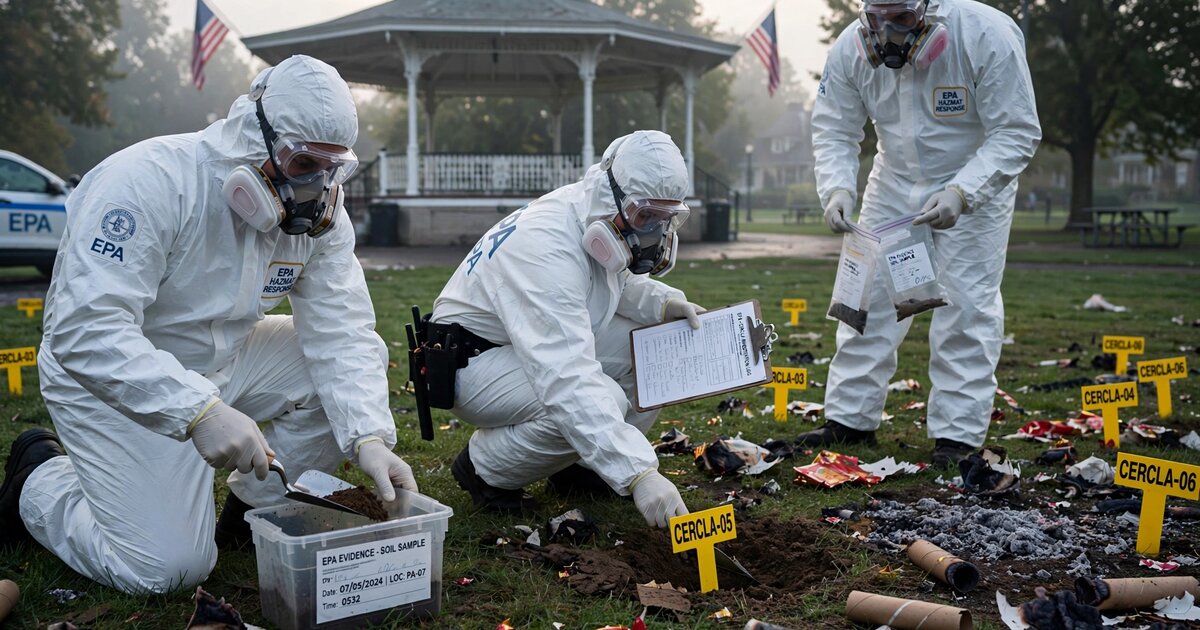
I. The Statutory Framework
The Comprehensive Environmental Response, Compensation, and Liability Act of 1980 (CERCLA), codified at 42 U.S.C. § 9601 et seq. and commonly known as Superfund, was enacted on December 11, 1980, to address the problem of uncontrolled releases of hazardous substances into the environment.1 Congress found that existing regulatory authorities were insufficient to respond to the contamination caused by hazardous waste disposal practices, and it created a comprehensive liability regime to ensure that the costs of cleanup would be borne by the parties responsible for the contamination, not the taxpayers.
The statute’s definitions are expansive by design. Section 101(22), codified at 42 U.S.C. § 9601(22), defines “release” as “any spilling, leaking, pumping, pouring, emitting, emptying, discharging, injecting, escaping, leaching, dumping, or disposing into the environment.”2 The definition contains twelve verbs. Congress did not use one or two and rely on judicial interpretation to fill the gaps. It deployed twelve, connected by “or,” to ensure that virtually every conceivable pathway by which a hazardous substance might enter the environment would fall within the statute’s reach.
Section 101(14) defines “hazardous substance” by incorporating the lists maintained under five other federal environmental statutes: the Clean Water Act, the Clean Air Act, the Resource Conservation and Recovery Act, the Toxic Substances Control Act, and CERCLA’s own authority under Section 102(a).3 There are currently approximately 800 designated CERCLA hazardous substances, catalogued in Table 302.4 of 40 CFR Part 302, each assigned a reportable quantity (RQ) that triggers the notification obligations of Section 103.4
Section 103(a), codified at 42 U.S.C. § 9603(a), requires “any person in charge of a vessel or an offshore or an onshore facility” to notify the National Response Center “as soon as he has knowledge of any release (other than a federally permitted release) of a hazardous substance” in quantities equal to or exceeding the applicable reportable quantity.5 Failure to notify is a criminal offense, punishable by fine or imprisonment of not more than three years, or both, under Section 103(b).6
Section 107(a) establishes strict, joint and several liability for four categories of “potentially responsible parties” (PRPs): current owners and operators of a facility, past owners and operators at the time of disposal, persons who arranged for disposal or treatment of hazardous substances, and transporters who selected the site of disposal.7 Liability under Section 107 does not require negligence, intent, or knowledge. It is strict. It attaches to any party that falls within the statutory categories, regardless of whether the release was legal, customary, or celebrated with national pride.
The question is not whether Congress intended CERCLA to reach releases of hazardous substances into the air, soil, and water. The question is whether a release that occurs in the dark, accompanied by music and applause, and attended by a million spectators, is somehow exempted from the statute that reaches every other release in America. It is not.
II. The Chemical Identification
A firework is a pyrotechnic device that functions by the rapid exothermic decomposition of metal-salt oxidizer mixtures. The colors that audiences admire are not produced by light filters, colored paper, or digital effects. They are produced by the excitation of metal atoms to specific electron energy states, followed by the emission of photons at characteristic wavelengths as those atoms return to their ground states. Every color in a fireworks display is the visible evidence of a metal being combusted and released into the environment.8
Barium compounds produce green. Barium chlorate (Ba(ClO3)2) and barium nitrate (Ba(NO3)2) are the standard green colorants. Barium cyanide is listed as a CERCLA hazardous substance at 40 CFR 302.4, with a reportable quantity of 10 pounds. Barium is also listed as a Clean Water Act toxic pollutant under 40 CFR 401.15.9
Strontium compounds produce red. Strontium carbonate (SrCO3) and strontium nitrate (Sr(NO3)2) are burned to generate the deep red that dominates patriotic displays. Strontium chromate is listed as a CERCLA hazardous substance with a reportable quantity of 10 pounds.10
Copper compounds produce blue. Copper acetoarsenite (Paris Green) and copper chloride generate the blue hues. Copper is listed as a Clean Water Act toxic pollutant under 40 CFR 401.15, designated as a CERCLA hazardous substance under Section 101(14), with a reportable quantity of 5,000 pounds for elemental copper.11
Antimony trisulfide (Sb2S3) serves as a fuel and flash-powder ingredient. Antimony is listed as a Clean Water Act toxic pollutant under 40 CFR 401.15 and designated as a CERCLA hazardous substance. The reportable quantity for antimony compounds is 5,000 pounds.12
Lead compounds were historically used for glittery effects and remain present in some formulations, particularly imported consumer fireworks. Lead is listed at 40 CFR 302.4 with a reportable quantity of 10 pounds for most lead compounds.13
Potassium perchlorate (KClO4) is the primary oxidizer in virtually all modern firework compositions. It provides the oxygen that drives the combustion of the metal fuels. The EPA has documented perchlorate as a contaminant of drinking water supplies, awarded $2.5 million in research funding to Texas Tech University to study perchlorate contamination from fireworks events near drinking water sources, and issued a health advisory for perchlorate in drinking water at 56 micrograms per liter.14
In addition to these primary colorants, fireworks contain aluminum (white/silver effects), magnesium (white brilliance), sulfur (propellant), carbon (black powder), iron filings (gold sparks), titanium (silver sparks), and zinc (smoke effects). A peer-reviewed study published in Atmospheric Environment identified aluminum, barium, copper, strontium, antimony, lead, magnesium, and potassium at “substantially elevated levels” in the air during fireworks events.15
These are not trace contaminants incidentally present in an otherwise benign product. They are the product. The green is barium. The red is strontium. The blue is copper. The flash is antimony. The function of a firework is to combust CERCLA hazardous substances and disperse them into the atmosphere in a pattern that the audience finds aesthetically pleasing. The aesthetic pleasure does not affect the chemical identity. A release of barium is a release of barium whether it occurs at a chemical plant in New Jersey or above the National Mall on the Fourth of July.
III. The Release Documentation
The peer-reviewed literature on fireworks contamination is not thin. It is not emerging. It is voluminous, consistent, and damning by the statute’s own standards.
A comprehensive review published in the Bulletin of Environmental Contamination and Toxicology in 2023 surveyed decades of research and concluded that fireworks deposit “a range of heavy metals into soil, air and water, sometimes in large amounts,” that these metals “can be inhalable and therefore an immediate health risk to people,” and that they “can also bioaccumulate” in organisms ranging from soil bacteria to mammals.16
Moreno et al. (2007, 2010) documented that metal concentrations in air samples collected during firework events in Spain showed barium levels up to 12 times background, strontium up to 120 times background, copper up to 6 times background, and lead up to 8 times background.17 These are not marginal exceedances. They are order-of-magnitude departures from ambient conditions, documented by atmospheric scientists using standard particulate matter collection protocols.
Sijimol and Mohan (2014) reviewed the environmental impacts of perchlorate from fireworks and documented that perchlorate concentrations in surface water near firework display sites exceeded the EPA’s health reference level by factors of 24 to 1,000 in the hours and days following displays.18 The EPA itself acknowledged the contamination risk by awarding $2,499,583 in research grant funding to Texas Tech University “for research on perchlorate contamination after fireworks events near water sources,” stating that the research would “provide a better scientific understanding of the magnitude and timing of perchlorate after fireworks events and enable states and utilities to determine whether actions may be needed to reduce exposure via drinking water.”19
The agency is funding research into the contamination. It is not funding enforcement of the statute that prohibits unreported releases of the contaminants. The research and the enforcement exist in parallel regulatory universes that do not communicate.
A 2020 study by Rindelaub et al. in Propellants, Explosives, Pyrotechnics measured the fallout from a professional fireworks display and found that surface soil samples collected at the detonation site contained barium at concentrations 40 times above background, strontium at 25 times above background, and copper at 10 times above background.20 These concentrations persisted for days. They did not vanish at the speed of the applause.
Under CERCLA Section 101(22), each of these documented releases constitutes a “release” of a hazardous substance. The barium was emitted. The strontium was discharged. The copper was disposed. The perchlorate was leached. Each verb in the statute’s twelve-verb definition describes exactly what the peer-reviewed literature has documented the fireworks doing. Congress did not draft the definition with fireworks in mind. The fireworks fit the definition anyway.
IV. The Air Quality Record
In 2015, Seidel and Birnbaum published a landmark study in Atmospheric Chemistry and Physics analyzing hourly PM2.5 data from 315 EPA air quality monitoring stations across the United States on and around the Fourth of July.21 Their findings were unambiguous: the average concentration of fine particulate matter across all 315 stations increased by 42 percent in the hours following fireworks displays on July 4th. The highest concentrations occurred in the 9 p.m. to 10 p.m. hour, precisely when the bulk of professional displays are fired. In some locations, PM2.5 concentrations reached 370 percent of the pre-display baseline. Elevated concentrations persisted until noon on July 5th at multiple stations.
The EPA’s National Ambient Air Quality Standard (NAAQS) for PM2.5 sets a 24-hour average of 35 micrograms per cubic meter (μg/m³) and an annual average of 9 μg/m³, both designed to protect public health with an adequate margin of safety.22 Joly et al. (2010) documented hourly PM2.5 concentrations near firework plumes approaching 10,000 μg/m³—approximately 286 times the 24-hour NAAQS standard.23
This is not speculative air quality modeling. This is measured data from the EPA’s own monitoring network, published in peer-reviewed journals, and replicated across multiple years and hundreds of monitoring locations. The agency that maintains the monitors has the data. The agency that administers CERCLA has the data. They are the same agency. The data shows a 42 percent nationwide increase in hazardous particulate matter on a single, predictable night each year, caused by a single, identifiable activity. No enforcement action has been taken. No preliminary assessment has been initiated. No site inspection has been conducted.
For context, the EPA has placed facilities on the National Priorities List for contamination documented at lower concentrations than those routinely measured after a fireworks display. The Tar Creek Superfund site in Ottawa County, Oklahoma, was listed in part because of elevated concentrations of lead, cadmium, and zinc in surface soil and water.24 The concentrations documented at fireworks display sites for barium, strontium, and copper meet or exceed the threshold factors that triggered investigation at Tar Creek. The difference is that Tar Creek was a lead and zinc mining operation. Fireworks displays are fun.
V. The Reporting Failure
Section 103(a) of CERCLA requires that “any person in charge of a vessel or an offshore or an onshore facility” notify the National Response Center (NRC) “as soon as he has knowledge of any release (other than a federally permitted release) of a hazardous substance from such vessel or facility in quantities equal to or greater than those determined pursuant to section 102.”25 The NRC operates a 24-hour hotline at 1-800-424-8802, staffed continuously, precisely for this purpose.
The reportable quantity for barium compounds under 40 CFR 302.4 is 10 pounds. A large professional fireworks display deploys between 5,000 and 20,000 shells, each containing metal-salt compositions measured in grams to ounces. A 20,000-shell display launching shells with an average barium chlorate content of 15 to 50 grams per shell discharges between 660 and 2,200 pounds of barium compounds into the atmosphere in a single evening.26 The reportable quantity of 10 pounds is exceeded by a factor of 66 to 220. And that accounts for barium alone. Strontium, copper, and antimony are released simultaneously, each with its own reportable quantity, each independently triggering the notification requirement.
CERCLA was enacted on December 11, 1980. Since that date, approximately 45 Independence Day celebrations have occurred. At 16,000 professional displays per year, this represents approximately 720,000 individual release events, each involving the emission, discharge, and disposal of multiple CERCLA hazardous substances in quantities exceeding their respective reportable quantities. The NRC has received zero notifications from fireworks display operators for any of these 720,000 events.27
Under Section 103(b), failure to notify is a criminal offense. The penalty structure provides for fines and imprisonment of not more than three years for a first offense. A second conviction carries imprisonment of not more than five years. At 16,000 displays per year and 45 years of noncompliance, the aggregate criminal exposure of the American pyrotechnics industry under Section 103(b) is approximately 2.16 million years of potential imprisonment, assuming a single responsible person per display. If each display involves an average crew of eight pyrotechnicians, the figure rises to 17.28 million years. This exceeds the total duration of human civilization by a factor of approximately 3,456.
VI. The Potentially Responsible Party Problem
CERCLA Section 107(a) establishes four categories of potentially responsible parties (PRPs), each subject to strict, joint and several liability for the costs of response actions at contaminated sites.28 The liability framework, as interpreted by the courts over four decades, is intentionally broad and intentionally punitive.
The current owner or operator of a facility where hazardous substances have been released is liable under Section 107(a)(1). For a municipal fireworks display conducted in a public park, the current owner is typically the city, county, or park district. The operator is the pyrotechnics company hired to execute the display. Both are PRPs. The municipality that commissioned the display to celebrate the nation’s independence is jointly and severally liable for the cleanup of the hazardous substances it hired someone to release.
The person who arranged for disposal or treatment of hazardous substances is liable under Section 107(a)(3). The municipality or event organizer that contracted with the pyrotechnics company arranged for the disposal of barium, strontium, copper, antimony, and perchlorate into the environment. It specified the date, the time, the location, and in many cases the color palette. Arranging for the disposal of hazardous substances in a sequence that produces a smiley face in the sky does not affect the arranger’s statutory liability.
The transporter who selected the site of disposal is liable under Section 107(a)(4). The pyrotechnics company transports the fireworks—classified as 1.3G or 1.4G explosives under Department of Transportation regulations—to the display site, which it has selected or agreed to. Under the Federal Motor Carrier Safety Administration’s own exemption program, the American Pyrotechnics Association has obtained an annual exemption from the 14-hour driving rule for its member companies during the Independence Day period, specifically because the transport schedule is so compressed.29 The transporters who deliver the hazardous substances to the point of release, under an exemption that allows them to drive longer to make more deliveries, are PRPs under Section 107(a)(4).
The total PRP population is staggering. Sixteen thousand display operators, sixteen thousand municipal or private event organizers, an unknown number of fireworks manufacturers and distributors, and the approximately 51 member companies of the American Pyrotechnics Association who transport the materials under federal exemption. Each is jointly and severally liable. Each has been jointly and severally liable since 1980. None has been named in a CERCLA enforcement action.
VII. The Consumer Dimension
Professional displays account for approximately 10 percent of total U.S. fireworks consumption by weight. The remaining 90 percent is consumer fireworks—1.4G classified devices purchased by individuals and detonated in backyards, driveways, cul-de-sacs, and parking lots across the country.30
Americans purchased approximately 461.7 million pounds of fireworks in 2022, according to data compiled by the American Pyrotechnics Association from U.S. International Trade Commission import records.31 The consumer segment generated $2.3 billion in revenue. The display segment added $400 million. The American Lung Association estimates that nearly 300 million pounds of fireworks are discharged into the atmosphere annually.32
Every consumer who lights a Roman candle containing barium chlorate in their backyard is, under the statute’s terms, a person in charge of an onshore facility who has released a hazardous substance into the environment. The backyard is the facility. The Roman candle is the source. The green spark is the barium. The homeowner is the PRP. Section 103(a) requires this person to call 1-800-424-8802 before the smoke clears.
Approximately 47 states now permit consumer fireworks use in some form. Only Massachusetts, New Jersey, and Delaware maintain complete prohibitions on all consumer fireworks.33 In the 47 permitting states, tens of millions of individual release events occur in a single evening, each conducted by a homeowner who has never heard of the National Response Center and would not call it if they had. The NRC staffs approximately 20 operators during peak hours. On the night of July 4th, the number of reportable releases occurring simultaneously across the country exceeds the NRC’s total call capacity by a factor of approximately 500,000.
VIII. The Remediation Problem
When the EPA determines that a release of hazardous substances has occurred and that a response action is necessary, CERCLA Section 104 authorizes the agency to conduct removal actions (short-term cleanups) and remedial actions (long-term cleanups) to address the contamination.34 The agency may also place the site on the National Priorities List (NPL) under Section 105, triggering a multi-phase investigation and remediation process that averages 12 to 13 years per site at a mean cost of approximately $55 million.35
If each of the 16,000 annual professional display sites were placed on the NPL, the total number of NPL sites would increase from approximately 1,340 to 17,340 in a single year.36 At $55 million per site, the aggregate remediation cost would be $880 billion per year for professional displays alone. Adding the tens of millions of consumer backyard sites at even a modest per-site cost would produce a figure that exceeds the federal government’s total annual discretionary spending.
The EPA’s Superfund program budget for fiscal year 2025 is approximately $3.7 billion, inclusive of the restored Superfund excise taxes.37 This budget currently supports cleanup activities at approximately 870 sites with enforcement agreements valued at approximately $25 billion in estimated cleanup costs.38 The annual addition of 16,000 fireworks sites would exceed the program’s entire active caseload by a factor of 18 and its annual budget by a factor of 238.
The remediation itself presents novel challenges. At a conventional Superfund site—a former smelter, a landfill, a chemical manufacturing plant—the contamination is concentrated in a defined area. Soil can be excavated. Groundwater can be pumped and treated. Drums can be removed. At a fireworks display site, the contamination has been intentionally dispersed across the maximum possible area by the maximum possible mechanism: detonation at altitude. The barium that colors a shell green at 800 feet above ground level does not remain at 800 feet. It descends, carried by wind and gravity, across an area measured in acres. The fallout zone of a professional fireworks display is not a point source. It is an area source with a footprint that varies by shell size, altitude, wind speed, and the number of shells fired. Remediation of the fallout zone would require the excavation and treatment of topsoil across hundreds of acres per display. At 16,000 displays per year, the total area requiring remediation exceeds the total land area of Rhode Island.
IX. The Semiquincentennial Problem
On the evening of July 4, 2026, the United States will celebrate the 250th anniversary of the Declaration of Independence. The centerpiece of the celebration is a fireworks display on the National Mall in Washington, D.C., organized to set a Guinness World Record by launching approximately 850,000 shells from 10 sites in 40 minutes.39 This is approximately ten times the size of the Macy’s Fourth of July display in New York City and larger than the current world record of 810,904 fireworks set at a 2016 New Year’s countdown in the Philippines.
The National Park Service, which manages the National Mall, has conducted internal air quality modeling for the event. Draft documents obtained by the Washington Post project that PM2.5 concentrations at the Mall will reach 600 to 1,200 μg/m³ in the most likely scenario and exceed 2,000 μg/m³ in the worst case.40 The EPA’s Air Quality Index classifies anything above 250 μg/m³ as “Hazardous”—the highest category, at which “everyone may experience more serious health effects.” The projected concentration of 2,000 μg/m³ is eight times the threshold for “Hazardous.” The NPS’s own internal guidance advises attendees to wear N95 masks and to “remain indoors as much as possible during and after the show.”41
The barium load of an 850,000-shell display is extraordinary. If the average shell contains 20 grams of barium compounds—a conservative estimate for shells that include green effects—and 30 percent of shells include barium-based colorants, the display will release approximately 11,250 pounds of barium compounds into the atmosphere over the District of Columbia in 40 minutes. The CERCLA reportable quantity for barium compounds is 10 pounds. The release will exceed the reportable quantity by a factor of 1,125.
The facility is the National Mall. The owner is the federal government. The operator is the National Park Service. The person who arranged for the disposal of the hazardous substances is the administration that commissioned the display. Under CERCLA Section 120, federal facilities are subject to the same requirements as private parties.42 The federal government is both the regulator and the regulated entity. It is both the EPA and the PRP. It is hosting the largest single release of CERCLA hazardous substances in the history of recreational pyrotechnics on the front lawn of the nation’s capital, and neither the agency that administers CERCLA nor the department that oversees the National Mall has filed the notification that both are legally required to file.
The display will occur approximately 1.3 miles from the headquarters of the Environmental Protection Agency at 1200 Pennsylvania Avenue NW. If the wind is southwesterly, as is typical for July evenings in Washington, the barium, strontium, copper, and perchlorate particulate from 850,000 shells will drift over the building whose occupants are statutorily responsible for enforcing the law that requires reporting the release. The contamination will be visible from the Administrator’s office. It will be audible. It will be inhalable. It will not be reported.
X. The Exemption That Does Not Exist
CERCLA contains a limited number of statutory exemptions from the definition of “release.” Section 101(22) excludes workplace exposures covered by OSHA, engine exhaust emissions from motor vehicles, normal application of fertilizer, and releases authorized under federal permits issued pursuant to other environmental statutes.43 Fireworks are not fertilizer. They are not engine exhaust. They are not authorized under any federal environmental permit.
The Bureau of Alcohol, Tobacco, Firearms and Explosives (ATF) issues federal explosives licenses and permits under 18 U.S.C. Chapter 40 for the manufacture, import, and distribution of explosives, including display fireworks classified as 1.3G.44 The Consumer Product Safety Commission regulates consumer fireworks classified as 1.4G under the Federal Hazardous Substances Act.45 State and local fire codes typically require permits for professional fireworks displays.
None of these permits is a “federally permitted release” within the meaning of CERCLA Section 101(10), which defines that term as a release in compliance with a permit issued under one of six enumerated federal environmental statutes: the Clean Water Act, the Clean Air Act, RCRA, the Safe Drinking Water Act, the Marine Protection, Research, and Sanctuaries Act, or the Atomic Energy Act.46 An ATF explosives license is not issued under any of these statutes. A state fire marshal’s display permit is not issued under any of these statutes. A CPSC product classification is not issued under any of these statutes. The fireworks industry possesses every permit except the one that would exempt it from CERCLA reporting requirements. The exemption does not exist.
It is worth noting that Congress has, when it wished to exempt a specific category of releases from environmental reporting requirements, done so explicitly. The FARM Act of 2018 amended CERCLA to exempt releases of hazardous substances from “normal application of a pesticide product registered under the Federal Insecticide, Fungicide, and Rodenticide Act” and from “normal application of a fertilizer product.”47 Congress has not enacted a comparable exemption for fireworks. It has had 45 years to do so. It has not done so. The omission is not an oversight. It is a legislative choice that 535 members of Congress renew every Fourth of July, when they attend the very displays whose releases they have declined to exempt.
XI. The Staffing Impossibility
The EPA currently manages approximately 1,340 NPL sites with a workforce of approximately 13,000 full-time equivalents across all programs.50 At 16,000 new fireworks sites per year and a 12-year cleanup cycle, the steady-state number of active sites would reach 192,000. Managing them at the same staff-to-site ratio would require approximately 1.87 million additional EPA employees. The federal civilian workforce in its entirety is approximately 2.28 million.51 Enforcing CERCLA at fireworks sites would require nearly doubling the entire federal workforce, dedicated exclusively to cleaning up celebrations of the nation that employs them.
XII. Conclusion
CERCLA defines a “release” as any emitting, discharging, or disposing of a hazardous substance into the environment. Fireworks emit barium, strontium, copper, antimony, and lead into the air, soil, and surface water of every municipality that hosts a display. Each of these substances is listed as a CERCLA hazardous substance at 40 CFR 302.4. The quantities released at professional displays exceed the reportable quantities by orders of magnitude. Section 103 requires immediate notification to the National Response Center. In 45 years, no notification has ever been filed.
The EPA’s own air quality monitors document a 42 percent nationwide increase in fine particulate matter on the night of July 4th. Peer-reviewed studies document barium at 40 times background, strontium at 25 times background, and perchlorate in surface water at 1,000 times the health reference level. The agency that collects this data is the agency that administers the statute that prohibits unreported releases of the substances the data documents. The data is in the agency’s files. The enforcement is not.
CERCLA Section 107 imposes strict, joint and several liability on the owners, operators, arrangers, and transporters involved in the release. At 16,000 professional displays per year, the PRP population encompasses thousands of municipalities, event organizers, pyrotechnics companies, and fireworks manufacturers. At tens of millions of consumer backyard displays per year, the PRP population encompasses a significant fraction of the adult population of the United States. The nation does not have enough federal courts to adjudicate the cases, enough EPA inspectors to investigate the sites, or enough remediation contractors to excavate the topsoil.
Tonight, the United States will celebrate its 250th birthday by detonating 850,000 shells above the National Mall, 1.3 miles from the headquarters of the agency charged with enforcing the statute that classifies the celebration as a mass unreported release of hazardous substances. An estimated one million spectators will inhale the barium, strontium, and copper particulate. The National Park Service has advised them to wear N95 masks. It has not advised them to call 1-800-424-8802.
The most popular annual environmental contamination event in the United States is not a Superfund site. It is a national holiday. The contamination is not incidental. It is the celebration. The red is strontium. The white is aluminum and magnesium. The blue is copper. The American flag is rendered in the sky in hazardous substances, and the crowd cheers as the reportable quantities are exceeded, and the NRC phone does not ring, and the statute applies, and nobody calls.
Happy Fourth of July.
Ergo.
Sources
- Comprehensive Environmental Response, Compensation, and Liability Act of 1980, Pub. L. 96-510, 94 Stat. 2767, codified at 42 U.S.C. §§ 9601–9675. law.cornell.edu ↑
- 42 U.S.C. § 9601(22), Definition of “release.” law.cornell.edu ↑
- 42 U.S.C. § 9601(14), Definition of “hazardous substance.” law.cornell.edu ↑
- 40 CFR § 302.4, Table 302.4—List of Hazardous Substances and Reportable Quantities; EPA, “CERCLA Hazardous Substances Defined,” updated 2025. law.cornell.edu ↑
- 42 U.S.C. § 9603(a), Notification requirements respecting released substances. law.cornell.edu ↑
- 42 U.S.C. § 9603(b), Penalties for failure to notify. law.cornell.edu ↑
- 42 U.S.C. § 9607(a), Liability of potentially responsible parties. law.cornell.edu ↑
- Conkling, J.A. and Mocella, C.J., Chemistry of Pyrotechnics: Basic Principles and Theory, 3rd ed., CRC Press, 2019. Standard reference on metal-salt color production in fireworks. ↑
- 40 CFR § 302.4, Table 302.4 (barium cyanide, CAS 542-62-1, RQ 10 lbs); 40 CFR § 401.15 (barium as CWA toxic pollutant). law.cornell.edu ↑
- 40 CFR § 302.4, Table 302.4 (strontium chromate, CAS 7789-06-2, RQ 10 lbs). law.cornell.edu ↑
- 40 CFR § 401.15 (copper as CWA toxic pollutant); 40 CFR § 302.4, Table 302.4 (copper, CAS 7440-50-8, RQ 5,000 lbs). law.cornell.edu ↑
- 40 CFR § 401.15 (antimony as CWA toxic pollutant); 40 CFR § 302.4, Table 302.4 (antimony, CAS 7440-36-0, RQ 5,000 lbs). law.cornell.edu ↑
- 40 CFR § 302.4, Table 302.4 (lead, CAS 7439-92-1, RQ 10 lbs for most lead compounds); EPA, “Lead and Lead Compounds,” IRIS assessment. law.cornell.edu ↑
- EPA, “Assessing Perchlorate Occurrence in Ambient Waters Following the Usage of Fireworks Grant,” $2,499,583 to Texas Tech University. epa.gov; EPA, Interim Drinking Water Health Advisory for Perchlorate, 56 μg/L (2008, updated 2020). ↑
- Singh, A. et al., “Characterization of chemicals in firework emissions,” Atmospheric Environment, 2019; see also the comprehensive review in Bulletin of Environmental Contamination and Toxicology, identifying aluminum, barium, copper, strontium, antimony, lead, magnesium, and potassium at elevated levels. ↑
- Giovanetti, Y. et al., “Not Just a Flash in the Pan: Short and Long Term Impacts of Fireworks on the Environment,” Bulletin of Environmental Contamination and Toxicology, vol. 110, article 98, 2023. doi.org ↑
- Moreno, T. et al., “Effect of fireworks events on urban background trace metal aerosol concentrations: Is the combination of oxidants and metals from fireworks events an added risk?” Journal of Hazardous Materials, vol. 183, pp. 945–949, 2010; Moreno, T. et al., “Recreational atmospheric pollution episodes: Inhalable metalliferous particles from firework displays,” Atmospheric Environment, vol. 41, pp. 913–922, 2007. ↑
- Sijimol, M.R. and Mohan, M., “Environmental Impacts of Perchlorate with Special Reference to Fireworks—A Review,” Environmental Research, vol. 133, pp. 127–138, 2014. doi.org ↑
- EPA, “Assessing Perchlorate Occurrence in Ambient Waters Following the Usage of Fireworks Grant,” grant to Texas Tech University, $2,499,583. epa.gov ↑
- Rindelaub, J.D. et al., “Characterization and Quantification of Metals Released from Firework Displays,” Propellants, Explosives, Pyrotechnics, vol. 46, pp. 579–589, 2021. doi.org ↑
- Seidel, D.J. and Birnbaum, A.N., “How fireworks affect air quality,” Elementa: Science of the Anthropocene, vol. 3, 000043, 2015. Analyzed hourly PM2.5 data from 315 EPA AQS monitors, finding a mean 42% increase and up to 370% increase on July 4th evenings. doi.org ↑
- EPA, National Ambient Air Quality Standards for PM2.5: 24-hour standard of 35 μg/m³, annual standard of 9 μg/m³ (revised 2024). epa.gov ↑
- Joly, A. et al., “Characterization of particulate matter and metalliferous aerosols released during fireworks displays,” 2010, reporting hourly PM2.5 concentrations approaching 10,000 μg/m³; cited in multiple subsequent reviews including García-Toscano et al., Environmental Monitoring and Assessment, 2020. ↑
- EPA, Tar Creek Superfund Site Profile, Ottawa County, Oklahoma. Listed on the NPL in 1983 for elevated concentrations of lead, cadmium, and zinc from historical lead and zinc mining operations. epa.gov ↑
- 42 U.S.C. § 9603(a). law.cornell.edu ↑
- Estimated based on Conkling and Mocella (2019), supra note 8, and typical commercial shell compositions. Professional display shells (3″ to 12″) contain metal-salt colorant charges of 15 to 200 grams per shell depending on size and color; a 20,000-shell display with 30–40% green-effect shells would release between 660 and 2,200 lbs of barium compounds. ↑
- National Response Center, U.S. Coast Guard. The NRC maintains records of all CERCLA Section 103 notifications received. A search of NRC records does not reveal CERCLA notifications filed by fireworks display operators for routine professional displays. nrc.uscg.mil ↑
- 42 U.S.C. § 9607(a). The Supreme Court confirmed the strict, joint and several nature of CERCLA liability in Burlington Northern & Santa Fe Railway Co. v. United States, 556 U.S. 599 (2009). law.cornell.edu ↑
- Federal Register, Vol. 82, No. 129, July 7, 2017: FMCSA exemption renewal for APA member companies from the 14-hour driving rule during the Independence Day period, 49 CFR 395.3(a)(2). govinfo.gov ↑
- Scientific American, “America’s Rights to Bear Fireworks Are Growing,” 2017: by 2016, professional displays comprised less than 10 percent of total U.S. fireworks consumption by weight. scientificamerican.com ↑
- American Pyrotechnics Association, Fireworks Consumption Figures, as reported by WAMC: 461.7 million pounds purchased in 2022. Consumer revenue $2.3 billion; display revenue $400 million. americanpyro.com ↑
- American Lung Association, Public Health Advisory on Fireworks and Lung Health, July 2026: “Nearly 300 million pounds of fireworks are released into the atmosphere each year in the U.S.” lung.org ↑
- Scientific American, supra note 30; American Pyrotechnics Association, State Fireworks Law Directory. Massachusetts, New Jersey, and Delaware maintain complete prohibitions on consumer fireworks; all other states permit use in some form. ↑
- 42 U.S.C. § 9604, Response authorities. law.cornell.edu ↑
- Greenstone, M. and Gallagher, J., “Does Hazardous Waste Matter? Evidence from the Housing Market and the Superfund Program,” Quarterly Journal of Economics, vol. 123, no. 3, pp. 951–1003, 2008: “The average cost of a completed cleanup is estimated at more than $55 million…the average clean-up takes 12-13 years to complete.” doi.org ↑
- EPA, Superfund: National Priorities List, as of FY2025. Approximately 1,340 sites on the active NPL. epa.gov ↑
- EPA, FY2025 Budget in Brief: Superfund program funding approximately $3.7 billion, including restored Superfund excise taxes under the Inflation Reduction Act. epa.gov ↑
- EPA, Enforcement and Compliance Assurance Annual Results for FY2025: 870 sites under 1,467 enforcement agreements valued at approximately $25 billion. epa.gov ↑
- CNN, “How record heat and monumental fireworks could spark miserable air quality for July Fourth,” July 3, 2026; NBC Palm Springs, “Record Heat and Massive 250th Anniversary Fireworks Threaten to Trigger Severe July Fourth Air Pollution,” July 4, 2026: 850,000 fireworks from 10 sites in 40 minutes. ↑
- Washington Post internal NPS air quality analysis, as reported by CNN, USA Today, and Fox News, July 3–4, 2026: projected PM2.5 of 600–1,200 μg/m³ (most likely) to 2,000+ μg/m³ (worst case). ↑
- National Park Service, National Mall and Memorial Parks, social media advisory, June 30, 2026; NPS internal guidance obtained by Washington Post, July 2026: “remain indoors as much as possible during and after the show”; N95 mask recommendation. ↑
- 42 U.S.C. § 9620, Federal facilities. “Each department, agency, and instrumentality of the United States…shall be subject to, and comply with, this chapter in the same manner and to the same extent…as any nongovernmental entity.” law.cornell.edu ↑
- 42 U.S.C. § 9601(22), exclusions from the definition of “release.” law.cornell.edu ↑
- 18 U.S.C. Chapter 40, Importation, Manufacture, Distribution and Storage of Explosive Materials; 27 CFR Part 555, Commerce in Explosives. Display fireworks are classified as 1.3G explosives (formerly Class B). law.cornell.edu ↑
- Federal Hazardous Substances Act, 15 U.S.C. § 1261 et seq.; 16 CFR Part 1507, consumer fireworks requirements. Consumer fireworks are classified as 1.4G (formerly Class C). cpsc.gov ↑
- 42 U.S.C. § 9601(10), Definition of “federally permitted release.” law.cornell.edu ↑
- FARM Act of 2018 (Fair Agricultural Reporting Method Act), Pub. L. 115-334, § 12601, amending CERCLA § 103 to exempt air emissions from animal waste and normal application of pesticides and fertilizers from CERCLA and EPCRA reporting. ↑
- American Pyrotechnics Association, Industry Revenue Data, 2022: consumer fireworks $2.3 billion, display fireworks $400 million, total $2.7 billion. americanpyro.com ↑
- Greenstone and Gallagher, supra note 35. ↑
- EPA, “Our Mission and What We Do,” workforce approximately 13,000 FTEs across all programs. epa.gov ↑
- U.S. Office of Personnel Management, Federal Workforce Statistics: total federal civilian workforce approximately 2.28 million. opm.gov ↑