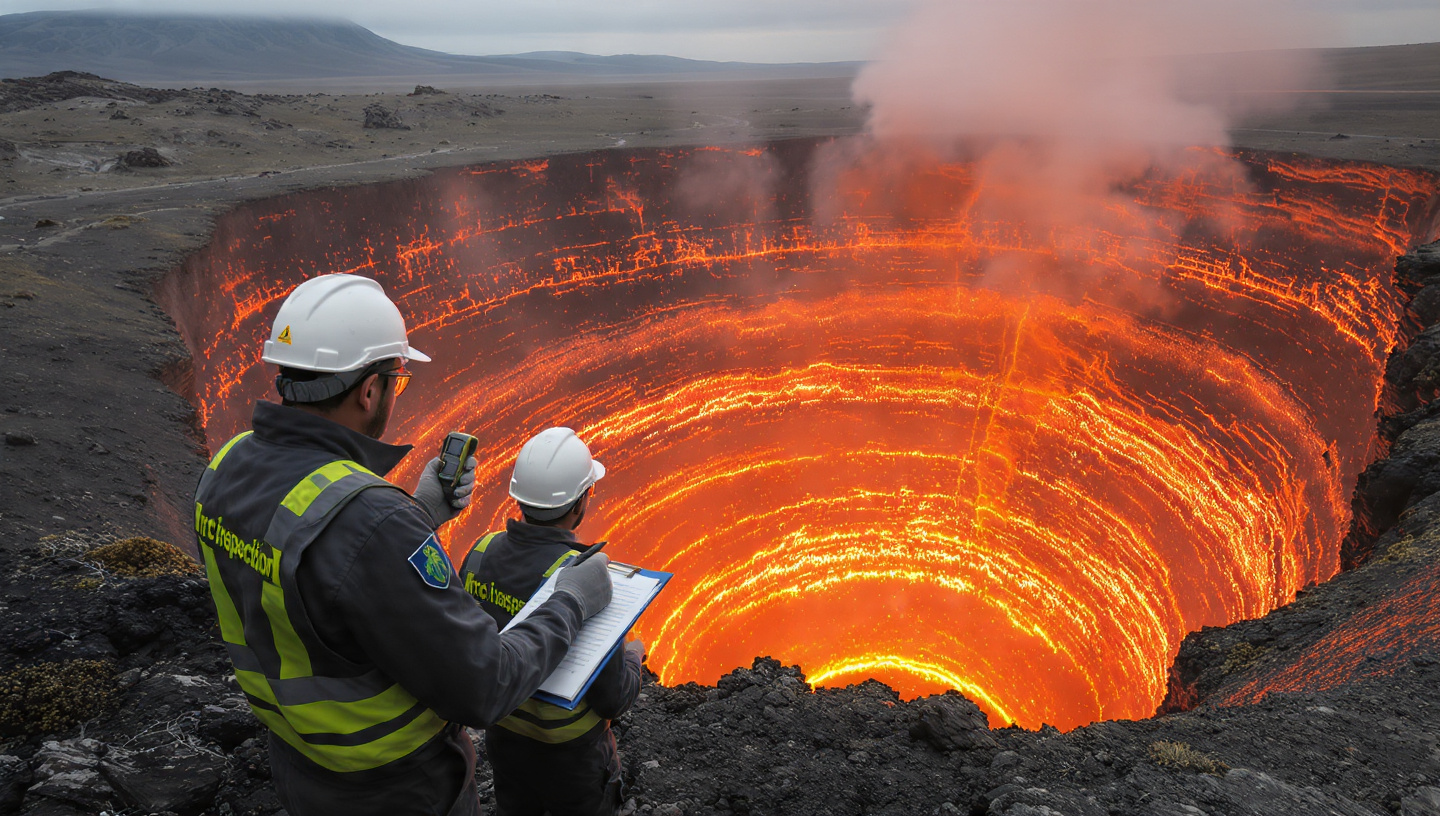
I. The Statutory Framework
The Atomic Energy Act of 1954, codified at 42 U.S.C. § 2011 et seq., establishes the federal government’s comprehensive authority over nuclear materials and nuclear energy in the United States. The Act created what was then the Atomic Energy Commission, whose regulatory functions were transferred in 1974 to the Nuclear Regulatory Commission by the Energy Reorganization Act. The NRC’s statutory mandate, as articulated in § 2012(d), is “to protect the health and safety of the public” from the hazards of nuclear materials and nuclear energy.1
The Act defines its key terms with characteristic precision. Section 11(z), codified at 42 U.S.C. § 2014(z), provides that the term “source material” means “(1) uranium, thorium, or any other material which is determined by the Commission pursuant to the provisions of section 2091 of this title to be source material; or (2) ores containing one or more of the foregoing materials, in such concentration as the Commission may by regulation determine from time to time.”2
The implementing regulations are correspondingly thorough. Title 10 of the Code of Federal Regulations, Part 40, governs the domestic licensing of source material. Section 40.3 provides that no person may “receive title to, own, receive, possess, use, transfer, provide for long-term care or disposal of, or deliver to any other person” any source material unless authorized by specific license or exemption.3 Part 50 of the same title governs the licensing of production and utilization facilities, establishing requirements for design, construction, operation, emergency planning, and decommissioning of nuclear reactors.4
The regulatory framework is, by any objective measure, the most comprehensive safety regime in American law. The NRC employs approximately 2,800 staff. Its annual budget exceeds $900 million. It maintains four regional offices, a 24-hour operations center, and a resident inspector program that stations at least two full-time inspectors at every operating reactor site in the country. It has regulated ninety-four commercial power reactors across fifty-seven plants in twenty-eight states to a standard of operational safety that is, by statistical measure, exemplary.
It has not, in the seventy-two years since the Atomic Energy Act became law, applied any provision of that Act to the largest concentration of source material in the solar system. That concentration is located directly beneath the Commission’s headquarters in Rockville, Maryland. It extends 6,371 kilometers in every direction. It has been in continuous operation since before the planet had an atmosphere.
II. The Source Material
The Earth contains uranium. This is not a contested proposition. It is one of the foundational observations of modern geochemistry, established by the discovery of radioactivity itself. Henri Becquerel’s 1896 observation that uranium salts emitted penetrating radiation was conducted on material extracted from the planet’s crust. The uranium was there before Becquerel. It was there before France. It has been there since the accretion of the solar system approximately 4.5 billion years ago.
The quantity is substantial. The Uranium Corporation of India, citing standard geochemical references, estimates that approximately 1.3 × 10¹⁴ tonnes of uranium exist in the Earth’s crust alone, corresponding to an average concentration of approximately 2.7 parts per million by mass.5 That is 130 quadrillion kilograms. The continental crust, which underlies every American city, courthouse, and NRC regional office, is enriched in uranium relative to the mantle below it, with concentrations in the upper crust reaching 2.7 micrograms per gram.6
Thorium, the other material explicitly named in the statutory definition of source material, is approximately three to four times more abundant in the Earth’s crust than uranium. The bulk Earth content of thorium-232, as compiled by Turcotte and Schubert in their standard reference Geodynamics, is measured in units that require scientific notation to express.7
For comparison, a typical pressurized water reactor in the United States contains approximately 80 to 100 metric tonnes of uranium fuel in its core at any given time. The U.S. Energy Information Administration reports that as of March 2026, the United States operates 96 nuclear power reactors across 57 plants.8 A generous estimate of the total active uranium fuel inventory across the entire American nuclear fleet is therefore approximately 9,000 metric tonnes, or 9 × 10⁶ kilograms.
The Earth’s crust alone contains approximately 1.3 × 10¹⁷ kilograms of uranium. The ratio is approximately 14 billion to one. The Earth contains roughly fourteen billion times more source material than every licensed nuclear facility in the United States combined. The Atomic Energy Act does not contain a de minimis threshold for the quantity of source material that triggers regulatory jurisdiction. Nor does it contain a de maximus exception. It covers uranium. The Earth has uranium. The arithmetic is not complex.
III. The Power Output
The uranium, thorium, and potassium-40 in the Earth’s interior are not inert. They are undergoing continuous radioactive decay, a process in which unstable atomic nuclei release energy in the form of alpha particles, beta particles, gamma radiation, and heat. This process has been ongoing for 4.5 billion years. It has not been licensed, permitted, or approved by any regulatory body at any level of government.
The total thermal power produced by the Earth’s interior, as measured by geothermal heat flux through more than 20,000 boreholes worldwide, is approximately 44 terawatts. In 2011, the KamLAND collaboration, operating the Kamioka Liquid-scintillator Antineutrino Detector in Japan, published measurements in Nature Geoscience demonstrating that radioactive decay of uranium and thorium alone contributes approximately 20 terawatts to this total, with an additional estimated 4 terawatts from potassium-40 decay.9 As Scientific American subsequently reported, “the new measurements suggest radioactive decay provides more than half of Earth’s total heat.”10
Twenty terawatts is 20 trillion watts. The entire United States commercial nuclear fleet, the 96 reactors regulated by the NRC with the full apparatus of federal licensing, inspection, and enforcement, generates approximately 97 gigawatts of total capacity.11 That is 97 billion watts. The Earth’s unlicensed nuclear facility produces approximately 206 times more thermal power from nuclear processes than every licensed reactor in the country.
The NRC’s own NUREG-1350, Volume 35, reports with evident institutional pride that its licensed reactors “generate about 18.6 percent of U.S. gross electricity.”12 This is true. It is also true that the unlicensed nuclear facility beneath those reactors generates enough thermal power to supply the entire planet’s electricity consumption several times over, and has been doing so since before multicellular life existed. The NRC’s jurisdiction covers eighteen percent of American electricity. It does not cover one hundred percent of American geology.
IV. The Natural Reactor Precedent
The NRC defines a “nuclear reactor” at 10 CFR § 50.2 as “an apparatus, other than an atomic weapon, designed or used to sustain nuclear fission in a self-supporting chain reaction.” One might argue that natural radioactive decay, which proceeds through spontaneous alpha and beta emission rather than neutron-induced fission, falls outside this definition. One would be wrong to assume the Earth has never hosted the alternative.
In 1972, French physicist Francis Perrin identified anomalous depletion of uranium-235 in ore samples from the Oklo mine in Gabon, West Africa. Subsequent investigation revealed that the Oklo deposit contained the remnants of at least sixteen natural nuclear fission reactors that had operated approximately 1.7 billion years ago, when the natural enrichment of uranium-235 was approximately 3.7 percent, sufficient to sustain a moderated chain reaction in the presence of groundwater.13
These were not metaphorical reactors. They were genuine self-sustaining nuclear fission chain reactions, moderated by water, operating in pulsed cycles of approximately 30 minutes on and 150 minutes off as water was periodically boiled away and replenished. They operated for hundreds of thousands of years. The fission products found in the surrounding rock are isotopically consistent with sustained criticality. The evidence has been published in Scientific American, reviewed by the International Atomic Energy Agency, and is not in scientific dispute.14
The definition at 10 CFR § 50.2 says “designed or used.” The Earth was not designed to sustain nuclear fission in a self-supporting chain reaction. But it has been used for precisely that purpose, by itself, at least sixteen times that we know of, across a geological formation that operated without a license, a containment structure, an emergency plan, or a single NRC inspection for longer than Homo sapiens has existed as a species.
The natural reactor precedent is not merely historical. In 2011, the KamLAND collaboration reported that its geoneutrino measurements could not rule out the existence of a natural nuclear reactor operating in the Earth’s deep interior, placing an upper limit of approximately 3 to 5 terawatts on such a reactor’s possible output. The Borexino experiment in Italy independently constrained the limit to approximately 3 terawatts.15 The hypothesis of a deep-Earth georeactor, first proposed by J. Marvin Herndon and published in the Proceedings of the National Academy of Sciences, posits a uranium mass of approximately 2 × 10¹⁹ grams at the center of the Earth’s core, operating at a steady-state fission power of approximately 3 terawatts.16
The NRC has not commented on whether a hypothetical 3-terawatt fission reactor at the center of the Earth would require a license. Three terawatts is approximately 31 times the output of the entire American nuclear fleet. The question is not academic. It is geometric.
V. The Emissions Record
The Earth’s unlicensed nuclear facility does not merely produce thermal energy. It produces radioactive emissions that penetrate the surface, enter American homes, and kill American citizens in documented, quantified, and federally acknowledged numbers.
Radon-222 is a radioactive noble gas produced by the decay of uranium-238 through a chain that proceeds from uranium through thorium-234, protactinium-234, and radium-226. It is generated continuously in the Earth’s crust and migrates upward through soil, rock fractures, and foundations into the indoor air of buildings. It is invisible. It is odorless. It is the second leading cause of lung cancer in the United States after cigarette smoking.
The Environmental Protection Agency, in its Assessment of Risks from Radon in Homes, estimates that radon causes approximately 21,000 lung cancer deaths each year in the United States.17 The Centers for Disease Control and Prevention independently confirm this figure.18 Twenty-one thousand annual fatalities from the radioactive emissions of a single, unlicensed, uninspected nuclear facility.
For context, the accident at Three Mile Island Unit 2 on March 28, 1979, the most serious nuclear accident in American history, resulted in a partial core meltdown, the release of radioactive gases, and a decade of regulatory reform. It killed no one. The NRC’s response included 12 years of cleanup operations, fundamental restructuring of the agency’s oversight philosophy, and the creation of the Institute of Nuclear Power Operations. The Chernobyl disaster of 1986, the worst nuclear accident in world history, is attributed by the United Nations Scientific Committee on the Effects of Atomic Radiation to 31 direct fatalities from acute radiation syndrome.19 Long-term estimates vary widely but are measured in thousands, not tens of thousands per year.
The disproportion is instructive. The NRC devoted a generation of institutional reform to an accident that produced zero fatalities. It has devoted zero institutional attention to a facility that produces 21,000 fatalities per year, every year, without interruption, and has been doing so since the first humans inhaled the first radon atoms that migrated from the first uranium deposits in the first continental crust. The facility’s annual body count exceeds that of every licensed nuclear accident in human history combined, by roughly two orders of magnitude. The regulatory response has been proportionally inverse.
VI. The Emergency Planning Failure
The NRC’s emergency planning requirements are among the most detailed in American administrative law. Section 50.47 of Title 10, paragraph (c)(2), provides that “generally, the plume exposure pathway EPZ for nuclear power plants shall consist of an area about 10 miles (16 km) in radius and the ingestion pathway EPZ shall consist of an area about 50 miles (80 km) in radius.”20
Within the plume exposure pathway emergency planning zone, detailed plans must exist for prompt notification of the public, evacuation routes, reception centers, radiological monitoring, and distribution of potassium iodide tablets. Within the ingestion pathway zone, plans must address interdiction of contaminated food and water supplies. These plans are developed jointly by the licensee, state governments, and local jurisdictions. They are tested through graded exercises evaluated by FEMA. They are a condition of the operating license. A nuclear power plant that cannot demonstrate adequate emergency planning cannot operate.
The Earth’s nuclear facility has no plume exposure pathway emergency planning zone. This is not because its plume exposure pathway is smaller than 10 miles. It is because its plume exposure pathway encompasses the entire habitable surface of the planet. Radon-222, the facility’s primary airborne radioactive emission, has a half-life of 3.8 days, sufficient to allow migration from subsurface deposits through soil and building foundations into indoor air across every ZIP code in the nation. The EPA estimates that approximately one in fifteen American homes has radon concentrations at or above the agency’s action level of 4 picocuries per liter.21
No evacuation route has been designated. No reception center has been identified. No potassium iodide distribution plan has been developed. No graded exercise has been conducted. No FEMA evaluation has been performed. The ingestion pathway zone, which for a licensed reactor extends 50 miles, would need to extend to the continental margins and beyond, as uranium-series radionuclides enter groundwater systems, agricultural soils, and the food supply across all fifty states. The regulatory apparatus that requires a 57-page emergency plan for a single reactor in New Jersey has not produced a single page of emergency planning for the facility that underlies New Jersey.
VII. The Inspection Record
The NRC’s Reactor Oversight Process is the agency’s primary mechanism for ensuring that licensed nuclear facilities operate in compliance with federal safety requirements. NUREG-1350, Volume 35, reports that each operating reactor in the United States received approximately 5,960 total inspection and assessment hours in fiscal year 2024.22 Across 94 operating reactors, this amounts to approximately 560,000 inspection hours per year devoted to the American nuclear fleet.
The inspection program employs resident inspectors who maintain continuous on-site presence at each reactor facility. These inspectors conduct baseline inspections covering seven cornerstones of safety: initiating events, mitigating systems, barrier integrity, emergency preparedness, public radiation safety, occupational radiation safety, and security. Each cornerstone has specific performance indicators with quantitative thresholds. Violations are classified by severity. Enforcement actions range from notices of violation to orders for immediate shutdown.
The Earth’s nuclear facility has received zero inspection hours. Not in fiscal year 2024. Not in any fiscal year. Not in any year since the NRC was created in 1975, or since the Atomic Energy Commission was created in 1946, or since the Atomic Energy Act was signed in 1954, or since the discovery of radioactivity in 1896. The facility has been in continuous, uninspected operation for approximately 4.5 billion years. During that time, it has undergone no baseline inspection, no reactive inspection, no special inspection, and no augmented inspection team deployment.
This is not because the facility is inaccessible. The deepest borehole ever drilled, the Kola Superdeep Borehole in Russia, reached 12,262 meters in 1989. The deepest mine in the world, the Mponeng gold mine in South Africa, extends approximately 4 kilometers below the surface, where rock temperatures exceed 66°C and the mine’s ventilation system consumes enough energy to power a small city. At those depths, the Earth’s radioactive source material is already present and actively decaying. An NRC inspector equipped with standard dosimetry would find measurable radiation fields within the first few hundred meters of the surface.
No NRC inspector has been deployed. No dosimetry has been issued. No inspection report has been filed. The agency that devotes 5,960 hours per year to a reactor it can walk through in an afternoon has devoted zero hours to a facility that extends to the center of the planet. The cornerstones of safety have not been assessed. The performance indicators have not been evaluated. The question is not whether the facility would pass inspection. The question is whether the agency has noticed it.
VIII. The Exemption Problem
A generous reading of the NRC’s regulatory framework would note that 10 CFR § 40.13(a) provides an exemption from Part 40 licensing requirements for source material in certain unrefined forms. The regulation exempts, among other things, “any person who receives, possesses, uses, or transfers source material in any chemical mixture, compound, solution, or alloy in which the source material is by weight less than one-twentieth of 1 percent (0.05 percent) of the mixture, compound, solution, or alloy.”23
The average concentration of uranium in the Earth’s crust is approximately 2.7 parts per million, or 0.00027 percent by weight. This is below the 0.05 percent threshold. The exemption, on its face, would appear to apply.
We note three difficulties with this position. First, the exemption was drafted to address small quantities of source material in commercial products, such as ceramic glazes and welding rods, not a planetary body containing 130 quadrillion kilograms of uranium. The absurdity of applying a consumer-product exemption to a facility that produces 20 terawatts of thermal power and kills 21,000 people per year is not diminished by the fact that the uranium is dilute. Cyanide at 0.00027 percent concentration in a municipal water supply would not be exempted from the Safe Drinking Water Act on the ground that the concentration is low. The total quantity matters. The harm matters.
Second, the exemption does not apply to source material that is being “used.” The Earth’s uranium is not sitting inert. It is actively undergoing nuclear transformation, producing daughter isotopes, emitting ionizing radiation, generating thermal energy, and releasing radon gas into the breathing space of the American public. Whether the Earth “uses” its uranium in any intentional sense is a philosophical question. Whether the uranium is being used, in the plain meaning of the word, is not.
Third, the exemption establishes a regulatory principle that, if applied consistently, would exempt any nuclear facility from oversight provided its fuel is sufficiently diluted in surrounding material. A reactor operator who mixed 100 tonnes of uranium fuel with 200 million tonnes of concrete would, under this logic, be exempt from licensing. The fuel would still be undergoing fission. The radiation would still be emitted. The concrete would simply make the concentration low enough to satisfy the regulation’s text while defeating its purpose. This is what the Earth has done, except with rock instead of concrete, and on a scale the drafters did not anticipate.
IX. The Decommissioning Problem
Section 50.75 of Title 10 requires each holder of an operating license for a nuclear power reactor to provide reasonable assurance that funds will be available for decommissioning the facility at the end of its operating life. The NRC’s decommissioning cost estimates, published in NUREG-1307, provide formulae for calculating the minimum funding requirements. Actual decommissioning costs for American reactors have ranged from approximately $500 million to over $1 billion per unit.24
The Earth’s nuclear facility cannot be decommissioned. This is not a funding issue. It is a physics issue.
The primary fuel, uranium-238, has a half-life of 4.468 billion years. The facility has been operating for approximately 4.5 billion years, meaning that roughly half of its original uranium-238 inventory remains. The secondary fuel, thorium-232, has a half-life of 14.05 billion years, meaning that approximately 82 percent of its original thorium inventory is still present. The tertiary fuel, potassium-40, has a half-life of 1.25 billion years, meaning that approximately 7 percent of its original inventory remains, but the original inventory was measured in units that make the residual quantity substantial.25
No decommissioning fund has been established. No spent fuel management plan has been developed. The nation’s ongoing debate over the Yucca Mountain repository, which has consumed approximately $15 billion in federal expenditure over four decades to address the disposal of roughly 83,000 metric tonnes of spent nuclear fuel from licensed reactors, has not contemplated the disposal of 130 quadrillion kilograms of naturally occurring uranium, because the problem exceeds the capacity of the English language to express in terms that a congressional appropriations committee would find actionable.26
The NRC’s decommissioning framework assumes that a nuclear facility has a finite operating life, typically 40 to 80 years. At the end of that life, the fuel is removed, the structures are dismantled, the site is remediated, and the license is terminated. The Earth’s facility has no planned end of operation. Its fuel will continue to undergo radioactive decay until the uranium-238 and thorium-232 inventories are effectively exhausted, which will occur in approximately 10 to 15 billion years, by which time the Sun will have expanded into a red giant and consumed the facility along with the regulatory agency tasked with overseeing it. This is not a decommissioning plan. This is an exit strategy that relies on stellar evolution.
X. Conclusion
The Atomic Energy Act of 1954 defines source material as uranium and thorium. The Earth contains both, in quantities that dwarf every licensed facility in the country by a factor of billions. The material is not inert. It is undergoing continuous radioactive decay, producing 20 terawatts of thermal power, emitting ionizing radiation through every square meter of the continental surface, and releasing radon gas that kills 21,000 Americans per year.
The Earth has hosted at least sixteen confirmed natural nuclear fission chain reactions. Modern geoneutrino measurements have not excluded the possibility of an active fission reactor in the planet’s core. The facility operates without a license, without an emergency plan, without an inspection program, without a decommissioning fund, and without a single page of regulatory documentation in the NRC’s Agencywide Documents Access and Management System.
The NRC’s total regulatory effort in fiscal year 2024 amounted to approximately 560,000 inspection hours across 94 reactors that collectively produce 97 gigawatts of thermal capacity and have, in seven decades of commercial operation, killed a combined total of zero Americans through radiation exposure. In the same year, the uninspected, unlicensed facility directly beneath those reactors produced 206 times more nuclear thermal power and caused 21,000 deaths.
The regulatory framework is not ambiguous. The statute names uranium and thorium. The Earth has both. The regulations require licensing for the possession and use of source material. The Earth possesses and uses source material on a planetary scale. The regulations require emergency planning within 10 miles of a nuclear facility. Every American lives within 10 miles of this one. The regulations require inspection. None has occurred. The regulations require decommissioning planning. The facility’s fuel has a half-life that exceeds the remaining lifespan of the star that illuminates it.
Three hundred and thirty million Americans live on top of the most powerful nuclear facility in the solar system. It has been operating without oversight since before the formation of the Moon. It kills more Americans every year than every nuclear accident in history. And the agency charged with protecting the public from the hazards of nuclear energy has concluded, through seven decades of institutional silence, that a facility producing 20 terawatts of continuous nuclear thermal power does not require a license because the uranium is mixed in with enough rock.
The rock is not reassuring. The radon is not reassured. The 21,000 are not available for comment.
Ergo.
Sources
- 42 U.S.C. § 2011 et seq., Atomic Energy Act of 1954, as amended; 42 U.S.C. § 2012(d) (purpose of Act). law.cornell.edu ↑
- 42 U.S.C. § 2014(z), definition of “source material.” law.cornell.edu ↑
- 10 CFR § 40.3, “License requirements.” law.cornell.edu ↑
- 10 CFR Part 50, “Domestic Licensing of Production and Utilization Facilities.” nrc.gov ↑
- Uranium Corporation of India Ltd., “Uranium & Its Measurement”: “It is estimated that the average concentration of uranium in earth’s crust is about 3 gms per tonne of rock… About 1.3 × 10¹⁴ tonnes of uranium exist in the earth’s crust.” ucil.gov.in ↑
- R. Arevalo Jr., W.F. McDonough, and M. Luong, “The K/U ratio of the silicate Earth: Insights into mantle composition, structure and thermal evolution,” Earth and Planetary Science Letters, vol. 278, 2009, pp. 361–369. See also S.R. Taylor and S.M. McLennan, “The Continental Crust: Its Composition and Evolution,” Blackwell, 1985. ↑
- D.L. Turcotte and G. Schubert, Geodynamics, Cambridge University Press, 3rd ed., 2014, Chapter 4: “Heat Transfer” (radiogenic heat production). ↑
- U.S. Energy Information Administration, “How many nuclear power plants are in the United States, and where are they located?”: “As of March 2026, the United States had 57 commercially operated nuclear power plants with 96 nuclear power reactors in 28 states.” eia.gov ↑
- KamLAND Collaboration, “Partial radiogenic heat model for Earth revealed by geoneutrino measurements,” Nature Geoscience, vol. 4, 2011, pp. 647–651. nature.com ↑
- D. Biello, “Nuclear Fission Confirmed as Source of More than Half of Earth’s Heat,” Scientific American, July 18, 2011. scientificamerican.com ↑
- U.S. Energy Information Administration, “The United States operates the world’s largest nuclear power plant fleet,” April 24, 2025: “In 2024, U.S. utilities operated 94 nuclear reactors with a total net generating capacity of nearly 97 gigawatts (GW).” eia.gov ↑
- U.S. Nuclear Regulatory Commission, NUREG-1350, Vol. 35, “Information Digest 2024–2025,” NRC by the Numbers. nrc.gov ↑
- R. Naudet, Oklo: Des Réacteurs Nucléaires Fossiles, Eyrolles, Paris, 1991. See also A.P. Meshik, “The Workings of an Ancient Nuclear Reactor,” Scientific American, vol. 293, no. 5, November 2005, pp. 82–91. scientificamerican.com ↑
- International Atomic Energy Agency, “The Oklo Phenomenon,” Proceedings of a Symposium, Libreville, June 1975, STI/PUB/405. iaea.org ↑
- KamLAND (2011), cited above at note 9. Borexino Collaboration, “Measurement of geo-neutrinos from 1353 days of Borexino,” Physics Letters B, vol. 722, 2013, pp. 295–300. See also Physics World, “Radioactive decay accounts for half of Earth’s heat,” July 18, 2011. physicsworld.com ↑
- J.M. Herndon, “Nuclear georeactor origin of oceanic basalt 3He/4He, evidence, and implications,” Proceedings of the National Academy of Sciences, vol. 100, no. 6, 2003, pp. 3047–3050. pubmed.ncbi.nlm.nih.gov ↑
- U.S. Environmental Protection Agency, “What are the health effects from exposure to radon?”: “radon in indoor air is estimated to cause about 21,000 lung cancer deaths each year in the United States.” epa.gov ↑
- Centers for Disease Control and Prevention, “Radon and Your Health”: “The EPA and the Surgeon General’s office estimate radon is responsible for more than 21,000 lung cancer deaths each year in the United States.” cdc.gov ↑
- United Nations Scientific Committee on the Effects of Atomic Radiation (UNSCEAR), “Sources and Effects of Ionizing Radiation: UNSCEAR 2008 Report,” Volume II, Annex D: Health effects due to radiation from the Chernobyl accident. unscear.org ↑
- 10 CFR § 50.47(c)(2), “Emergency plans.” nrc.gov ↑
- U.S. Environmental Protection Agency, “Radionuclide Basics: Radon.” epa.gov ↑
- NUREG-1350, Vol. 35 (2024), cited above at note 12: “About 5,960 total inspection and assessment hours at each operating reactor in FY 2024.” ↑
- 10 CFR § 40.13(a), “Unimportant quantities of source material.” law.cornell.edu ↑
- U.S. Nuclear Regulatory Commission, “Decommissioning Nuclear Power Plants,” Backgrounder. See also NUREG-1307, “Report on Waste Burial Charges: Changes in Decommissioning Waste Disposal Costs at Low-Level Waste Burial Facilities.” nrc.gov ↑
- Half-life values: U-238: 4.468 × 10⁹ years; Th-232: 1.405 × 10¹⁰ years; K-40: 1.248 × 10⁹ years. Standard values from the Nuclear Data Center, Brookhaven National Laboratory. bnl.gov ↑
- U.S. Government Accountability Office, GAO-21-603, “Nuclear Waste: Congressional Action Needed to Break Impasse and Develop a Permanent Disposal Solution,” September 2021. gao.gov ↑