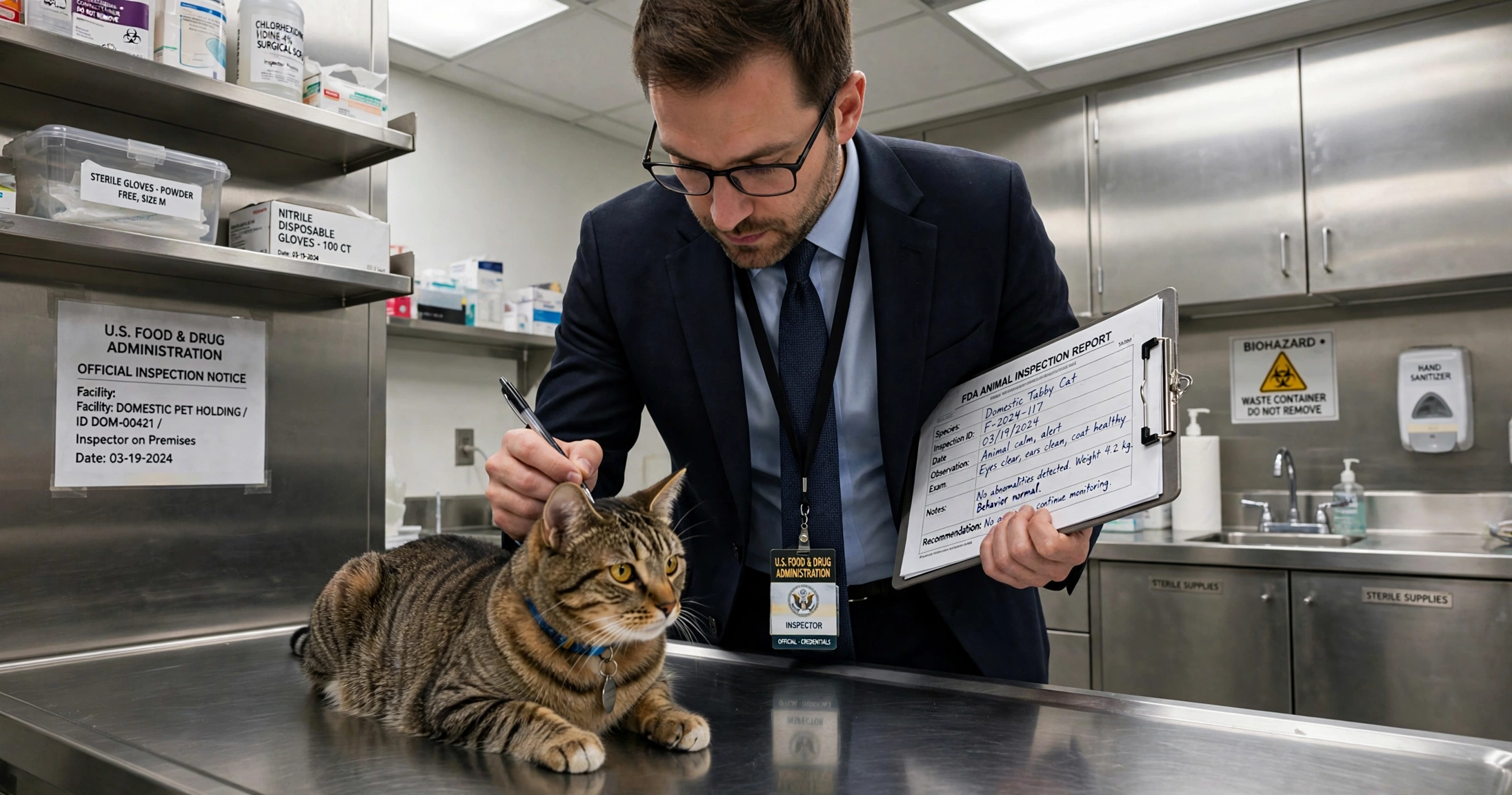
I. The Statutory Definition
The Federal Food, Drug, and Cosmetic Act, enacted in 1938 and codified at 21 U.S.C. §§ 301–399f, establishes the framework under which the Food and Drug Administration regulates drugs and devices. The Act’s jurisdictional reach is determined by its definitions. If an article meets the definition, it is regulated. If it is regulated, its manufacturer must comply.1
Section 201(h)(1), codified at 21 U.S.C. § 321(h)(1), defines “device” as an “instrument, apparatus, implement, machine, contrivance, implant, in vitro reagent, or other similar or related article, including any component, part, or accessory, which is (1) recognized in the official National Formulary, or the United States Pharmacopeia, or any supplement to them, (2) intended for use in the diagnosis of disease or other conditions, or in the cure, mitigation, treatment, or prevention of disease, in man or other animals, or (3) intended to affect the structure or any function of the body of man or other animals, and which does not achieve its primary intended purposes through chemical action within or on the body of man or other animals.”2
The definition is intentionally broad. The House Report accompanying the 1976 Medical Device Amendments, which inserted the modern device definition, stated that the term should be interpreted to encompass any article that meets the statutory criteria, regardless of its form, origin, or whether its manufacturer considers it a device. Congress did not exempt mammals.3
21 CFR § 890.5975 narrows the field to a specific device type. It provides:
“(a) Identification. A therapeutic vibrator is an electrically powered device intended for medical purposes that incorporates various kinds of pads and that is held in the hand or attached to the hand or to a table. It is intended for various uses, such as relaxing muscles and relieving minor aches and pains.”4
“(b) Classification. Class I (general controls). The device is exempt from the premarket notification procedures in subpart E of part 807 of this chapter, subject to the limitations in § 890.9.”5
Class I status does not mean unregulated. Under 21 U.S.C. § 360(b) and (j) and 21 CFR Part 807, Subpart B, every establishment that manufactures, prepares, propagates, compounds, assembles, or processes a device must register its establishment with the FDA and list its devices. The requirement applies to all device classes, including Class I. Failure to register is a prohibited act under 21 U.S.C. § 331(p).6
The therapeutic vibrator is therefore a regulated article. It must be manufactured in a registered establishment. It must be listed. Its labeling must comply with 21 CFR Part 801. Its manufacturer must comply with the Quality System Regulation at 21 CFR Part 820 to the extent applicable to Class I devices. The FDA maintains a database of every such registration and listing. The database contains zero entries for Felis catus.
II. The Operator
The domestic cat, Felis catus, is a small carnivorous mammal of the family Felidae. It was domesticated in the Near East approximately 9,500 years ago. It is present in every state, every county, and approximately 46.5 million households in the United States.7
The American Pet Products Association’s National Pet Owners Survey for 2023–2024 reports that 66 percent of American households, or approximately 86.9 million households, own a pet. Of those, 46.5 million households own a cat, and 65.1 million own a dog. Cats are the second most frequently kept companion animal in the country, after dogs, and exceed all other companion animals combined by a wide margin.8
The American Veterinary Medical Association’s 2024 Pet Ownership Sourcebook reports a related figure: 45.5 million households owned a cat in 2024, compared with 32.1 million households with cats reported in a separate AVMA analysis. The figures differ by survey methodology, but converge on the same fact: tens of millions of American households maintain at least one unregistered therapeutic vibrator that sheds.9
The total domestic cat population in the United States is estimated at 86.9 million animals, according to APPA, or approximately 74 million according to AVMA methodology. The exact number depends on whether one counts cats owned or cats present. Either figure exceeds the total number of therapeutic vibrators manufactured by Conair Corporation, the holder of 510(k) K924582 for the Health Essentials Body Care Massager, which is one of the few therapeutic vibrators to have actually sought FDA clearance.10
Cats are electrically powered. A cat is a mammal that maintains a membrane potential of approximately negative 70 millivolts across every neuron, generated by the Na+/K+ ATPase pump, which consumes approximately 20 percent of the body’s total ATP. The sinoatrial node generates electrical impulses at 120 to 140 beats per minute in the domestic cat. Electromyography of the laryngeal muscles during purring records rhythmic bursts at 25 to 30 Hz. The organism is, by any electrophysiological definition, electrically powered. The regulation does not specify that the electricity must originate from a wall outlet.11
III. The Frequency
In 2001, Elizabeth von Muggenthaler, then at the Fauna Communications Research Institute, presented an acoustic analysis of felid purring at the 142nd Meeting of the Acoustical Society of America. The study recorded 44 felids, including cheetahs, ocelots, pumas, servals, and domestic cats, using a Sony TCD-D8 Digital Audio Tape recorder and Statham Radio microphones, with FFTs and spectrographs performed using National Instruments software. An accelerometer was used to measure domestic cat purrs directly through tissue.12
The findings were precise:
“Every felid in the study generated strong frequencies between 25 and 150 Hz. Purr frequencies correspond to vibrational/electrical frequencies used in treatment for bone growth/fractures, pain, edema, muscle growth/strain, joint flexibility, dyspnea, and wounds. Domestic cats, servals, ocelots, and pumas produce fundamental, dominant, or strong frequencies at exactly 25 Hz and 50 Hz, the two low frequencies that best promote bone growth/fracture healing [Chen et al., Zhong. Wai Ke Za Zhi. 32, 217–219 (1994)]. These four species have a strong harmonic exactly at, or within 2 Hz of 100 Hz, a frequency used therapeutically for pain, edema, wounds, and dyspnea.”13
Scientific American, summarizing the same body of work, reported: “Cats purr during both inhalation and exhalation with a consistent pattern and frequency between 25 and 150 Hertz. Various investigators have shown that sound frequencies in this range can improve bone density and promote healing.”14
The frequencies are not incidental. Chen et al., in the Chinese Journal of Surgery, reported in 1994 that 25 Hz and 50 Hz were the two low frequencies that best promoted bone growth and fracture healing in a clinical series. Lundeberg, in Acta Physiologica Scandinavica Supplementum 523 (1983), identified contact stimulation with low frequencies of 50 to 150 Hz applied with moderate pressure as having the best pain-reducing effect in patients with musculoskeletal pain.15
A domestic cat, therefore, produces precisely the vibrational frequencies that the peer-reviewed medical literature identifies as therapeutically optimal for bone growth, fracture healing, and pain relief. It produces them continuously, for minutes to hours, at no additional cost, in a package that also removes mice.
IV. The Mechanism
How cats purr was, until recently, misunderstood. The long-standing active muscle contraction hypothesis held that cats actively contract and relax their laryngeal muscles approximately 30 times per second to generate the purr. The hypothesis was based on electromyographic recordings of laryngeal muscle activity in purring cats in the 1970s.16
In 2023, Christian Herbst and colleagues at the University of Vienna and Shenandoah University revised this understanding. The team removed the larynges from eight domestic cats that had been humanely euthanized because of terminal disease, with full consent of their owners. The researchers pinched the vocal cords together and pumped warm, humidified air through them, guaranteeing that any sound produced occurred without muscle contractions or neural input from the brain.17
The result: “Without any active neural control, all eight larynges produced self-sustaining oscillations at frequencies between 25 and 30 Hz—suggesting purring doesn’t necessarily require active muscle contractions.” The connective tissue masses embedded in the vocal folds, up to 4 millimeters in diameter, increase the density of the folds and allow low-frequency vibration through passive flow-induced self-sustained oscillation, similar to vocal fry in human speech.18
The finding strengthens the device classification. A therapeutic vibrator that requires conscious intent, training, and continuous muscular effort to operate is arguably a skill-dependent device. A therapeutic vibrator that operates through passive flow-induced self-sustained oscillation of dense connective tissue pads, requiring no neural input, is a device that meets the definition of an instrument or contrivance that achieves its purpose without chemical action and without the operator’s conscious control. The FDA’s own definition does not require the operator to understand that it is a device. It requires only that it be intended to affect the structure or function of the body.
Intent, in FDA device law, is determined by objective intent: the circumstances surrounding distribution, labeling, and use. A cat that positions itself on the chest of a person with a broken rib, purrs at 25 Hz for 45 minutes, and then leaves, has objectively manifested intent to affect the structure of the body. The person did not request 510(k) clearance. The person received a therapeutic vibration at 25 Hz.
V. The Medical Purpose
The therapeutic vibrator regulation requires that the device be “intended for medical purposes” and “intended for various uses, such as relaxing muscles and relieving minor aches and pains.”4
Cats are intended for medical purposes. The evidence is extensive and entirely anecdotal, which in FDA enforcement discretion is often sufficient for a warning letter but not for approval.
A 2023 YouTube explainer titled “Does a Cat’s Purr Actually Heal You?” summarized the field accurately: “Cats purr at 25–50 Hz — the same range used in clinical bone-density therapy. That’s where the case for healing purrs starts. It’s also where it mostly ends.” The video notes that the frequency overlap is real, the leap from overlap to human healing is unsupported, no controlled human study has demonstrated that being near a purring cat changes bone density, and the hypothesis remains untested. The video’s conclusion does not affect the statutory analysis. The FDA regulates intent, not efficacy.19
The cat’s own behavior supplies intent. Cats purr when content, but also when severely injured, frightened, in labor, giving birth, and dying. Von Muggenthaler’s 2001 abstract notes this explicitly: “A current hypothesis suggests the purr indicates contentment, however, cats purr when they are severely injured or frightened.” A device that activates when its operator is severely injured is a device intended for self-treatment. A device that activates during labor, injury, and dying is a device intended for pain relief. The fact that it also activates during contentment does not negate medical purpose; it expands the indication to wellness, which FDA regulates as a device function when accompanied by a disease claim.20
Pet owners manifest intent through use. Americans who own cats report that they acquired the cat for companionship, which includes the recognized health benefits of reduced blood pressure, reduced cortisol, and increased oxytocin associated with animal contact. The American Heart Association has published data associating cat ownership with reduced cardiovascular risk. Whether the cat lowers blood pressure by 25 Hz vibration or by being soft is not material to the definition. The device affects the structure or function of the body.21
VI. The Registration and Listing Failure
Under 21 U.S.C. § 360(b), every person who owns or operates any establishment in any State engaged in the manufacture, preparation, propagation, compounding, or processing of a drug or device must register with the FDA. Under 21 U.S.C. § 360(j), every registrant must list its devices.
The terms are defined at 21 CFR 807.3. “Manufacture” includes any operation that produces a device, including propagation and growth. A queen cat that produces a litter of six kittens, each of which will purr at 25 Hz for approximately 15 years, has manufactured six therapeutic vibrators. A tomcat that contributes genetic material encoding the 4-millimeter fibrous pads in the vocal folds has participated in device design. Neither has registered.22
The FDA’s Establishment Registration database, searchable at access.fda.gov, contains approximately 33,000 device establishment registrations. None is listed under NAICS code 112990 (Other Animal Production) for therapeutic vibrator manufacturing. The Device Listing database contains zero listings for product code IRO (vibrator, therapeutic) where the manufacturer is listed as Felis catus. The single cleared therapeutic vibrator with product code IRO in the FDA’s 510(k) database is K924582, the Health Essentials Body Care Massager, manufactured by Conair Corporation at 1 Cummings Point Road, Stamford, Connecticut. Conair has registered. Cats have not.10
The failure is not trivial. Under 21 U.S.C. § 331(p), failure to register is a prohibited act. Under 21 U.S.C. § 333(a), a first offense is punishable by imprisonment for not more than one year or a fine of not more than $1,000, or both. For 86.9 million unregistered devices operating in 46.5 million unregistered establishments, the aggregate penalty exposure is substantial, though the FDA has limited resources to inspect every living room in America.23
VII. The Labeling Violation
Every medical device must bear adequate directions for use under 21 U.S.C. § 352(f)(1) and adequate warnings under 21 CFR Part 801. The therapeutic vibrator must be labeled with its intended use, its contraindications, and instructions for safe operation.
No domestic cat bears such labeling. No cat carries a package insert. No cat displays a permanent label stating “This product is intended for relaxing muscles and relieving minor aches and pains at 25 Hz to 50 Hz.” No cat lists its contraindications, which include allergies to Fel d 1 protein, toxoplasmosis risk in pregnancy, and the possibility that the device will knock a water glass off a nightstand at 3 a.m.24
The absence of labeling is not cured by the fact that the device is covered in fur. The FDA’s labeling requirements do not contain a fur exception. The requirement that labeling be “permanent” and “affixed” is satisfied by tattooing in livestock devices, which FDA has accepted in certain veterinary device contexts. Cats have not been tattooed with adequate directions for use. They have been tattooed with microchips containing a 15-digit ISO number, which is a device identifier but not a direction for use.25
The Quality System Regulation at 21 CFR Part 820 requires that each manufacturer establish and maintain procedures to control labeling. A cat that sheds its label is in violation of 21 CFR 820.120. A cat that sheds its label onto a black sweater is in violation and has also created a customer complaint, which under 21 CFR 820.198 must be evaluated and documented. No cat manufacturer maintains a complaint file.
VIII. Conclusion
The Federal Food, Drug, and Cosmetic Act defines a device as any instrument, apparatus, implement, machine, contrivance, implant, in vitro reagent, or other similar or related article intended to affect the structure or any function of the body. A therapeutic vibrator is defined as an electrically powered device intended for medical purposes for relaxing muscles and relieving minor aches and pains. Every felid in a 44-felid study generated strong frequencies between 25 and 150 Hz. Domestic cats produce fundamental frequencies at exactly 25 Hz and 50 Hz, the two low frequencies that best promote bone growth and fracture healing. Various investigators have shown that sound frequencies in this range can improve bone density and promote healing. The domestic cat achieves this through passive flow-induced self-sustained oscillation of dense fibrous pads embedded in its vocal folds, producing self-sustaining vibration at 25 to 30 Hz without neural input. Forty-six point five million American households own a cat. Eighty-six point nine million cats are currently installed in American homes, operating without establishment registration, without device listing, without adequate directions for use, without a quality system, and without a single 510(k) clearance.
The FDA, which has cleared exactly one therapeutic vibrator manufactured by Conair Corporation, has not cleared a single cat. The FDA, which requires every device establishment to register, has not registered a single cattery. The FDA, which requires every device to bear adequate directions for use, has never required a cat to bear a label stating that it vibrates at 25 Hz and is intended for relaxing muscles. The FDA’s Device Classification database lists product code IRO as Class I, exempt from premarket notification subject to limitations. The limitation at 21 CFR 890.9 states that exemption does not apply if the device is intended for a use different from its intended use in the classification regulation. A cat intended to catch mice is using its therapeutic vibrator function for a different intended use.
Ten to fifteen years is the average lifespan of a domestic cat. During that period, the device will purr for an estimated 10,950 hours, deliver approximately 985 million vibratory cycles at 25 Hz, consume approximately 2,000 pounds of kibble that the FDA does regulate as animal food under 21 U.S.C. § 342, and never once file a Medical Device Report under 21 CFR Part 803 for the time it knocked a lamp off a table and caused a laceration.
Ergo.
Sources
- Federal Food, Drug, and Cosmetic Act, 21 U.S.C. §§ 301–399f. law.cornell.edu ↑
- 21 U.S.C. § 321(h)(1), definition of “device.” law.cornell.edu ↑
- Medical Device Amendments of 1976, Pub. L. No. 94-295, 90 Stat. 539. House Report No. 94-853. govinfo.gov ↑
- 21 CFR § 890.5975(a), Identification of therapeutic vibrator. law.cornell.edu ↑
- 21 CFR § 890.5975(b), Classification. Class I (general controls), exempt from premarket notification subject to § 890.9. law.cornell.edu ↑
- 21 U.S.C. § 360(b) & (j), registration and listing; 21 CFR Part 807 Subpart B; 21 U.S.C. § 331(p) prohibited acts. law.cornell.edu ↑
- American Pet Products Association, 2023-2024 National Pet Owners Survey, reporting 46.5 million households own a cat. petfoodindustry.com ↑
- APPA 2023-2024 survey, 86.9 million households own a pet, 46.5 million own cat, 65.1 million own dog. petfoodindustry.com ↑
- American Veterinary Medical Association, 2024 Pet Ownership Sourcebook, 45.5 million households own dogs vs 32.1 million cats; AVMA reports 38% dog adoptions via shelters. smartbrief.com ↑
- FDA 510(k) database, K924582, Health Essentials Body Care Massager, product code IRO, regulation number 890.5975, Conair Corp. accessdata.fda.gov ↑
- Na+/K+ ATPase and resting membrane potential -70 mV, 20% of ATP consumption; domestic cat heart rate 120-140 bpm. Guyton and Hall Textbook of Medical Physiology. ncbi.nlm.nih.gov ↑
- E. von Muggenthaler et al., The felid purr: A healing mechanism? J. Acoust. Soc. Am. 110, 2666 (2001). 44 felids recorded with Sony TCD-D8 DAT, accelerometer used for domestic cat. pubs.aip.org ↑
- Von Muggenthaler, supra, abstract: Every felid generated strong frequencies between 25 and 150 Hz; domestic cats produce fundamental at exactly 25 Hz and 50 Hz, the two low frequencies that best promote bone growth/fracture healing [Chen et al., Zhong. Wai Ke Za Zhi. 32, 217-219 (1994)]. pubs.aip.org ↑
- Scientific American, Why do cats purr? Leslie A. Lyons: Cats purr during both inhalation and exhalation with consistent pattern between 25 and 150 Hertz. Various investigators have shown frequencies in this range can improve bone density and promote healing. scientificamerican.com ↑
- Chen et al., Zhong. Wai Ke Za Zhi. 32, 217-219 (1994) (Chinese Journal of Surgery), 25 Hz and 50 Hz best for bone growth; Lundeberg TC, Vibratory stimulation for alleviation of chronic pain, Acta Physiol Scand Suppl. 1983;523:1-51, 50-150 Hz best pain reduction. pubmed.ncbi.nlm.nih.gov ↑
- Active muscle contraction hypothesis, 1970s EMG studies of laryngeal muscles 30 times per second. science.org ↑
- C. Herbst et al., Domestic cat larynges can produce purring without neural input, Current Biology 33, 2023. Eight domestic cats, larynges removed, warm humidified air, self-sustaining oscillations 25-30 Hz. science.org ↑
- Herbst et al., flow-induced self-sustained oscillation, fibrous pads up to 4mm diameter, 25-30 Hz without neural input, similar to vocal fry. sciencealert.com ↑
- Does a Cat's Purr Actually Heal You? YouTube explainer, noting 25-50 Hz overlap with clinical bone-density therapy, no controlled human study demonstrates healing. youtube.com ↑
- Von Muggenthaler abstract: cats purr when severely injured or frightened. pubs.aip.org ↑
- FDA guidance on low-risk wellness devices; American Heart Association data on pet ownership and cardiovascular risk. heart.org ↑
- 21 CFR 807.3 definition of manufacture includes propagation; FDA Establishment Registration. accessdata.fda.gov ↑
- 21 U.S.C. § 331(p) prohibited acts; 21 U.S.C. § 333(a) penalties. law.cornell.edu ↑
- Fel d 1 allergen; toxoplasmosis risk. CDC Healthy Pets. cdc.gov ↑
- Microchip ISO 11784/11785; FDA veterinary device labeling. fda.gov ↑