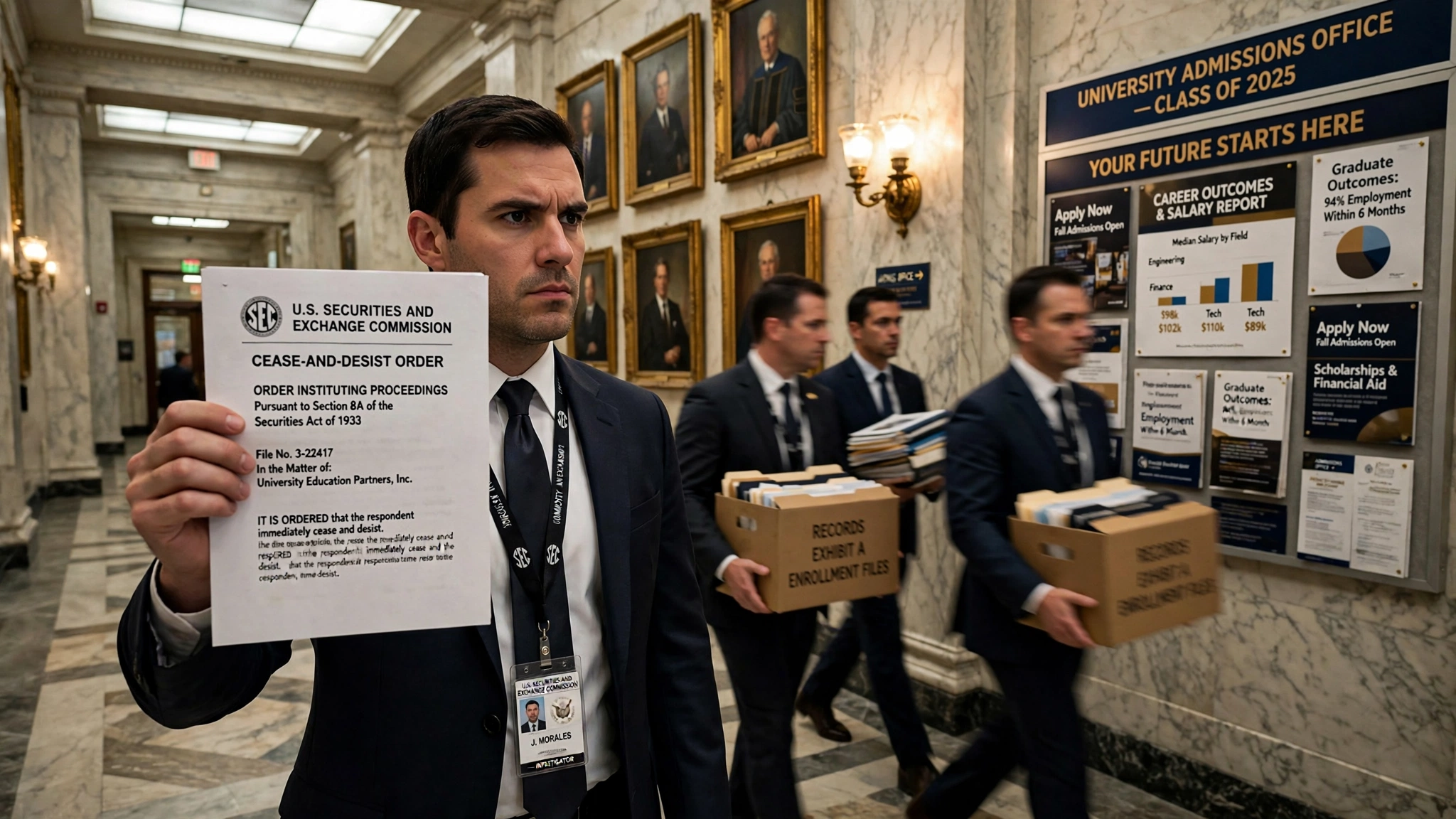
I. The Statutory Framework
The Securities Act of 1933, the foundational federal statute governing the offer and sale of securities in the United States, was enacted in the aftermath of the 1929 stock market crash with the dual objectives of ensuring that investors receive material information concerning securities offered for public sale and prohibiting deceit, misrepresentation, and other fraud in the sale of those securities. Section 5 of the Act, codified at 15 U.S.C. § 77e, makes it unlawful for any person to offer or sell a security unless a registration statement has been filed with the Securities and Exchange Commission. Section 12 provides a private right of action for purchasers of unregistered securities. The penalties for noncompliance are not advisory. They are statutory, injunctive, and, in cases involving willful violations, criminal.1
The threshold question in any enforcement action under Section 5 is whether the instrument at issue constitutes a “security” within the meaning of the Act. Section 2(a)(1), codified at 15 U.S.C. § 77b(a)(1), defines the term with deliberate breadth:
“The term ‘security’ means any note, stock, treasury stock, security future, security-based swap, bond, debenture, evidence of indebtedness, certificate of interest or participation in any profit-sharing agreement, collateral-trust certificate, preorganization certificate or subscription, transferable share, investment contract, voting-trust certificate, certificate of deposit for a security, fractional undivided interest in oil, gas, or mineral rights…”2
The phrase “investment contract” appears in this enumeration without definition. Congress did not explain what it meant. It did not provide examples. It did not limit the term to any particular class of financial product. The Supreme Court, in the eighty years since the Act’s passage, has supplied the definition. That definition describes a college education with uncomfortable precision.
II. The Howey Test
In 1946, the Supreme Court decided SEC v. W.J. Howey Co., 328 U.S. 293, a case involving a Florida corporation that sold plots of land in a citrus grove and simultaneously offered a service contract under which the company would cultivate, harvest, and market the fruit on behalf of the purchaser. The purchasers were, in the Court’s characterization, “predominantly business and professional people who lack the knowledge, skill, and equipment necessary for the care and cultivation of citrus trees.”3 They invested money. They expected a return. They relied entirely on the efforts of the Howey Company to produce that return.
Justice Murphy, writing for the majority, formulated the test that bears the company’s name:
“[A]n investment contract for purposes of the Securities Act means a contract, transaction or scheme whereby a person invests his money in a common enterprise and is led to expect profits solely from the efforts of the promoter or a third party, it being immaterial whether the shares in the enterprise are evidenced by formal certificates or by nominal interests in the physical assets employed in the enterprise.”4
The test has four elements: (1) an investment of money, (2) in a common enterprise, (3) with a reasonable expectation of profits, (4) derived from the efforts of others. Lower courts have subsequently interpreted the requirement that profits come “solely” from others’ efforts to mean “predominantly” or “principally.”5 The test has been applied to franchise agreements, limited partnerships, condominium developments, livestock-feeding programs, whiskey warehouse receipts, and, most recently, with considerable enthusiasm, to cryptocurrency tokens, non-fungible tokens, and decentralized finance protocols.6
The Court emphasized that the test looks to economic reality, not form: “[T]he test is whether the scheme involves an investment of money in a common enterprise with profits to come solely from the efforts of others. If that test be satisfied, it is immaterial whether the enterprise is speculative or non-speculative, or whether there is a sale of property with or without intrinsic value.”7
The economic reality of a college tuition payment satisfies every element of this test. Each element merits individual examination.
III. Element One: An Investment of Money
The first element is the least contested. The College Board reports that the average published tuition and fees for the 2025–2026 academic year are $11,950 at public four-year institutions for in-state students and approximately $41,000 at private nonprofit four-year institutions.8 These are annual figures. The standard undergraduate program requires four years of enrollment. The total nominal investment for a single participant ranges from approximately $47,800 at the low end to approximately $164,000 at the high end, before accounting for room, board, books, and opportunity costs.
The investment is frequently leveraged. The Federal Reserve reports that total outstanding student loan debt in the United States reached approximately $1.83 trillion as of November 2025, including both federal and private loans.9 Federal student loan debt alone stood at $1.696 trillion as of December 2025, a record, distributed across approximately 43 million borrowers at an average balance of $39,633 per borrower.10 These are margin positions. The investors are borrowing money, at interest, to finance their participation in the offering.
The W.J. Howey Company’s citrus grove transactions involved per-acre prices in the hundreds of dollars. The Supreme Court found that this constituted an “investment of money” sufficient to satisfy the first element of the test. A single year’s tuition at a private four-year university exceeds the total cost of the citrus grove interest that produced the most consequential securities law test in American history.
IV. Element Two: A Common Enterprise
The second element of the Howey test requires that the investment be made in a “common enterprise.” The Supreme Court did not define this term in Howey and has declined to do so in subsequent cases, producing a persistent circuit split over its meaning.11 The federal circuits have developed two principal approaches: “horizontal commonality,” which requires pooling of investor funds with returns tied to the fortunes of other investors, and “vertical commonality,” which requires only that the investor’s fortunes be tied to those of the promoter.
A university satisfies both.
Horizontal commonality: Tuition payments from all enrolled students are pooled into a single operating fund. No student’s tuition is segregated for that student’s exclusive benefit. The tuition paid by a philosophy major finances the laboratory equipment used by an engineering major. The engineering major’s tuition finances the philosophy department’s sabbatical program. The returns to any individual investor—the credential, the alumni network, the career placement services—are inextricably linked to the collective investment of all participants. A degree from a university with one enrolled student and no endowment is not the same security as a degree from a university with forty thousand enrolled students and a $50 billion endowment, even if the tuition payment is identical. The value of the instrument depends on the pool.
Vertical commonality: The fortunes of the university are directly tied to the outcomes of its graduates. U.S. News & World Report, the de facto rating agency for the higher education securities market, weights alumni giving rate and post-graduation earnings in its ranking methodology. The Department of Education’s College Scorecard tracks median earnings at ten years post-enrollment for every Title IV institution in the country, creating what is functionally a performance reporting system for the issuer.12 When graduates earn more, the institution’s ranking rises, its selectivity increases, and it can charge higher tuition for the next cohort of investors. The promoter’s fortunes rise and fall with those of the investors. This is vertical commonality in its textbook form.
V. Element Three: A Reasonable Expectation of Profits
The third element requires that the investor enter the transaction with a reasonable expectation of profits. This is traditionally the most litigated element, because it requires the court to distinguish between an investment motivated by profit and a purchase motivated by consumption. In United Housing Foundation, Inc. v. Forman, 421 U.S. 837 (1975), the Supreme Court held that shares in a housing cooperative were not securities because the purchasers were “not investors but consumers” who acquired the shares “not for a return on their investments but for the purpose of obtaining a place to live.”13 The SEC has argued in the cryptocurrency context that promotional materials, marketing statements, and public representations by the issuer are probative of whether purchasers had a reasonable expectation of profits. Courts have agreed.14
The Forman Court distinguished consumption from investment by examining the issuer’s own representations. If the issuer marketed the transaction as a financial opportunity—if it promised returns, published yield calculations, or compared its product favorably to competing financial instruments—the consumption defense collapsed. The question was not what the purchaser secretly intended but what the issuer publicly promised.
The promotional materials of the higher education industry are not ambiguous on this point. They are, in fact, more explicit about the expectation of financial return than the marketing materials at issue in any reported securities case in the history of federal jurisprudence.
Georgetown University’s Center on Education and the Workforce—a research center housed within a degree-granting institution that is itself an issuer in the market it studies—publishes a report titled The College Payoff. The title is not a metaphor. The report calculates “lifetime earnings” at each education level and concludes that “[a] Bachelor’s degree is worth $2.8 million on average over a lifetime” and that “Bachelor’s degree holders earn 84 percent more than those with just a high school diploma.”15
The same center publishes a separate report that ranks 4,600 colleges and universities by “return on investment.” The methodology is explicit: researchers “calculated ROI by multiplying a school’s cost of attendance by the number of years an average student might be enrolled” and then “subtracted that total cost from the cumulative sum of earnings students are expected to make at intervals of 10, 15, 20, 30, and 40 years following enrollment.”16 This is the internal rate of return calculation. It is the same calculation that the SEC uses to evaluate whether a promoter has made profit representations sufficient to satisfy the third element of the Howey test.
The language is industry-wide. College websites publish “salary outcomes.” Admissions brochures feature charts of “median earnings by major.” The Department of Education’s College Scorecard—a federal government publication designed to help consumers comparison-shop among issuers—displays “Median Earnings 10 Years After Enrollment” as a headline metric for every institution.17 The promotional ecosystem of higher education is, in its entirety, a profit representation.
In SEC v. Terraform Labs Pte. Ltd., the Southern District of New York found that promotional statements about the future value of crypto tokens constituted sufficient evidence of profit expectations under Howey.18 The Terraform defendants’ marketing materials promised “yields” and “returns.” Georgetown University’s marketing materials promise a “payoff.” The word “payoff” is in the title.
VI. Element Four: Derived From the Efforts of Others
The fourth element requires that the expected profits be derived primarily from the efforts of others rather than from the investor’s own efforts. This is the element on which the higher education industry would mount its strongest defense, and it is the element on which that defense most conspicuously fails.
The investor’s effort in a college education is real. Students attend classes, complete assignments, write examinations, and produce research. They are not passive recipients. They do work. But the Howey test does not require that the investor do nothing. It requires that the profits derive primarily from the efforts of others. The Fifth Circuit, in SEC v. Koscot Interplanetary, Inc., 497 F.2d 473 (5th Cir. 1974), held that profits need only come “predominantly” from others’ efforts, not “solely.”19 The Ninth Circuit adopted the same standard in SEC v. Glenn W. Turner Enterprises, Inc., 474 F.2d 476 (9th Cir. 1973).20
The profits from a college degree—the earnings premium—derive from the credential, not from the coursework. An employer who hires a Harvard graduate at a premium over a community college graduate is not paying for the quality of the graduate’s study habits. The employer is paying for the signal transmitted by the institution’s admissions process, its faculty reputation, its research output, its accreditation status, its alumni network, and its brand equity—all of which are produced by the university, not by the student. The student’s effort is the cost of obtaining the credential, not the source of the credential’s value.
The institutional infrastructure that produces the earnings premium is operated entirely by third parties. The professors teach. The administrators manage. The registrar certifies. The career services office matches graduates with employers. The development office cultivates the alumni network that generates referrals and hiring preferences. The endowment managers invest the pooled capital that funds all of the above. The student contributes tuition and effort; the institution produces the product that the labor market prices.
In the original Howey case, the citrus grove investors could have tended their own trees. Some of them chose not to sign the service contract and did precisely that. The Court found an investment contract anyway, because the marketing materials and the structure of the offering were designed to attract investors who would rely on the efforts of the Howey Company. A university admissions brochure is designed to attract applicants who will rely on the efforts of the university. The parallel is not approximate. It is exact.
VII. The Offering Documents
Section 5 of the Securities Act requires that, before offering a security to the public, the issuer file a registration statement with the SEC containing specified disclosures: financial statements audited by an independent accounting firm, a description of the business, identification of the officers and directors, a discussion of risk factors, and a description of how the proceeds of the offering will be used.21 After the registration statement becomes effective, the issuer must deliver a prospectus to each purchaser containing a fair summary of these disclosures.
No university in the United States has ever filed a registration statement with the Securities and Exchange Commission for the purpose of offering tuition-based enrollment. No university has ever delivered a statutory prospectus to an incoming student. No university has ever submitted its financial statements to the Commission in the form required by Regulation S-X.
What universities do produce is a class of documents that functions identically to a prospectus in every material respect except compliance with federal securities law. The admissions brochure describes the enterprise. The course catalog describes the product. The financial aid award letter describes the terms of the investment. The Common Data Set, published annually by most institutions, discloses enrollment statistics, retention rates, graduation rates, and financial data in a standardized format. The College Scorecard publishes post-enrollment earnings. Georgetown’s ROI tool ranks 4,600 institutions by financial return.
The SEC has filed enforcement actions against initial coin offering issuers whose white papers contained less financial disclosure than the average college viewbook. In In re Impact Theory, LLC, the SEC’s first NFT enforcement action, the Commission found that the respondent’s promotional materials—which discussed the “value” of the tokens and the team’s plans to build a media empire—were sufficient to establish that purchasers had a reasonable expectation of profits under Howey.22 The respondent raised $29.9 million. Stanford University’s tuition revenue exceeds $1 billion per year. Stanford has not filed a white paper with the SEC. It has not filed anything with the SEC.
VIII. The Magnitude of the Unregistered Offering
The 3,722 degree-granting postsecondary institutions in the United States collectively raise more than $160 billion per year in tuition and fee revenue.23 For context, the SEC filed 456 enforcement actions in fiscal year 2025, the lowest number in at least twenty years, and obtained orders for monetary relief totaling $17.9 billion.24 The total monetary relief obtained by the Commission in a single fiscal year is less than one percent of the outstanding leveraged positions held by participants in the higher education securities market.
IX. The Enforcement Asymmetry
The SEC has applied the Howey test with increasing vigor to novel financial instruments. In 2023 and 2024, the Commission filed enforcement actions against cryptocurrency exchanges, DeFi protocols, and NFT issuers, alleging in each case that the instruments at issue constituted unregistered securities under the Howey framework. In SEC v. Coinbase, Inc., the Southern District of New York held that the SEC had plausibly alleged that cryptocurrency transactions on Coinbase’s platform constituted investment contracts.25 In SEC v. Ripple Labs, Inc., the same court found that Ripple’s institutional sales of XRP tokens were unregistered securities offerings.26 In SEC v. Terraform Labs, the court held that “Howey’s definition of ‘investment contract’ was and remains a binding statement of the law, not dicta,” and that the crypto assets at issue satisfied every element of the test.27
The Commission has applied Howey to orange groves, chinchilla-breeding operations, pay-phone leasebacks, whiskey warehouse receipts, and limited partnership interests in oil wells. It has applied Howey to digital images of cartoon apes. In fiscal year 2025 alone, it filed 303 standalone enforcement actions.24
It has not applied Howey to a single university.
The Securities Act has been in effect for ninety-three years. The Howey test has been the law for eighty years. The higher education industry has been collecting tuition for considerably longer. During the entirety of this period—through the expansion of federal student lending in 1965, the creation of Sallie Mae in 1972, the elimination of in-school interest subsidies in 1992, the privatization of student lending in 2005, the nationalization of student lending in 2010, the pandemic payment pause from 2020 to 2023, and the current $1.83 trillion debt overhang—the SEC has not opened an investigation, issued a subpoena, sent a Wells notice, filed a complaint, entered a consent decree, or published a no-action letter concerning the registration status of a single tuition-financed degree program at any institution in the country.
X. The Accreditation Defense
The higher education industry will argue that it is already regulated. Degree-granting institutions in the United States are subject to oversight by regional and national accrediting bodies recognized by the Department of Education. These accreditors evaluate institutional quality, governance, financial stability, and educational outcomes as a condition of the institution’s eligibility to participate in federal student aid programs under Title IV of the Higher Education Act.28
This argument confuses regulatory jurisdiction with regulatory exemption. The Securities Act does provide certain exemptions from registration. Section 3 exempts government securities, municipal securities, and securities issued by banks. Section 4 exempts transactions by persons other than issuers, underwriters, or dealers, and transactions not involving a public offering. Section 3(a)(4) exempts securities issued by nonprofit organizations “organized and operated exclusively for religious, educational, benevolent, fraternal, charitable, or reformatory purposes.”29
But Section 3(a)(4) exempts the organization’s securities—its bonds, notes, and debt instruments—from registration. It does not exempt the organization from the definition of “security” altogether. The exemption presupposes that the instrument is a security and provides a narrow carve-out from the registration requirement for specific types of securities issued by qualifying organizations. It says nothing about investment contracts. It says nothing about tuition. The exemption was designed to allow churches and charities to issue bonds without filing a registration statement. It was not designed to exempt a $160-billion-per-year industry from the anti-fraud and registration provisions of the federal securities laws.
Accreditation, moreover, is not securities regulation. An accreditor evaluates whether an institution meets educational quality standards. The SEC evaluates whether an issuer has made material misrepresentations to investors. These are different questions, administered by different bodies, under different statutory mandates, with different enforcement mechanisms. The existence of food safety regulation does not exempt a restaurant from the securities laws if the restaurant sells franchise agreements that satisfy the Howey test. The existence of educational accreditation does not exempt a university from the securities laws if the university sells enrollment agreements that satisfy the Howey test.
XI. Conclusion
The Securities Act of 1933 defines “security” to include any “investment contract.” The Supreme Court has held, for eighty years, that an investment contract exists wherever a person invests money in a common enterprise with an expectation of profits derived primarily from the efforts of others. A college tuition payment is an investment of money. The university is a common enterprise. The expected profit—the earnings premium, the college payoff, the return on investment—is the single most prominent claim in every piece of marketing material produced by every admissions office at every degree-granting institution in the country. The profit derives from the credential, which is produced by the institution, not by the student.
Georgetown University’s own Center on Education and the Workforce—a research center that operates within a university that charges $65,082 per year in tuition and fees—publishes a report titled The College Payoff that quantifies the lifetime earnings premium at each education level and ranks 4,600 institutions by return on investment. The Department of Education publishes a federal website that displays median earnings for every institution in the country. The entire informational infrastructure of American higher education is, under the SEC’s own analytical framework, a promotional ecosystem designed to establish a reasonable expectation of profits in the minds of prospective investors.
The SEC applied the Howey test to a citrus grove in 1946. It applied the test to cartoon ape JPEGs in 2023. It has filed enforcement actions against cryptocurrency exchanges whose promotional materials promised “yields” and “returns.” Georgetown University promises a “payoff.” The word is in the title. The Commission has not filed a single enforcement action.
The statute does not say “investment contract, except when the investment is socially valued.” It says “investment contract.” The Howey test does not say “profits to come from the efforts of others, unless the investor also attends lectures.” It says “profits to come from the efforts of others.” The four elements are satisfied. The registration statement has not been filed. The offering has been continuous for ninety-three years. And 19.6 million Americans are currently invested in it.
Ergo.
Sources
- Securities Act of 1933, § 5, 15 U.S.C. § 77e, Registration of securities. law.cornell.edu ↑
- Securities Act of 1933, § 2(a)(1), 15 U.S.C. § 77b(a)(1), Definition of “security.” law.cornell.edu ↑
- SEC v. W.J. Howey Co., 328 U.S. 293, 296 (1946). supreme.justia.com ↑
- Id. at 298–99. ↑
- SEC v. Glenn W. Turner Enterprises, Inc., 474 F.2d 476, 482 (9th Cir. 1973) (interpreting “solely” to mean “predominantly”); SEC v. Koscot Interplanetary, Inc., 497 F.2d 473, 480–81 (5th Cir. 1974) (same). ↑
- SEC, “Framework for ‘Investment Contract’ Analysis of Digital Assets,” April 2019 (withdrawn and superseded March 17, 2026). The framework applied the Howey test to digital assets and was used as the basis for numerous enforcement actions. sec.gov ↑
- Howey, 328 U.S. at 301. ↑
- College Board, Trends in College Pricing and Student Aid 2025. Public four-year in-state tuition and fees: $11,950 (2025–26). See also research.com, “65 Student Loan Statistics: 2026 Data, Trends & Predictions.” research.com ↑
- Federal Reserve Bank of New York, Household Debt and Credit Report, Q3 2025. Total student loan debt: approximately $1.83 trillion (including federal and private loans). See SoFi, “Student Loan Debt Statistics,” citing Federal Reserve data. sofi.com ↑
- U.S. Department of Education, Federal Student Aid Portfolio Summary, December 2025. Total federal student loan debt: $1.696 trillion; average balance per borrower: $39,633. See Motley Fool, “Student Loan Debt Statistics,” citing Department of Education data. fool.com ↑
- See SEC v. SG Ltd., 265 F.3d 42, 49 (1st Cir. 2001) (discussing the circuit split on horizontal vs. vertical commonality). The Supreme Court has never resolved the split. See also Fordham Journal of Corporate & Financial Law, Vol. 30 (2024), discussing conflicting versions of common enterprise. ↑
- U.S. Department of Education, College Scorecard. The Scorecard reports median earnings at 6, 8, and 10 years after enrollment for every Title IV institution. collegescorecard.ed.gov ↑
- United Housing Foundation, Inc. v. Forman, 421 U.S. 837, 852–53 (1975). The Court held that shares in a housing cooperative were not “securities” under the Acts because “[t]he inducement to purchase was solely to acquire subsidized low-cost living space; it was not to invest for profit.” supreme.justia.com ↑
- See SEC, supra note 6, at § II.C (“Reasonable Expectation of Profits”): “Price appreciation resulting solely from external market forces (such as general inflationary trends or the economy) impacting the supply and demand for an underlying asset generally is not considered ‘profit’ under the Howey test. The inquiry, therefore, centers on whether efforts by [others]… are a key factor in the enterprise's success.” ↑
- Georgetown University Center on Education and the Workforce, The College Payoff: More Education Doesn’t Always Mean More Earnings (2021). “Bachelor’s degree holders earn a median of $2.8 million during their career, 75% more than if they had only a high school diploma.” The earlier edition (2011) reported the premium at 84%. cew.georgetown.edu ↑
- Georgetown University Center on Education and the Workforce, ROI data tool, updated February 2025. cew.georgetown.edu. See also Georgetown University, The Feed, “Ranking thousands of colleges by return on investment” (March 2025). ↑
- College Scorecard, supra note 12. ↑
- SEC v. Terraform Labs Pte. Ltd., No. 23-cv-1346-JSR, 2023 U.S. Dist. LEXIS 230518 (S.D.N.Y. Dec. 28, 2023). The court stated that “Howey’s definition of ‘investment contract’ was and remains a binding statement of the law, not dicta.” ↑
- SEC v. Koscot Interplanetary, Inc., 497 F.2d 473, 480–81 (5th Cir. 1974). ↑
- SEC v. Glenn W. Turner Enterprises, Inc., 474 F.2d 476, 482 (9th Cir. 1973). ↑
- Securities Act §§ 7, 10, 15 U.S.C. §§ 77g, 77j. See also SEC Regulation S-K, 17 CFR Part 229 (non-financial disclosure requirements) and Regulation S-X, 17 CFR Part 210 (financial statement requirements). ↑
- In re Impact Theory, LLC, Securities Act Release No. 11226, Admin. Proc. File No. 3-21647 (Aug. 28, 2023). The respondent raised $29.9 million through the sale of NFTs that the SEC determined were investment contracts under Howey. See Dechert LLP, “SEC Brings First-Ever Enforcement Action Against Non-Fungible Cryptocurrency Tokens” (2023). ↑
- National Center for Education Statistics, Table 333.10 (public institution revenues) and Table 333.40 (private nonprofit institution revenues). Public institution tuition and fees 2022–23: approximately $80.8 billion. Private nonprofit tuition and fees (net of allowances) 2021–22: approximately $81.5 billion. nces.ed.gov ↑
- SEC, “SEC Announces Enforcement Results for Fiscal Year 2025,” Press Release 2026-63 (April 7, 2026). 456 total enforcement actions (303 standalone, 69 follow-on, 84 delinquent filings); $17.9 billion in monetary relief. See Sidley Austin LLP, “SEC Enforcement FY2025 Results Signal Shift in Priorities” (May 5, 2026). corpgov.law.harvard.edu ↑
- SEC v. Coinbase, Inc., No. 23-cv-04738-KPF, 2024 U.S. Dist. LEXIS 56994 (S.D.N.Y. Mar. 27, 2024). ↑
- SEC v. Ripple Labs, Inc., 682 F. Supp. 3d 308, 322 (S.D.N.Y. 2023). ↑
- SEC v. Terraform Labs, supra note 18. ↑
- Higher Education Act of 1965, Title IV, 20 U.S.C. § 1070 et seq. Accreditation is a prerequisite for institutional participation in Title IV federal student aid programs. ↑
- Securities Act § 3(a)(4), 15 U.S.C. § 77c(a)(4). law.cornell.edu ↑