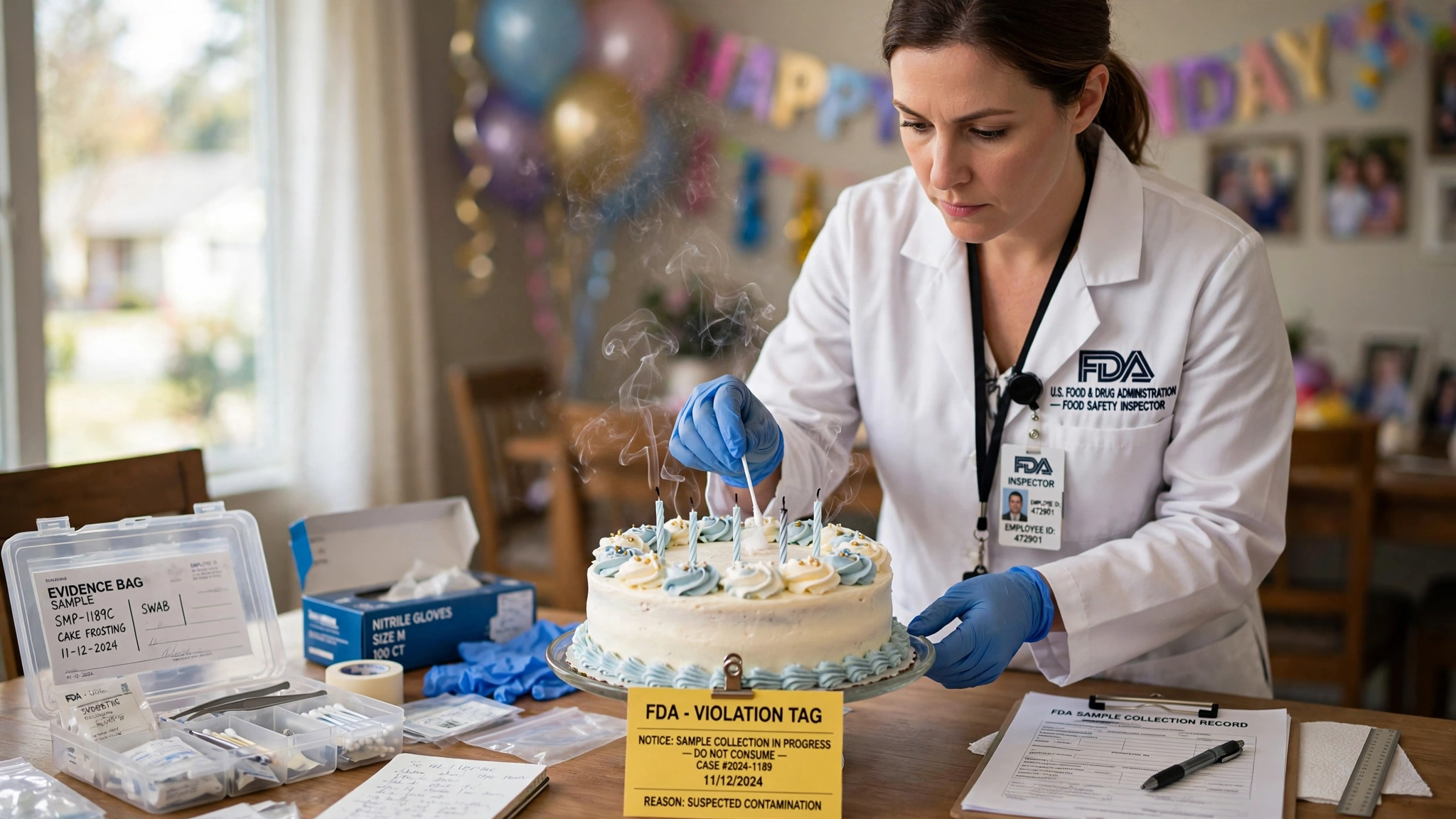
I. The Statutory Framework
The Federal Food, Drug, and Cosmetic Act of 1938, codified at 21 U.S.C. § 301 et seq., is the foundational federal statute governing the safety of the American food supply. Section 301, codified at 21 U.S.C. § 331, prohibits the introduction or delivery for introduction into interstate commerce of any food that is adulterated within the meaning of Section 402. Section 402, codified at 21 U.S.C. § 342, defines the circumstances under which food is deemed adulterated.1
Section 402(a)(4), at 21 U.S.C. § 342(a)(4), provides that a food shall be deemed adulterated “if it has been prepared, packed, or held under insanitary conditions whereby it may have become contaminated with filth, or whereby it may have been rendered injurious to health.” The operative standard is not that contamination occurred. The standard is that insanitary conditions existed whereby contamination may have occurred. The statute does not require proof of illness. It does not require identification of a specific pathogen. It requires only a condition and a possibility.2
The Supreme Court affirmed the breadth of this provision in United States v. Lexington Mill & Elevator Co., holding that the adulteration provisions of the food safety laws are to be given a liberal construction consistent with their remedial purpose. The Court of Appeals for the Fourth Circuit, in United States v. 1,200 Cans, Pasteurized Whole Eggs, held that the phrase “may have become contaminated” means “a reasonable possibility” of contamination, not a certainty. A reasonable possibility is all the statute requires. It is all the statute has ever required.3
The statute does not specify the identity of the person who creates the insanitary condition. It does not require that the person be an employee of a food establishment. It does not require that the person be aware that an insanitary condition has been created. It states the condition. It states the consequence. It moves on.
II. The Contamination Event
In 2017, Paul Dawson, a professor of food science at Clemson University, and his co-investigators published a study in the Journal of Food Research titled “Bacterial Transfer Associated with Blowing Out Candles on a Birthday Cake.” The study was designed to quantify the bacterial contamination resulting from the common practice of extinguishing birthday candles by blowing. The methodology was straightforward. The researchers spread a uniform layer of icing over aluminum foil, inserted seventeen birthday candles into a Styrofoam base beneath the foil, and asked eleven test subjects to blow out the candles after consuming a slice of pizza to stimulate salivation. They then collected samples from the icing surface and cultured them on nutrient agar plates to measure bacterial growth.4
The results were as follows. Blowing out the candles increased the number of bacteria recovered from the icing surface by an average of 1,400 percent compared to icing on which no candles had been blown out. This is not a typographical error. The bacterial load increased by a factor of fifteen. One participant’s exhalation increased the bacterial count by approximately 12,000 percent, a factor of 120. The variation between participants was enormous, suggesting that some individuals deposit far more oral bacteria per exhalation than others, a finding consistent with the known variability in human salivary flow rates and oral microbiome composition.5
Professor Dawson described the mechanism to The Atlantic: “Some people blow on the cake and they don’t transfer any bacteria. Whereas you have one or two people who really for whatever reason… transfer a lot of bacteria.” The study concluded that “the transfer of bacteria and other microorganisms from the respiratory tract of a person blowing out candles to food consumed by others is likely.” The peer-reviewed literature does not describe this transfer as hypothetical. It describes it as likely. The experiment was repeated three times on separate days across eleven subjects. The 1,400 percent average held.6
The study was published in a refereed journal. It has been cited by food safety researchers, public health communicators, and, during the COVID-19 pandemic, by state health departments that prohibited the practice in food service establishments. The science is settled. When a person blows on a cake, bacteria from that person’s mouth land on the cake. The only variable is how much.
III. The Oral Microbiome
The human oral cavity is not a clean environment. The expanded Human Oral Microbiome Database, maintained by the Forsyth Institute and supported by the National Institute of Dental and Craniofacial Research at the National Institutes of Health, has catalogued approximately 774 microbial species that colonize the human mouth, of which approximately 58 percent have been formally named and the remainder are known only by their 16S rRNA gene sequences. The oral cavity is the second most diverse microbial habitat in the human body, exceeded only by the gut. It contains more distinct microbial species than the skin, the respiratory tract, or the urogenital tract.7
The total bacterial population of a single human mouth is estimated at between 10 billion and 20 billion individual organisms at any given time. These organisms colonize the teeth, the gums, the tongue, the palate, the tonsils, and the buccal mucosa. They are present in saliva at concentrations of approximately 100 million cells per milliliter. A single milliliter of human saliva contains more bacterial cells than there are people in the state of California.8
The majority of these organisms are commensal and nonpathogenic under normal circumstances. Some are not. Streptococcus mutans, the primary etiological agent of dental caries, is present in the oral cavity of approximately 85 percent of the human population and is readily transmissible through saliva. Porphyromonas gingivalis, the bacterium most strongly associated with periodontal disease, has been detected in the oral cavities of individuals with no clinical signs of periodontitis and is transmissible through close contact. Streptococcus pyogenes, the causative agent of strep throat, scarlet fever, and necrotizing fasciitis, colonizes the pharynx and is expelled during forceful exhalation. Staphylococcus aureus, including methicillin-resistant strains, has been isolated from the oral cavity at carriage rates of 2 to 9 percent in healthy adults.9
When a person blows out birthday candles, the air stream passes over the tongue, the palate, the pharynx, and the labial surfaces of the teeth. It entrains saliva droplets containing these organisms and deposits them on the icing surface. The deposited organisms land on a substrate composed of sugar, fat, and water, a growth medium that clinical microbiologists would recognize as nutritive.
IV. The Aerosol Dynamics
The physics of respiratory aerosol generation during forceful exhalation are well characterized. Research published by Lydia Bourouiba and colleagues at the Massachusetts Institute of Technology in the Journal of Fluid Mechanics demonstrated that respiratory events produce a turbulent multiphase cloud of gas and suspended droplets that can travel substantially farther than previously assumed. A cough generates approximately 3,000 droplet nuclei. A sneeze generates approximately 40,000. Forceful blowing, the specific respiratory action required to extinguish birthday candles, produces a sustained directed airflow that combines features of both: the velocity of a cough with the duration required to extinguish multiple flames arranged across a surface area of approximately 200 square centimeters.10
The droplets produced during blowing range in diameter from less than 1 micrometer to more than 500 micrometers. Droplets smaller than 5 micrometers remain airborne as aerosol nuclei and can be inhaled by bystanders. Droplets larger than 100 micrometers follow ballistic trajectories and impact surfaces within approximately one meter of the source. The icing surface of a birthday cake is positioned at a distance of approximately 30 to 50 centimeters from the mouth of the person blowing. It is within the ballistic range of the largest droplets and the settling range of intermediate droplets. It intercepts the respiratory plume at its point of maximum concentration.11
The COVID-19 pandemic produced an unprecedented volume of research on respiratory droplet transmission. The Centers for Disease Control and Prevention published guidance in 2020 confirming that SARS-CoV-2 is transmitted through respiratory droplets and aerosols generated during breathing, talking, coughing, and sneezing. The agency did not specifically list blowing out birthday candles among its examples of respiratory droplet-generating activities. It did not need to. The physics are the same. The only difference is the target. When a person exhales forcefully toward another person’s face, the CDC calls it a transmission risk. When a person exhales forcefully toward another person’s food, the FDA calls it a party.12
V. The Regulatory Standard for Personnel Hygiene
The FDA’s Current Good Manufacturing Practice regulations, codified at 21 CFR Part 117 (formerly Part 110), establish the minimum sanitary requirements for the manufacturing, processing, packing, and holding of human food. Section 117.10, titled “Personnel,” specifies the hygiene requirements for all persons who handle food. Subsection (b)(9) requires personnel to take “any other necessary precautions to protect against allergen cross-contact and against contamination of food, food-contact surfaces, or food-packaging materials with microorganisms or foreign substances (including perspiration, hair, cosmetics, tobacco, chemicals, and medicines applied to the skin).”13
The regulation does not list “respiratory discharge” in its parenthetical examples. It does not need to. The parenthetical is illustrative, not exhaustive, as indicated by the word “including.” Respiratory discharge is a foreign substance. Saliva is a foreign substance. Aerosolized oral bacteria are microorganisms. The regulation requires that personnel take precautions to protect food from contamination with microorganisms and foreign substances. Blowing on food is the opposite of a precaution.
The FDA’s Model Food Code, published every four years and adopted by approximately three-quarters of state and local jurisdictions as the basis for their retail food safety regulations, is more explicit. Section 2-401.11 of the 2022 Food Code states that “employees shall eat, drink, or use any form of tobacco only in designated areas where the contamination of exposed food; clean equipment, utensils, and linens; unwrapped single-service and single-use articles; or other items needing protection can not result.” The Food Code prohibits food handlers from engaging in activities that could result in the contamination of exposed food through oral or respiratory mechanisms. Blowing onto the exposed surface of a food product is such an activity.14
A bakery employee who blew across the frosted surface of every cake before boxing it for sale would be terminated, reported, and possibly prosecuted. The same act, performed by a customer in a dining room while surrounded by applauding relatives, is classified as a cherished tradition.
VI. The Enforcement Record
The FDA does not treat insanitary conditions in food facilities as theoretical concerns. It treats them as violations that warrant enforcement action. The agency’s publicly searchable Warning Letters database contains hundreds of letters issued to food manufacturers, processors, and handlers for conditions that satisfy the “insanitary conditions” standard of 21 U.S.C. § 342(a)(4). These conditions include the presence of rodent excreta in food storage areas, the presence of insects in processing rooms, the failure to maintain food-contact surfaces in a clean and sanitary condition, and the failure to require employees to wash their hands before handling food.15
In 2023, the FDA issued a warning letter to a bakery in Pennsylvania for, among other violations, failing to ensure that employees who handle food take adequate precautions to protect against contamination of food with microorganisms. The specific observation was that an employee was observed handling ready-to-eat baked goods without gloves and without having washed hands. The agency classified this as a violation of 21 CFR § 117.10. The contamination vector was bare skin contact. The bacterial load transferred from a human hand to a food surface during momentary contact is measured in hundreds of colony-forming units.16
The bacterial load transferred from a human exhalation to a cake surface during the act of blowing out birthday candles is measured in the hundreds of thousands. The Clemson study documented a 1,400 percent increase on average and a 12,000 percent increase at the upper end. The FDA issues warning letters for hand contact that transfers hundreds of organisms. It has never issued a warning letter for respiratory projection that transfers hundreds of thousands.
The agency has also pursued criminal enforcement against food manufacturers for persistent insanitary conditions. In United States v. Blue Bell Creameries, L.P., the company entered a criminal plea agreement after a Listeria monocytogenes outbreak linked to ice cream produced at facilities with documented sanitation deficiencies. The contamination vector was environmental: bacteria present in the processing environment that contacted finished product. The company paid $19.35 million in criminal penalties. The organism count that triggered the enforcement action was lower, per unit of food surface area, than the organism count that the Clemson researchers measured on icing after a single exhalation.17
VII. The COVID Confession
The most instructive evidence that blowing out birthday candles contaminates food comes from the authorities who acted on the premise.
During the COVID-19 pandemic, multiple state and local health departments in the United States modified their food safety guidance to specifically address the practice of blowing out birthday candles in food service establishments. The California Department of Public Health’s guidance for restaurant reopening in 2020 instructed operators that “self-service items such as condiments should be provided in single-use packages,” and multiple county health departments extended this principle to prohibit birthday candle-blowing at restaurants on the grounds that it constituted a respiratory contamination risk to shared food. The New York City Department of Health and Mental Hygiene issued guidance for food service establishments that restricted communal food practices involving respiratory contact.18
These were not recommendations from fringe agencies. They were directives from the largest and most experienced public health departments in the country. They were issued because epidemiologists at those agencies understood, exactly as the Clemson researchers had documented three years earlier, that blowing on food deposits respiratory bioaerosols onto a shared food surface. The agencies understood the contamination mechanism. They understood the vector. They understood the risk. They prohibited the practice.
Then the pandemic ended. The prohibitions were lifted. The practice resumed. The science did not change. The respiratory tract of a person blowing out candles in August 2026 contains the same categories of microorganisms it contained in August 2020. The aerosol dynamics are identical. The deposition rate on the icing surface is identical. The only thing that changed is that the authorities stopped caring.
A prohibition that is enacted because a practice contaminates food and then rescinded while the practice still contaminates food is not an evidence-based policy decision. It is a confession followed by a retraction.
VIII. The Scale of the Violation
The United States Census Bureau estimates the resident population of the United States at approximately 336 million persons as of 2025. Each of these persons has one birthday per year. The Bureau of Labor Statistics reports that in 2023, American households spent an average of $67 on cakes and cupcakes, with the majority of that expenditure associated with celebratory occasions. The birthday cake industry in the United States is valued at approximately $5 billion annually. Industry surveys consistently report that cake remains the single most common food item associated with birthday celebrations in the United States, with participation rates exceeding 60 percent across all age demographics.19
If 60 percent of the American population celebrates a birthday with a cake on which candles are blown out, the annual number of candle-blowing events is approximately 200 million. Each event deposits, according to the Clemson data, a bacterial load that exceeds the pre-blowing baseline by a factor of 15 on average. Each event produces a food product that is then sliced and distributed to an average of four to eight consumers at a typical household birthday gathering.
This means that approximately 800 million to 1.6 billion individual servings of bacterially contaminated cake are consumed in the United States every year by persons who did not generate the contamination and who were not informed of the bacterial content of the icing before consuming it. No other single food handling practice in the country produces this volume of contaminated servings. No other food handling practice in the country is performed with this degree of public enthusiasm.
The FDA’s CGMP regulations at 21 CFR Part 117 apply to facilities that manufacture, process, pack, or hold human food. A kitchen in which a birthday cake is held and then subjected to respiratory contamination before being served to multiple consumers is a location where food is held. The act of blowing on the cake and then distributing slices is an act of processing and serving. The fact that the person holding the food is a parent rather than a production manager does not alter the bacterial count on the icing.
IX. The Regulatory Asymmetry
Consider two scenarios that occur simultaneously on a Saturday afternoon in any American city.
In a commercial bakery on the east side of town, a trained food handler wearing a hairnet, an apron, and nitrile gloves frosts a custom birthday cake for a customer. The bakery is registered with the FDA under 21 CFR Part 1, Subpart H. It is subject to the CGMP requirements of 21 CFR Part 117. It maintains sanitation standard operating procedures. Its employees have completed food safety training. Its food-contact surfaces are cleaned and sanitized at prescribed intervals. If the food handler sneezes near the cake, the protocol requires that the cake be discarded. If an inspector observes the food handler touching the frosted surface with an ungloved hand, the bakery receives a Form 483 observation. If the condition recurs, the bakery receives a warning letter. The bakery has produced a cake that is, by regulatory standards, safe and unadulterated.
The customer picks up the cake and drives it to a house on the west side of town, where a seven-year-old child has invited fourteen friends to a birthday party. The child’s parent places the cake on a table. The parent inserts candles. The parent lights the candles. Twenty people sing a song. The child takes a deep breath, leans forward, and exhales as forcefully as possible directly onto the frosted surface of the cake, propelling a turbulent cloud of saliva droplets, oral bacteria, pharyngeal mucus, and aerosolized food debris across every square centimeter of exposed icing. The bacterial load on the icing increases by 1,400 percent. The parent then slices the cake and distributes it to fourteen children, none of whom consented to consuming the respiratory discharge of the birthday celebrant.20
The bakery spent four hours producing a cake that met every applicable food safety standard. The child spent four seconds rendering it adulterated within the meaning of 21 U.S.C. § 342(a)(4). The bakery is regulated. The child is not. The bakery can lose its registration for an insanitary condition less severe than what the child just did. The child received applause.
The regulatory framework of the Federal Food, Drug, and Cosmetic Act traces the safety of a food product from its manufacture to its point of sale. It regulates the ingredients. It regulates the facility. It regulates the employees. It regulates the packaging. It does not regulate the moment when the end user deliberately contaminates the product with oral microflora before distributing it to a roomful of guests.
X. The Historical Irony
The practice of blowing out birthday candles is believed to have originated in eighteenth-century Germany, at Kinderfeste celebrations where candles representing the years of the child’s life were placed on a cake and extinguished in a single breath. The tradition predates the germ theory of disease by approximately a century. It was invented in an era when the mechanism of infectious disease transmission was attributed to miasma, the theory that illness was caused by bad air rather than by microorganisms. The tradition was harmless in the context of its time, because in the context of its time, nobody knew that the human mouth contained anything that could make anyone sick.21
Louis Pasteur published his germ theory experiments in the 1860s. Robert Koch identified the specific bacterial agents of anthrax, tuberculosis, and cholera in the 1870s and 1880s. Joseph Lister introduced antiseptic surgical practice in 1867. The connection between microorganisms and disease has been understood for more than 150 years. The connection between the human mouth and microorganisms has been understood for nearly as long. The connection between blowing and the transfer of oral microorganisms to surfaces was demonstrated empirically by the Clemson study in 2017 and confirmed by every respiratory aerosol study conducted during the COVID-19 pandemic.
The Federal Food, Drug, and Cosmetic Act was enacted in 1938. The CGMP regulations were first promulgated in 1969. The Food Safety Modernization Act was signed into law in 2011. Each successive law has expanded the FDA’s authority to regulate insanitary conditions in the food supply. Each successive regulation has tightened the requirements for food handler hygiene. The regulatory apparatus has grown more comprehensive in every decade since its inception. It has never, in any decade, addressed the single most bacteriologically productive act routinely performed on a food product in the United States.
XI. Conclusion
The evidence presented in these pages requires no interpretive leap. Section 402(a)(4) of the Federal Food, Drug, and Cosmetic Act defines food as adulterated if it has been held under insanitary conditions whereby it may have become contaminated with filth or rendered injurious to health. A birthday cake on which candles have been blown out has been held under conditions in which a person expelled respiratory bioaerosols containing an average of 700 species of bacteria directly onto the food surface. The Clemson study measured a 1,400 percent increase in bacterial contamination. The FDA’s own CGMP regulations require food handlers to protect against precisely this category of contamination. State and local health departments prohibited the practice during a pandemic because they understood it to be a contamination event. The FDA has issued warning letters to bakeries for contamination events that deposited fewer organisms per square centimeter of food surface.
The birthday cake industry in the United States generates approximately $5 billion in annual revenue. Approximately 200 million candle-blowing events occur each year. Between 800 million and 1.6 billion servings of respiratory-contaminated cake are consumed annually by persons who were not the source of the contamination.
The FDA regulates the flour in the cake. It regulates the eggs. It regulates the butter. It regulates the sugar. It regulates the oven in which the cake was baked and the hands of the person who frosted it. It does not regulate the moment when a person fills their lungs, parts their lips, and deposits the contents of their oral microbiome onto the finished product before serving it to guests.
The statute prohibits the adulteration of food. The regulation prohibits the contamination of food with microorganisms from personnel. The science documents the contamination. The pandemic proved the authorities knew. The practice continues.
Make a wish.
Ergo.
Sources
- 21 U.S.C. § 331(a): “The following acts and the causing thereof are prohibited: (a) The introduction or delivery for introduction into interstate commerce of any food, drug, device, tobacco product, or cosmetic that is adulterated or misbranded.” law.cornell.edu ↑
- 21 U.S.C. § 342(a)(4): “A food shall be deemed to be adulterated… (4) if it has been prepared, packed, or held under insanitary conditions whereby it may have become contaminated with filth, or whereby it may have been rendered injurious to health.” law.cornell.edu ↑
- United States v. Lexington Mill & Elevator Co., 232 U.S. 399 (1914). United States v. 1,200 Cans, Pasteurized Whole Eggs, 339 F. Supp. 131 (N.D. Ga. 1972): “may have become contaminated” means a “reasonable possibility,” not a certainty. ↑
- P. Dawson, I. Han, D. Lynn, J. Lackey, J. Baker, and R. Martinez-Dawson, “Bacterial Transfer Associated with Blowing Out Candles on a Birthday Cake,” Journal of Food Research, vol. 6, no. 4, 2017, pp. 1–6. DOI: 10.5539/jfr.v6n4p1. ccsenet.org ↑
- Ibid. Blowing out candles resulted in 1,400% more bacteria on icing compared to icing not blown on. One subject produced a 12,000% increase. Eleven subjects tested across three repetitions on separate days. ↑
- P. Dawson, quoted in The Atlantic, July 31, 2017: “Some people blow on the cake and they don’t transfer any bacteria. Whereas you have one or two people who really for whatever reason… transfer a lot of bacteria.” ↑
- Expanded Human Oral Microbiome Database (eHOMD), maintained by the Forsyth Institute with support from NIDCR/NIH. Approximately 774 microbial species catalogued from the human oral cavity, approximately 58% formally named. homd.org ↑
- I. L. C. Carlsson, “Bacterial Load of Saliva,” in M. Mandel (ed.), Oral Biology; estimated 100 million bacterial cells per milliliter of saliva. Total oral bacterial population estimated at 10–20 billion organisms. U.S. Census Bureau, California state population estimate: approximately 39 million (2025). ↑
- Streptococcus mutans: prevalence approximately 85% of human population, primary cariogenic agent. Porphyromonas gingivalis: keystone pathogen of periodontitis, transmissible. Streptococcus pyogenes: pharyngeal colonizer, causative agent of strep throat, scarlet fever, necrotizing fasciitis. Staphylococcus aureus oral carriage: 2–9% in healthy adults. Sources: A.J. van Winkelhoff et al., Oral Microbiology and Immunology; CDC fact sheets. ↑
- L. Bourouiba, E. Dehandschoewercker, and J.W.M. Bush, “Violent Expiratory Events: On Coughing and Sneezing,” Journal of Fluid Mechanics, vol. 745, 2014, pp. 537–563. Cough: approximately 3,000 droplets; sneeze: approximately 40,000 droplets. ↑
- Droplet size distribution: sub-1 μm to >500 μm. Droplets <5 μm remain airborne; droplets >100 μm follow ballistic trajectories. See S. Asadi et al., “Aerosol Emission and Superemission During Human Speech,” Scientific Reports, vol. 9, 2019, 2348. ↑
- CDC, “Scientific Brief: SARS-CoV-2 Transmission,” updated May 7, 2021. “The principal mode by which people are infected with SARS-CoV-2 is through exposure to respiratory droplets carrying infectious virus.” cdc.gov ↑
- 21 CFR § 117.10(b)(9): personnel must take “any other necessary precautions to protect against allergen cross-contact and against contamination of food, food-contact surfaces, or food-packaging materials with microorganisms or foreign substances (including perspiration, hair, cosmetics, tobacco, chemicals, and medicines applied to the skin).” law.cornell.edu ↑
- FDA Food Code 2022, Section 2-401.11: “Employees shall eat, drink, or use any form of tobacco only in designated areas where the contamination of exposed food; clean equipment, utensils, and linens; unwrapped single-service and single-use articles; or other items needing protection can not result.” fda.gov ↑
- FDA Warning Letters database, searchable at fda.gov. Categories include “Insanitary Conditions,” “CGMP violations,” and “Food Safety.” fda.gov ↑
- FDA Form 483 observations and Warning Letters issued to bakeries for CGMP violations under 21 CFR § 117.10, including inadequate handwashing and bare-hand contact with ready-to-eat food. Bacterial transfer from hand contact: typically 102 to 103 CFU per contact event. See P. Dawson et al., “Bacterial Transfer Associated with Handling Gloved and Ungloved Hands,” Food Protection Trends. ↑
- United States v. Blue Bell Creameries, L.P., criminal plea agreement, U.S. District Court for the Western District of Texas (2020). Blue Bell paid $19.35 million in criminal penalties for distributing ice cream manufactured under insanitary conditions. Three people died from Listeria monocytogenes linked to the contamination. ↑
- California Department of Public Health, COVID-19 Industry Guidance: Restaurants (2020). New York City Department of Health and Mental Hygiene, Interim Guidance for Food Service Establishments (2020). Multiple county health departments in California, Texas, and New York prohibited communal food practices involving respiratory contact during pandemic reopening. ↑
- U.S. Census Bureau, population estimate: approximately 336 million (2025). Bureau of Labor Statistics, Consumer Expenditure Survey 2023: average household expenditure on cakes and cupcakes, $67. Birthday cake market estimated at approximately $5 billion annually in the United States. bls.gov ↑
- Dawson et al. (2017), 1,400% average increase. The experiment simulated a birthday party by having subjects eat pizza prior to blowing, to activate salivary glands and introduce food debris. The 12,000% maximum increase was from a single participant, demonstrating the variance in individual contamination potential. ↑
- H. Weber, “The History of the Birthday Cake,” citing Kinderfeste traditions in 18th-century Germany. Miasma theory dominated medical understanding of disease until Pasteur’s germ theory experiments in the 1860s. Koch’s postulates published 1884. ↑