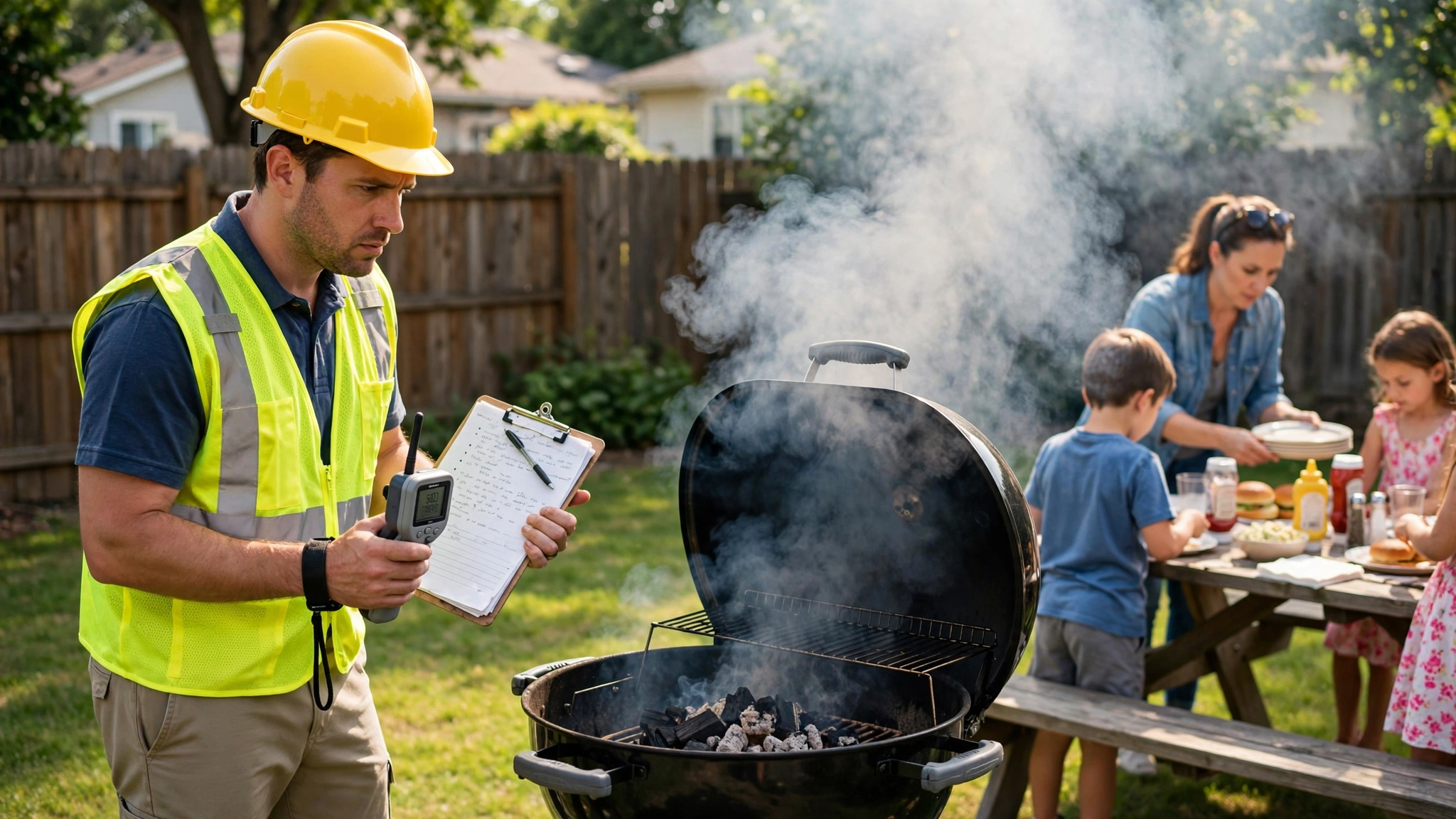
I. The Statutory Framework
The Clean Air Act Amendments of 1990 fundamentally restructured the regulation of hazardous air pollutants in the United States. Prior to the amendments, Section 112 of the original Act required the EPA to list pollutants that caused or contributed to “an increase in mortality or an increase in serious irreversible, or incapacitating reversible, illness,” and then to establish emission standards providing “an ample margin of safety to protect the public health.” In the twenty years between 1970 and 1990, the EPA managed to list exactly eight pollutants and regulate seven source categories under this authority.1
Congress, evidently dissatisfied with the pace, replaced the entire framework. The 1990 amendments enacted a statutory list of 189 hazardous air pollutants directly into the text of the law at Section 112(b)(1), subsequently amended to 187. Congress then directed the EPA to publish a list of source categories that emit these pollutants, and to promulgate National Emission Standards for Hazardous Air Pollutants—NESHAP—for each listed category within ten years.2
The standards must require “the maximum degree of reduction in emissions” that the Administrator determines is achievable, taking into account cost and non-air-quality impacts. For major sources—those emitting ten tons per year or more of any single HAP, or twenty-five tons per year or more of any combination—this standard is called Maximum Achievable Control Technology, or MACT. For area sources—every other stationary source of HAPs—the Administrator has discretion to impose MACT or the less stringent Generally Available Control Technology, or GACT.3
The definitions that operationalize this framework are straightforward. A “hazardous air pollutant” is any air pollutant listed under subsection (b). An “area source” is “any stationary source of hazardous air pollutants that is not a major source.” A “stationary source” has “the same meaning as such term has under section 7411(a) of this title.” That section, codified at 42 U.S.C. § 7411(a)(3), provides the operative definition: a stationary source is “any building, structure, facility, or installation which emits or may emit any air pollutant.”4
The statute does not limit “installation” to industrial equipment. It does not require a minimum emission rate. It does not exempt devices based on their proximity to potato salad.
II. What the Grill Emits
The emissions profile of a barbecue grill has been characterized with considerable precision in the peer-reviewed atmospheric chemistry literature. Kabir, Kim, and Ahn, in a 2010 study published in the Journal of Hazardous Materials, investigated volatile organic compound and carbonyl compound emissions from the combustion of sixteen commercial barbecue charcoal products. The study measured mean benzene concentrations of 98.7 parts per billion and mean toluene concentrations of 116 ppb in the combustion plumes. Formaldehyde was the most abundant carbonyl compound, at a mean concentration of 275 ppb, followed by acetaldehyde at 126 ppb.5
Benzene is listed at Section 112(b)(1) of the Clean Air Act. Its Chemical Abstracts Service registry number is 71-43-2. The International Agency for Research on Cancer classifies it as a Group 1 known human carcinogen. The EPA classifies it as a known human carcinogen. There is no safe threshold of exposure: the carcinogenic effects of benzene follow a linear dose-response curve in which any incremental exposure increases leukemia and lymphoma risk.6
Formaldehyde is listed at Section 112(b)(1). Its CAS number is 50-00-0. IARC classifies it as a Group 1 known human carcinogen. The EPA regulates formaldehyde emissions from plywood and composite wood product manufacturers, mineral wool production facilities, rubber tire manufacturers, wood furniture manufacturers, synthetic organic chemical manufacturing plants, and natural gas transmission and storage facilities, among others. The emission standard for formaldehyde in composite wood products, promulgated under Title VI of the Toxic Substances Control Act, is 0.05 parts per million for hardwood plywood.7 The average backyard charcoal grill, according to the Kabir study, produces formaldehyde at a mean concentration of 275 parts per billion—more than five times the 0.05 ppm standard the EPA applies to a sheet of plywood.
The grill does not stop at benzene and formaldehyde. A 2020 study by Jelonek and colleagues, published in Atmospheric Environment: X, documented that grilling with wood pellets and charcoal produces elevated emissions of particulate matter (PM2.5), nitrogen dioxide, sulfur dioxide, carbon monoxide, and formaldehyde, all exceeding recommended occupational exposure limits during a one-hour grilling session.8 A comprehensive review by Alves and colleagues documented that charcoal combustion products include not only the aromatic VOCs and carbonyls, but also particulate-phase polycyclic aromatic hydrocarbons, including benzo[a]pyrene, naphthalene, phenanthrene, anthracene, and fluorene.9
Naphthalene is listed at Section 112(b)(1). CAS number 91-20-3. Polycyclic organic matter—the category that encompasses benzo[a]pyrene and its carcinogenic relatives—is listed at Section 112(b)(1). These are not trace contaminants detected at the limits of analytical sensitivity. Kim and Lee, in a 2012 study published in the Journal of the Korean Society for Atmospheric Environment, measured ambient benzene concentrations of 2.93 μg/m³ and total BTEX concentrations of 10.5 μg/m³ in outdoor air surrounding charcoal grill restaurants—concentrations sixty-one percent higher than those measured at comparable sites without grills.10
III. The Installation
The question of whether a barbecue grill constitutes a “stationary source” under the Clean Air Act is not a question of policy. It is a question of statutory definition. The definition, reproduced in its entirety, is: “any building, structure, facility, or installation which emits or may emit any air pollutant.”11
A barbecue grill is an installation. It is installed in a specific location—a patio, a deck, a designated area of the yard. Built-in grills are permanently affixed to masonry or cabinetry. Freestanding grills are positioned and connected to fuel supplies (propane tanks, natural gas lines) at fixed points. The Ninth Circuit, in United States v. Walsh (1993), affirmed that the statutory definition encompasses any equipment that emits air pollutants from a fixed location, without limiting the term to industrial-scale operations.12
The statute says “emits or may emit.” The disjunctive is important. A grill that is currently unlit but has been used and will be used again “may emit” an air pollutant. The statutory trigger is potential, not continuous operation. A coal-fired power plant does not cease to be a stationary source during a planned outage. A barbecue grill does not cease to be an installation during a rainy Tuesday.
The definition also specifies “any air pollutant,” not “any hazardous air pollutant.” The broader term encompasses criteria pollutants, hazardous air pollutants, and any other substance that qualifies as an air pollutant under the Act. Particulate matter is a criteria pollutant. Carbon monoxide is a criteria pollutant. Both are emitted in documented quantities by barbecue grills. The installation emits air pollutants. The statute says the installation is a stationary source. The syllogism is complete.
IV. The Area Source That Isn’t
No individual backyard grill qualifies as a major source. The major-source threshold under Section 112(a)(1) is ten tons per year of any single HAP or twenty-five tons per year of any combination. A single charcoal grill, operated at the national average frequency, does not approach this threshold by several orders of magnitude.13
But the statute anticipated this. That is why it created the area source category. An area source is defined as “any stationary source of hazardous air pollutants that is not a major source.”14 The definition exists precisely to capture sources that emit listed pollutants in quantities below the major-source threshold. Dry cleaners are area sources. Gas stations are area sources. Dental offices that use mercury amalgam are area sources. The EPA has listed all of these, and dozens of other low-emission source categories, under Section 112(c)(3) and promulgated NESHAP or GACT standards for them.
Section 112(c)(3) directs the EPA to list “sufficient categories or subcategories of area sources to ensure that area sources representing 90 percent of the area source emissions of the 30 hazardous air pollutants that present the greatest threat to public health in the largest number of urban areas are subject to regulation.”15 The EPA’s own Integrated Urban Air Toxics Strategy, published in 1999, identified the thirty HAPs posing the greatest urban health threat. Benzene was on the list. Formaldehyde was on the list. The seven polycyclic aromatic hydrocarbons designated as probable or known carcinogens were on the list. Acetaldehyde was on the list.16
The EPA subsequently listed the area source categories accounting for ninety percent of emissions of these thirty priority pollutants. It listed stationary internal combustion engines. It listed industrial boilers. It listed commercial sterilizers and chromium electroplating facilities and portland cement kilns. It did not list barbecue grills. The omission is not because grills fail to meet the statutory definition. It is because the agency chose not to look.
V. The Scale of the Unregulated Category
The Hearth, Patio & Barbecue Association conducts biennial consumer research on grill ownership in the United States. Its 2023 State of the Barbecue Industry report, based on a nationally representative survey conducted by Rockbridge Associates, found that eighty percent of American homeowners and seventy percent of all American households own at least one grill or smoker. This figure matched the highest percentage in the study’s history, an increase from sixty-four percent household ownership in 2019.17
The U.S. Census Bureau estimates approximately 131 million households in the United States. Seventy percent of 131 million is approximately 91.7 million households containing at least one combustion device that emits listed hazardous air pollutants from a fixed location. Many households own more than one: the HPBA data show that sixty-five percent of grill owners have a charcoal grill, sixty-three percent have a gas grill, and nine percent have a wood pellet grill, with substantial overlap among categories.18
The total number of grills in residential use in the United States conservatively exceeds 120 million units. Each one is an installation. Each one emits hazardous air pollutants. The EPA has classified zero of them as area sources.
The aggregate fuel throughput is not trivial. According to market data compiled by IndexBox, approximately 983,000 tons of wood charcoal were consumed in the United States in 2024.19 This figure does not include propane, natural gas, or wood pellet consumption for grilling purposes. The American Petroleum Institute reports that approximately 7.6 billion gallons of propane are consumed annually in the United States, a meaningful fraction of which is attributable to the estimated 63 percent of grill-owning households that operate gas grills.20 Every pound of charcoal burned and every cubic foot of gas combusted produces a documented quantity of benzene, formaldehyde, and polycyclic organic matter. The emissions aggregate.
VI. The Industrial Comparison
The EPA has promulgated NESHAP for formaldehyde emissions from eleven distinct industrial source categories, including plywood and composite wood products manufacturing, mineral wool production, wet-formed fiberglass mat production, rubber tire manufacturing, wood furniture manufacturing, synthetic organic chemical manufacturing, and natural gas transmission and storage facilities.7 Each of these source categories was listed under Section 112(c) because its member facilities emit formaldehyde, a listed HAP, in quantities sufficient to warrant regulation.
Consider the composite wood products industry. The EPA’s formaldehyde emission standard for hardwood plywood, promulgated under TSCA Title VI in 2016, limits emissions to 0.05 parts per million as measured by the ASTM E1333 large chamber test method. Particleboard is limited to 0.09 ppm. Medium-density fiberboard is limited to 0.11 ppm.22 These standards were adopted, according to the EPA’s own regulatory impact analysis, because formaldehyde emissions from these products “can cause eye, nose, and throat irritation” and because “high levels of exposure have been linked to respiratory problems and some types of cancers.”
A plywood factory that emits formaldehyde at 0.06 ppm is in violation of federal law. A backyard grill that emits formaldehyde at 275 parts per billion—0.275 ppm, or approximately five times the plywood standard—is in violation of nothing. The formaldehyde molecule does not behave differently because it emerged from a chimney rather than a Weber lid vent. The carcinogenic mechanism does not pause to check whether the source has been listed under Section 112(c). The epithelial cells of the human nasopharynx do not distinguish between formaldehyde molecules produced by curing adhesive resin and formaldehyde molecules produced by pyrolyzing a bratwurst.
For benzene, the regulatory asymmetry is equally stark. The EPA listed benzene as a hazardous air pollutant under the original Section 112 in 1977, three years before the 1990 amendments expanded the framework. Coke oven batteries, petroleum refineries, chemical manufacturing plants, gasoline distribution terminals, and hazardous waste combustors are all subject to benzene NESHAP. The MACT standard for benzene emissions from coke oven batteries, codified at 40 CFR Part 63, Subpart L, sets emission limits per individual oven, requires continuous parameter monitoring, and mandates periodic leak detection and repair.23
A charcoal grill produces benzene at a mean concentration of 98.7 ppb during combustion. There is no NESHAP. There is no GACT standard. There is no leak detection and repair program. There is a pair of tongs and a bottle of lighter fluid.
VII. The Seasonal Peak Emission Event
The HPBA’s consumer data identifies the Fourth of July as the most popular grilling day of the year, with fifty-four percent of grill owners reporting that they cooked outdoors on that holiday. Memorial Day follows at forty-four percent, Labor Day at forty-seven percent, and Father’s Day at thirty-four percent.24
Fifty-four percent of 91.7 million grill-owning households is approximately 49.5 million grills ignited simultaneously within a twenty-four-hour period. Each grill combusts an average of one kilogram of charcoal or its propane equivalent over a cooking cycle of sixty to ninety minutes. Each combustion event produces benzene, formaldehyde, acetaldehyde, naphthalene, particulate matter, carbon monoxide, and polycyclic aromatic hydrocarbons in the concentrations documented by Kabir et al. and Jelonek et al.
The EPA’s Air Quality Index classifies PM2.5 concentrations above 35.5 μg/m³ as “unhealthy for sensitive groups.” A single charcoal grill in operation produces localized PM2.5 concentrations that can exceed 1,000 μg/m³ in the immediate vicinity of the cook, according to measurements by Song et al. (2018) at outdoor barbecue sites.25 That is approximately twenty-eight times the AQI “unhealthy for sensitive groups” threshold. The cook is the sensitive group. The cook is standing in it.
No monitoring network captures these emissions. The EPA’s ambient air quality monitoring stations are sited according to criteria specified at 40 CFR Part 58, Appendix E, which require placement at locations representative of area-wide air quality, not at locations representative of a man in cargo shorts standing downwind of a two-dollar bag of Kingsford. The residential combustion of nearly one million tons of wood charcoal per year passes through no continuous emissions monitoring system, triggers no excess emissions report, and generates no deviation notification to any state or federal permitting authority.
VIII. The Enforcement Vacuum
The EPA maintains a database of enforcement and compliance actions accessible through its Enforcement and Compliance History Online, or ECHO, system. A search of this database for enforcement actions related to residential barbecue grills, outdoor grills, residential charcoal combustion, or backyard cooking equipment returns zero results. This is not because the database is incomplete. It is because there are no enforcement actions to return.26
The absence of enforcement is not the result of a formal regulatory determination that grills are exempt from Section 112. The statute contains an explicit exemption for motor vehicles and nonroad vehicles, which are “subject to regulation under subchapter II.” This exemption was drafted with precision: it removes mobile combustion sources from the definition of “area source” because those sources are regulated elsewhere in the Act. There is no comparable exemption for stationary residential combustion devices. There is no exemption for installations that produce food. There is no exemption for equipment that is fun.27
The EPA has, on occasion, acknowledged the emissions from cooking activities. In its 2014 National Emissions Inventory, the agency classified “commercial cooking” as a category of area source emissions for particulate matter and volatile organic compounds. But residential cooking, including outdoor grilling, is subsumed into the broader category of “miscellaneous area sources” and is not tracked, listed, or regulated as a distinct source category.28 The agency knows the emissions exist. It counts them in the inventory. It does not regulate the source that produces them.
IX. Conclusion
The evidence requires no creative interpretation. It requires only that the definitions in the statute be applied to the object on the patio.
Section 112(b)(1) lists 187 hazardous air pollutants. Benzene is on the list. Formaldehyde is on the list. Naphthalene is on the list. Polycyclic organic matter is on the list. Acetaldehyde is on the list. Peer-reviewed atmospheric chemistry, published in journals including the Journal of Hazardous Materials, Atmospheric Environment, and Environmental Science & Technology, has documented that charcoal and gas grills produce every one of these substances during normal operation.
Section 7411(a)(3) defines a stationary source as “any building, structure, facility, or installation which emits or may emit any air pollutant.” A barbecue grill is an installation. It emits air pollutants. It is a stationary source.
Section 112(a)(2) defines an area source as “any stationary source of hazardous air pollutants that is not a major source.” A barbecue grill emits hazardous air pollutants. It is not a major source. It is an area source.
Section 112(c)(3) requires the EPA to list sufficient area source categories to ensure that ninety percent of area source emissions of the thirty most threatening urban HAPs are subject to regulation. Benzene and formaldehyde are both on the list of thirty. Barbecue grills emit both. The source category has not been listed.
Section 112(d) requires the EPA to promulgate emission standards for every listed source category. The standard for area sources may be GACT. No standard of any kind has been promulgated.
Ninety-one million American households own at least one of these unregulated stationary area sources. They operate them on patios, decks, balconies, and driveways. They operate them most intensively during the summer months, when photochemical smog formation is at its peak and ground-level ozone concentrations are highest. They operate them in the greatest concentration on July 4th, when approximately 49.5 million simultaneous combustion events release benzene, formaldehyde, and polycyclic organic matter into the ambient air of every residential neighborhood in the country.
The EPA regulates formaldehyde from plywood. It regulates benzene from coke ovens. It regulates polycyclic organic matter from aluminum smelters. It does not regulate any of these substances from the device that produces them twelve inches from a human being’s respiratory tract while that human being is eating corn on the cob.
The Clean Air Act is fifty-four years old. The barbecue grill predates it by several thousand. In all of that time, across all of those statutes, regulations, amendments, and NESHAP, no federal agency has classified the most popular combustion device in America as what the statute plainly says it is.
It is an installation. It emits. It is a source.
Ergo.
Sources
- U.S. Environmental Protection Agency, “Evolution of the Clean Air Act,” historical overview of Section 112 implementation, 1970–1990. epa.gov ↑
- 42 U.S.C. § 7412, as amended by the Clean Air Act Amendments of 1990, Pub. L. No. 101-549, § 301, 104 Stat. 2531 (1990). uscode.house.gov ↑
- 42 U.S.C. § 7412(d)(1)–(5), emission standards for major and area sources; MACT and GACT standards. law.cornell.edu ↑
- 42 U.S.C. § 7411(a)(3), defining “stationary source” as “any building, structure, facility, or installation which emits or may emit any air pollutant.” uscode.house.gov ↑
- E. Kabir, K.-H. Kim, and J.-W. Ahn, “Barbecue Charcoal Combustion as a Potential Source of Aromatic Volatile Organic Compounds and Carbonyls,” Journal of Hazardous Materials, vol. 174, nos. 1–3, 2010, pp. 492–499. sciencedirect.com ↑
- International Agency for Research on Cancer, “Benzene,” IARC Monographs on the Identification of Carcinogenic Hazards to Humans, vol. 120, 2018; Lebel et al., “Gas and Propane Combustion from Stoves Emits Benzene and Increases Indoor Air Pollution,” Environmental Science & Technology, vol. 56, no. 19, 2022, pp. 13,547–13,557. pubs.acs.org ↑
- U.S. Environmental Protection Agency, “Laws and Regulations Concerning Formaldehyde,” listing NESHAP source categories for formaldehyde. epa.gov ↑
- Z. Jelonek et al., “Emissions During Grilling with Wood Pellets and Chips,” Atmospheric Environment: X, vol. 12, 2021, art. 100140. sciencedirect.com ↑
- C.A. Alves et al., “Particulate and Gaseous Emissions from Charcoal Combustion in Barbecue Grills,” Fuel Processing Technology, vol. 176, 2018, pp. 296–306; see also J. Lao et al., “Barbecue Fumes: An Overlooked Source of Health Hazards in Outdoor Settings?,” Environmental Science & Technology, vol. 52, no. 17, 2018, pp. 10,007–10,016. pubmed.ncbi.nlm.nih.gov ↑
- S.-B. Kim and G.-J. Lee, “Characteristics of VOCs in the Ambient Air Around Charcoal Grill Restaurants,” Journal of the Korean Society for Atmospheric Environment, 2012, documenting BTEX concentrations at charcoal grill sites (2.93 μg/m³ benzene) vs. control sites (1.82 μg/m³). As cited in Gruber and Nikolasc (2024) and Alves et al. ↑
- 42 U.S.C. § 7411(a)(3). law.cornell.edu ↑
- United States v. James Walsh, 8 F.3d 659 (9th Cir. 1993), affirming that the “stationary source” definition at § 7411(a)(3) encompasses any equipment emitting air pollutants from a fixed location. law.justia.com ↑
- 42 U.S.C. § 7412(a)(1), defining “major source” threshold at 10 tons/year of any single HAP or 25 tons/year of any combination. law.cornell.edu ↑
- 42 U.S.C. § 7412(a)(2). law.cornell.edu ↑
- 42 U.S.C. § 7412(c)(3), area source listing requirements. law.cornell.edu ↑
- U.S. Environmental Protection Agency, “Integrated Urban Air Toxics Strategy,” 64 Fed. Reg. 38,706 (July 19, 1999), identifying 30 urban HAPs including benzene, formaldehyde, acetaldehyde, and 7 PAHs. federalregister.gov ↑
- Hearth, Patio & Barbecue Association, “2023 State of the Barbecue Industry,” consumer survey conducted by Rockbridge Associates Inc., published March 12, 2023. members.hpba.org ↑
- HPBA (2023), cited above. Charcoal ownership at 65% of grill owners; gas at 63%; wood pellet at 9%. ↑
- IndexBox, “United States’ Wood Charcoal Market Forecast,” reporting 2024 consumption of approximately 983,000 tons. indexbox.io ↑
- American Petroleum Institute and U.S. Energy Information Administration data on propane consumption. The EIA’s “Petroleum & Other Liquids” database reports total U.S. propane/propylene consumption, of which residential and commercial cooking represents a measurable fraction. eia.gov ↑
- EPA formaldehyde NESHAP source categories listed at note 7, above. ↑
- U.S. Environmental Protection Agency, “Formaldehyde Emission Standards for Composite Wood Products,” Final Rule, 81 Fed. Reg. 89,674 (December 12, 2016), codified at 40 CFR Part 770. epa.gov ↑
- 40 CFR Part 63, Subpart L, “National Emission Standards for Coke Oven Batteries.” ecfr.gov ↑
- HPBA (2023), cited above. Fourth of July: 54% of grill owners; Labor Day: 47%; Memorial Day: 44%; Father’s Day: 34%. ↑
- Z. Song et al., “Fine Particle Emission from Outdoor Barbecue Restaurants,” Atmospheric Pollution Research, 2018, measuring PM2.5 concentrations ranging from 71 to 1,083 μg/m³ at outdoor barbecue sites. ↑
- U.S. Environmental Protection Agency, Enforcement and Compliance History Online (ECHO). echo.epa.gov ↑
- 42 U.S.C. § 7412(a)(2), excluding only “motor vehicles or nonroad vehicles subject to regulation under subchapter II” from the definition of area source. law.cornell.edu ↑
- U.S. Environmental Protection Agency, “2014 National Emissions Inventory,” technical support document, area source methodology for commercial cooking and miscellaneous residential combustion categories. epa.gov ↑