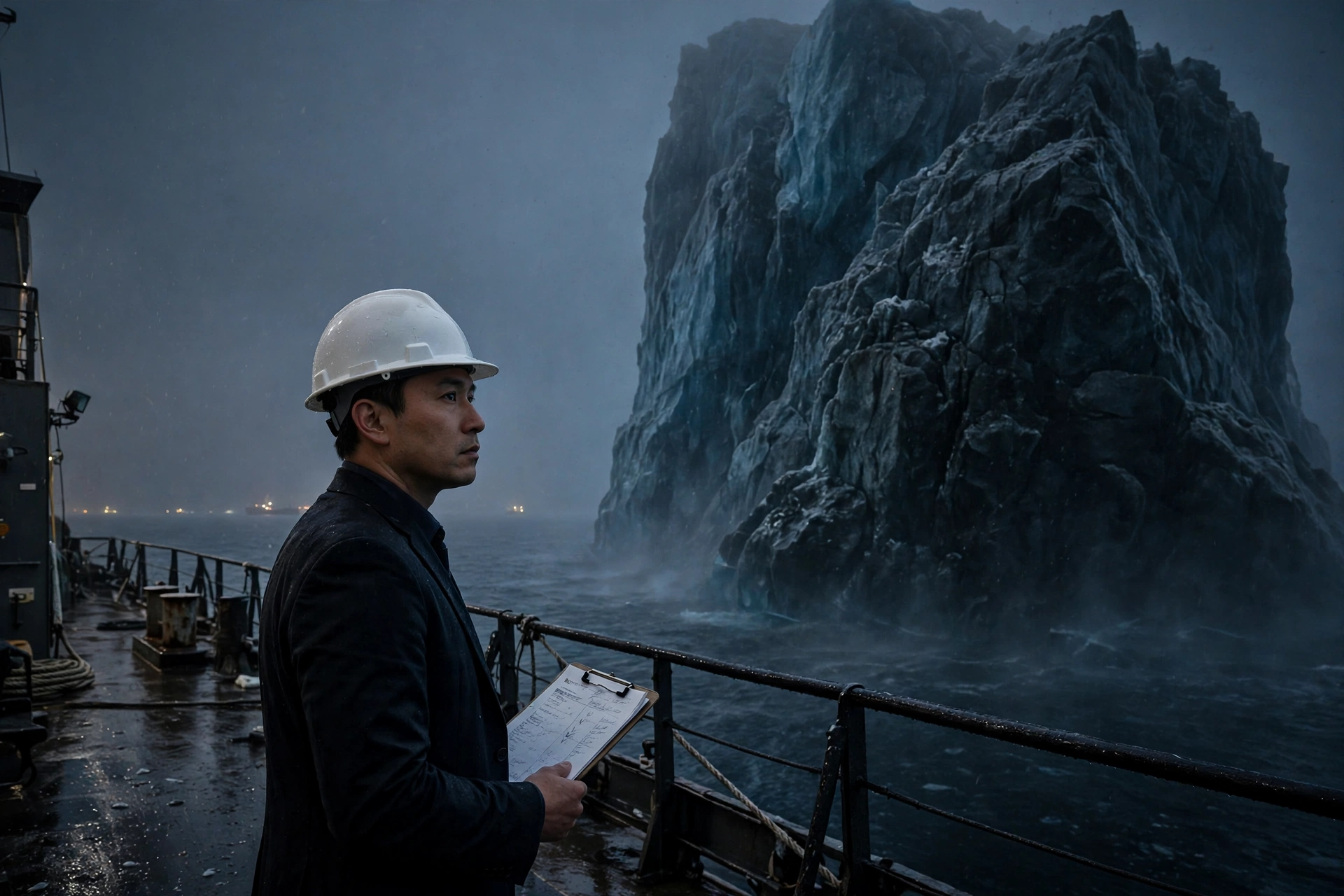
I. The Operation
Vessels are among the most documented objects in American law. Federal law provides that a vessel may engage in a trade only if it has been issued a certificate of documentation with an endorsement for that trade, and a vessel of less than five net tons may engage in a trade without being documented. A certificate of documentation may be issued only if the vessel is wholly owned by United States citizens or qualifying entities, is at least five net tons as measured under the tonnage rules, and is not documented under the laws of a foreign country. An application for the certificate must be filed by the owner of the vessel with the National Vessel Documentation Center.1
Documentation is the federal registration of a vessel. It serves as evidence of the vessel's nationality, it records ownership in a national registry, and it permits the vessel to be subject to preferred mortgages. Any vessel of at least five net tons that engages in coastwise trade or commercial fishing on the navigable waters of the United States or in the exclusive economic zone must hold a certificate bearing a valid endorsement for the activity in which it is engaged. Net tonnage is a measure of a vessel's internal volume, not its weight on a scale, and as a rough guideline most vessels over about 25 feet in length meet the five net ton minimum.2
International law defines the fleet broadly. The International Regulations for Preventing Collisions at Sea provide that the word vessel includes every description of water craft, including non-displacement craft, wing-in-ground-effect craft, and seaplanes, used or capable of being used as a means of transportation on water, and that the rules apply to all vessels upon the high seas and in all waters connected therewith navigable by seagoing vessels. A power-driven vessel underway shall exhibit a masthead light forward, a second masthead light abaft of and higher than the forward one, sidelights, and a sternlight, with the second masthead light required for vessels of 50 metres or more in length. Lights shall be complied with from sunset to sunrise.3
Modern law adds a transponder to the lantern. Under the International Convention for the Safety of Life at Sea, Chapter V, Regulation 19, all ships of 300 gross tonnage and upwards engaged on international voyages, cargo ships of 500 gross tonnage and upwards not engaged on international voyages, and passenger ships irrespective of size shall be fitted with an automatic identification system. The system shall provide automatically to appropriately equipped shore stations, other ships, and aircraft information including the ship's identity, type, position, course, speed, navigational status, and other safety related information, and ships fitted with the system shall maintain it in operation at all times. In United States waters, a self-propelled vessel of 65 feet or more in length engaged in commercial service must carry a Coast Guard type-approved Class A device.4
Consider what an iceberg is, in regulatory terms. It is a floating mass of ice that travels the high seas and the waters connected therewith, on routes navigable by seagoing vessels, in the company of documented ships, at the speed of the current, carrying a tonnage that dwarfs the vessels around it. It exhibits no masthead light forward, no second masthead light abaft, no sidelights, and no sternlight. It transmits no identity, no type, no position, no course, and no speed. It has no owner to file the application, no home port to paint on the stern, and no certificate of documentation in any registry on earth. The difference between the documented fleet and the undocumented one is not the tonnage. It is the paperwork.
II. The Scale of Production
The throughput of the undocumented fleet is established by the glaciologists. It is estimated that the glaciers of Greenland produce 15,000 to 30,000 icebergs every year, and that only about one percent of them, 150 to 300, ever make it to the Atlantic Ocean. The rest ground, melt, or break apart on the way, and the survivors are carried south by the Labrador Current past Baffin Island and through the Labrador Sea, a journey that can take three years from calving to the shipping lanes.5
Antarctica produces the largest units in the fleet. Iceberg B-15 calved from the Ross Ice Shelf in March 2000 and measured around 295 kilometres long by 37 kilometres wide, with a surface area of about 11,000 square kilometres, larger than the whole island of Jamaica. It broke apart over the following years, and its largest remaining piece, B-15A, with an area of about 3,000 square kilometres, was still the largest iceberg on Earth until it ran aground and split into several pieces on October 27, 2005, an event observed by seismographs both on the iceberg and across Antarctica. Iceberg A-76, which broke off the Ronne Ice Shelf in May 2021, measured 4,320 square kilometres, around 170 kilometres long and 25 kilometres wide, and was at the time the largest iceberg in the world.67
North Atlantic production is counted to the berg by the patrol the disaster created. The International Ice Patrol classifies an ice season as light for 230 or fewer icebergs drifting south of 48 degrees north latitude, and its time series, maintained since 1900, is highly variable, with a maximum of 2,202 icebergs in 1984 and a minimum of zero in both 1966 and 2006, and an overall mean of 491 with a standard deviation of 567. In the 2023 ice year, 385 icebergs drifted into the transatlantic shipping lanes, marking the first moderate year of the current decade. In 2014, there were 1,546 icebergs in the shipping lanes, the sixth most severe season on record since 1900. There were 1,165 in 2015 and 687 in 2016.89
Every one of those icebergs exceeds the documentation threshold by orders of magnitude. The five net ton minimum is met by most vessels over about 25 feet in length. A single North Atlantic iceberg is commonly 50 to 100 feet high above the water and 200 to 400 feet long, and the berg that sank the Titanic was reconstructed at a mass of about two million tonnes. The threshold is five net tons. The fleet sails past it at two million tonnes, unmeasured, unnamed, and unregistered, 491 times a year on average, and the registry has never recorded a single one of them.210
III. The Process
An iceberg floats because ice is less dense than seawater, and the margin is small enough to make the berg almost entirely invisible. Pure ice has a density of about 917 kilograms per cubic metre, while seawater averages about 1,025 kilograms per cubic metre. By Archimedes' principle, the submerged fraction of a floating body equals its density as a fraction of the fluid's density, so about 89.5 percent, or about ninety percent, of an iceberg's volume sits beneath the surface, and only about ten percent shows above the water. The United States Geological Survey states it plainly: ninety percent of an iceberg is below the waterline.11
That ratio is the fleet's most effective evasion. A documented vessel declares its tonnage, and the tonnage is measured. An iceberg declares nothing, and nine-tenths of it cannot be seen to be undeclared. Its maximum width under water is 20 to 30 percent larger than what can be seen at the surface, and its average draught, or depth below the waterline, is slightly less than its apparent length above water. A lookout sees the tip. The tip is the smallest part of the vessel, and it is the only part that ever enters the record.11
Motion completes the evasion. Icebergs are not anchored, made fast to the shore, or aground, which is to say they are underway within the meaning of the collision regulations, a vessel being underway when it is not at anchor, or made fast to the shore, or aground. They drift with the Labrador Current and the North Atlantic Current, the same currents that meet around the Grand Banks of Newfoundland, and they travel for up to three years from Greenland to the shipping lanes, surviving on sea ice that protects them from melting until the warm waters of the Gulf Stream finish them. The average lifespan of an iceberg in the North Atlantic is two to three years from calving to melting. For two to three years, the largest undocumented vessel in the fleet is underway, at night, without lights, in the busiest lanes on earth.35
Even the naming system concedes the gap. The United States National Ice Center records and follows the drift of any Antarctic iceberg greater than ten nautical miles in length, dividing the Antarctic region into four quadrants designated by the letters A to D, so that B-15 was the fifteenth iceberg identified in the B sector. The Center names the berg and tracks its drift, and the name is not a documentation number, the tracking is not a registry, and no certificate follows from either. B-15 was named, measured from space, followed for years, and documented by no one.12
IV. The Discharge
The discharge is documented in the wreck of the most famous ship in history. On the night of April 14, 1912, the passenger liner RMS Titanic collided with an iceberg at 11:40 p.m., and two hours and forty minutes later, at 2:20 a.m. on April 15, the ship sank. The United States committee investigating the sinking determined that 1,517 lives were lost, and its British counterpart determined that 1,503 died. Of the approximately 2,240 people aboard, only around 700 survived. The iceberg was reported by survivors to be 50 to 100 feet high and 200 to 400 feet long, and reconstructions based on survivor accounts estimate its depth at about 100 metres, its length at 125 metres, and its mass at about two million tonnes.1013
Put the lawful vessel against the undocumented one. The Titanic measured 46,328 gross tons. The iceberg that sank her is estimated at about two million tonnes, more than forty times the tonnage of the ship. The ship was documented, registered, named, lit, and commanded by a licensed master. The iceberg was none of those things, and it sank the documented vessel in two hours and forty minutes. Ice fell onto the deck of the ship as she struck, and the berg that did it was never identified with certainty, was photographed only as a suspect in the days after, and melted into the Atlantic within about two weeks of the collision, its evidence destroyed by warm water before any registry could record it.1013
The year of the sinking was itself an extreme ice season. In 1912, 1,038 icebergs were observed at 48 degrees north latitude, more than twice the long-run mean of 491. The disaster was not a freak encounter with a single stray berg. It was a collision between the largest documented passenger liner of its day and the largest undocumented fleet in the North Atlantic, in a year when the fleet was running at more than double its average strength.810
What followed is the strongest evidence in the record, and it cuts both ways. The International Ice Patrol was created in the aftermath of the sinking and has been run by the United States Coast Guard ever since, monitoring iceberg danger in the North Atlantic and warning ships, and the Patrol states that in more than a century no ship that has heeded its warnings has struck an iceberg. The warning system works. The documentation system has never been tried, because the fleet it would document has never applied, and the Patrol that watches the fleet is a warning service, not a registry.14
V. The Standard
The standard the iceberg evades is written down, and the lawful version of the same voyage operates under it every day. A lawful vessel engaged in trade holds a certificate of documentation with an endorsement for that trade, issued only to a wholly United States-owned vessel of at least five net tons, applied for by its owner on the standard form, and recorded at the National Vessel Documentation Center. It carries its name and home port, exhibits a masthead light forward, a second masthead light abaft and higher, sidelights, and a sternlight from sunset to sunrise, and it transmits its identity, type, position, course, and speed by automatic identification system, maintained in operation at all times.134
Apply the standard to the unit. A single North Atlantic iceberg, 50 to 100 feet high and 200 to 400 feet long, underway for two to three years, holds no certificate of documentation, because no owner has filed an application for it. It exhibits no masthead light, because it has no mast. It transmits no automatic identification signal, because it has no transponder, no power supply, and no identity to transmit. It carries no name on the bow and no home port on the stern, because the bow is a cliff of ice and the stern is wherever the current last left it. The largest vessel in the lane is the only one that meets none of the standard, and it meets it in the dark.
The system has a category for every part of the lawful voyage and no category for the voyage that matters. It documents the vessel that carries cargo, the vessel that carries passengers, the vessel that fishes, and the vessel that tows. It does not document the vessel that calves, the vessel that drifts, or the vessel that melts. The system registers the ship. The iceberg has no ship.
VI. The Defense
The defense is noted. It concedes every number in this investigation and disputes only the prescription.
Its first exhibit is the statute. Documentation law regulates vessels engaged in trade, and a certificate may be issued only to a vessel wholly owned by United States citizens or qualifying entities, at least five net tons, and not documented under the laws of a foreign country, on an application filed by the owner. An iceberg is not owned by anyone, is not engaged in a trade, and has no owner to file the application. It carries no cargo, takes no passengers, and fishes for nothing. It drifts, and drifting is not a trade under any definition any legislature has written.
Its second is the definition. The collision regulations define a vessel as every description of water craft used or capable of being used as a means of transportation on water, and an iceberg is not used as a means of transportation, and it is not capable of being used as one, because it has no deck, no hold, no helm, and no crew, and it goes where the current takes it. A thing that cannot be steered cannot be a vessel, and a thing that cannot be steered cannot be documented as one.
Its third is the lights. The lighting rules were written for vessels that can carry lanterns, and a masthead light requires a masthead, sidelights require sides that hold a fixed aspect, and a sternlight requires a stern. An iceberg has no masthead, its sides calve and roll without warning, and its stern is whichever face happens to be aft when the current turns it. A law that requires a light to be exhibited from sunset to sunrise cannot be applied to a vessel that has nowhere to hang the light and no one to light it.
Its fourth is the remedy already in place. The permitted version exists and it works: the International Ice Patrol, the daily iceberg charts, the satellite reconnaissance that now sights 87 percent of recorded icebergs in the North Atlantic, the warnings that no heeding ship has ever struck through, and the first Convention for the Safety of Life at Sea, adopted on January 20, 1914 by delegates from 13 countries, which established the patrol and the safety standards that govern every documented ship in the lane. The iceberg is not unregulated. The iceberg is watched, and the watching is regulated.914
The defense rests. It is overruled.
VII. The Prescription
The ledger is now complete, and it admits of only one reading.
Every iceberg in the North Atlantic should hold a certificate of documentation, issued to the berg as vessel and the calving glacier as the port of build, with an official number, a name on the bow, a home port on the stern, a masthead light forward, a second masthead light abaft and higher, sidelights, and a sternlight exhibited from sunset to sunrise, and an automatic identification system transmitting its identity, type, position, course, speed, and navigational status, maintained in operation at all times. The 491 bergs a year that drift south of 48 degrees north should file 491 applications, each with a tonnage measurement, an ownership declaration, and an endorsement for the trade of drifting. The International Ice Patrol, already staffed, already funded, already issuing daily charts, should be understood for what it is: the documentation office, waiting for the largest applicant in the history of the program to walk in the door.1348
The test case is the next berg. Two million tonnes of ice, ninety percent of it underwater, drifting at the speed of the current into the busiest shipping lanes on earth, without a certificate, without a light, without a signal, and without an owner to file for any of them, as it has since the first winter, striking the documented ship it was never registered beside, melting before any registry could record it, and waiting for a form that does not exist.
Ergo.
Sources
- A vessel may engage in a trade only if it has been issued a certificate of documentation with an endorsement for that trade, and a vessel of less than 5 net tons may engage in a trade without being documented. A certificate may be issued only if the vessel is wholly owned by United States citizens or qualifying entities, is at least 5 net tons, and is not documented under the laws of a foreign country. An application must be filed by the owner of the vessel. 46 U.S.C. 12102 and 12103. govinfo.gov uscode.house.gov ↑↑↑
- A certificate of documentation is a federal registration that proves a vessel's nationality and records its ownership in a national registry. Any vessel of at least five net tons that engages in coastwise trade or commercial fishing must hold one. Net tonnage is a measure of internal volume, not weight, and most vessels over about 25 feet in length meet the five net ton minimum. 46 C.F.R. Part 67. govinfo.gov ↑↑
- The word vessel includes every description of water craft, including non-displacement craft, wing-in-ground-effect craft, and seaplanes, used or capable of being used as a means of transportation on water. The rules apply to all vessels upon the high seas and in all waters connected therewith navigable by seagoing vessels. A power-driven vessel underway shall exhibit a masthead light forward, a second masthead light abaft of and higher than the forward one, sidelights, and a sternlight. Underway means not at anchor, or made fast to the shore, or aground. International Regulations for Preventing Collisions at Sea, 1972, Rules 3 and 23. laws-lois.justice.gc.ca ↑↑↑↑
- All ships of 300 gross tonnage and upwards engaged on international voyages and cargo ships of 500 gross tonnage and upwards not engaged on international voyages and passenger ships irrespective of size shall be fitted with an automatic identification system. The system shall provide automatically to appropriately equipped shore stations, other ships, and aircraft information including the ship's identity, type, position, course, speed, navigational status, and other safety related information, and ships fitted with it shall maintain it in operation at all times. SOLAS Chapter V, Regulation 19.2.4. In United States waters, a self-propelled vessel of 65 feet or more in length engaged in commercial service must carry a Coast Guard type-approved Class A device. 33 C.F.R. 164.46. navcen.uscg.gov codes.findlaw.com ↑↑↑
- It is estimated that of the 15,000 to 30,000 icebergs produced annually by the glaciers of Greenland only one percent, 150 to 300, ever make it to the Atlantic Ocean. Icebergs from the North Atlantic originate mainly from the western coasts of Greenland, and pieces can travel for three years before reaching Newfoundland and Labrador, pulled by the Labrador Current. National Oceanic and Atmospheric Administration, student sheet on icebergs. gml.noaa.gov ↑↑
- Iceberg B-15 was the largest recorded iceberg by area. It measured around 295 by 37 kilometres, with a surface area of 11,000 square kilometres, about the size of the island of Jamaica. Calved from the Ross Ice Shelf of Antarctica in March 2000, it broke up into smaller icebergs, the largest of which was named B-15A. en.wikipedia.org ↑
- Iceberg A-76 broke off the Ronne Ice Shelf in May 2021. It is around 170 kilometres long and around 25 kilometres wide, with an area of 4,320 square kilometres, and was at the time the largest iceberg in the world. Iceberg B-15, at about 11,000 square kilometres, was about two and a half times the size of A-76, and remains the largest in recorded history. severe-weather.eu ↑
- The International Ice Patrol time series for icebergs drifting south of 48 degrees north extends back to 1900. It is highly variable, with a maximum of 2,202 in 1984 and a minimum of 0 in both 1966 and 2006, and an overall mean of 491 with a standard deviation of 567. In 1912, 1,038 icebergs were observed at 48 degrees north latitude. NRC Publications, Iceberg sightings, shapes and management techniques for offshore Newfoundland and Labrador. nrc-publications.canada.ca ↑↑↑
- In Ice Year 2023, 385 icebergs drifted into transatlantic shipping lanes, marking the first moderate year of the current decade. The Patrol classifies an ice season as light for an iceberg number of 230 or less. In 2014, there were 1,546 icebergs in the shipping lanes, the sixth most severe season on record since 1900. There were 1,165 icebergs in 2015 and 687 in 2016. International Ice Patrol, Report of the International Ice Patrol in the North Atlantic, 2023 Season, Bulletin No. 109. navcen.uscg.gov canadianmanufacturing.com ↑↑
- On the night of April 14, 1912, the Titanic collided with an iceberg, and two hours later, at 2:20 on April 15, the ship sank, with an estimated 1,490 to 1,517 passengers dead. The iceberg that collided with the Titanic was reconstructed at a depth of about 100 metres and a length of 125 metres, and its mass was estimated at about 2 million tonnes. In 1912, 1,038 icebergs were observed at 48 degrees north latitude. The iceberg was reported by survivors to be 50 to 100 feet high and 200 to 400 feet long. Journal of Ocean Engineering and Technology, Review of Ice Characteristics in Ship-Iceberg Collisions, 2021. joet.org historyofgeology.fieldofscience.com ↑↑↑↑
- Pure ice has a density of about 917 kilograms per cubic metre, while seawater averages about 1,025 kilograms per cubic metre, so roughly 89.5 percent, or about 90 percent, of an iceberg's total mass and volume is hidden beneath the water's surface, leaving about 10 percent visible above it. The maximum width of an iceberg under water is 20 to 30 percent larger than what can be seen at the surface, and its average draught is slightly less than its apparent length above water. Ninety percent of an iceberg is below the waterline, United States Geological Survey. studycountry.com ↑↑
- The United States National Ice Center records and follows the drift of any iceberg greater than ten nautical miles in length. The nomenclature divides the Antarctic region into four quadrants, each designated by a letter from A to D, so B-15 is the fifteenth iceberg identified in the B sector. Australian Antarctic Program. antarctica.gov.au ↑
- The Titanic struck a North Atlantic iceberg at 11:40 p.m. on April 14, 1912, at a speed of 20.5 knots. Of the approximately 2,200 people on board, over 1,500 did not survive. According to the United States committee investigating the sinking, 1,517 lives were lost, and its British counterpart determined that 1,503 died. studycountry.com ↑↑
- The International Ice Patrol was formed after the sinking of the Titanic to monitor iceberg danger in the North Atlantic and warn ships. In 104 years, no ship that has heeded the warnings has struck an iceberg, according to the patrol. The first Convention for the Safety of Life at Sea was adopted on January 20, 1914, at a conference attended by representatives of 13 countries, which also agreed on the establishment of a North Atlantic ice patrol. canadianmanufacturing.com maritimeprofessional.com ↑↑