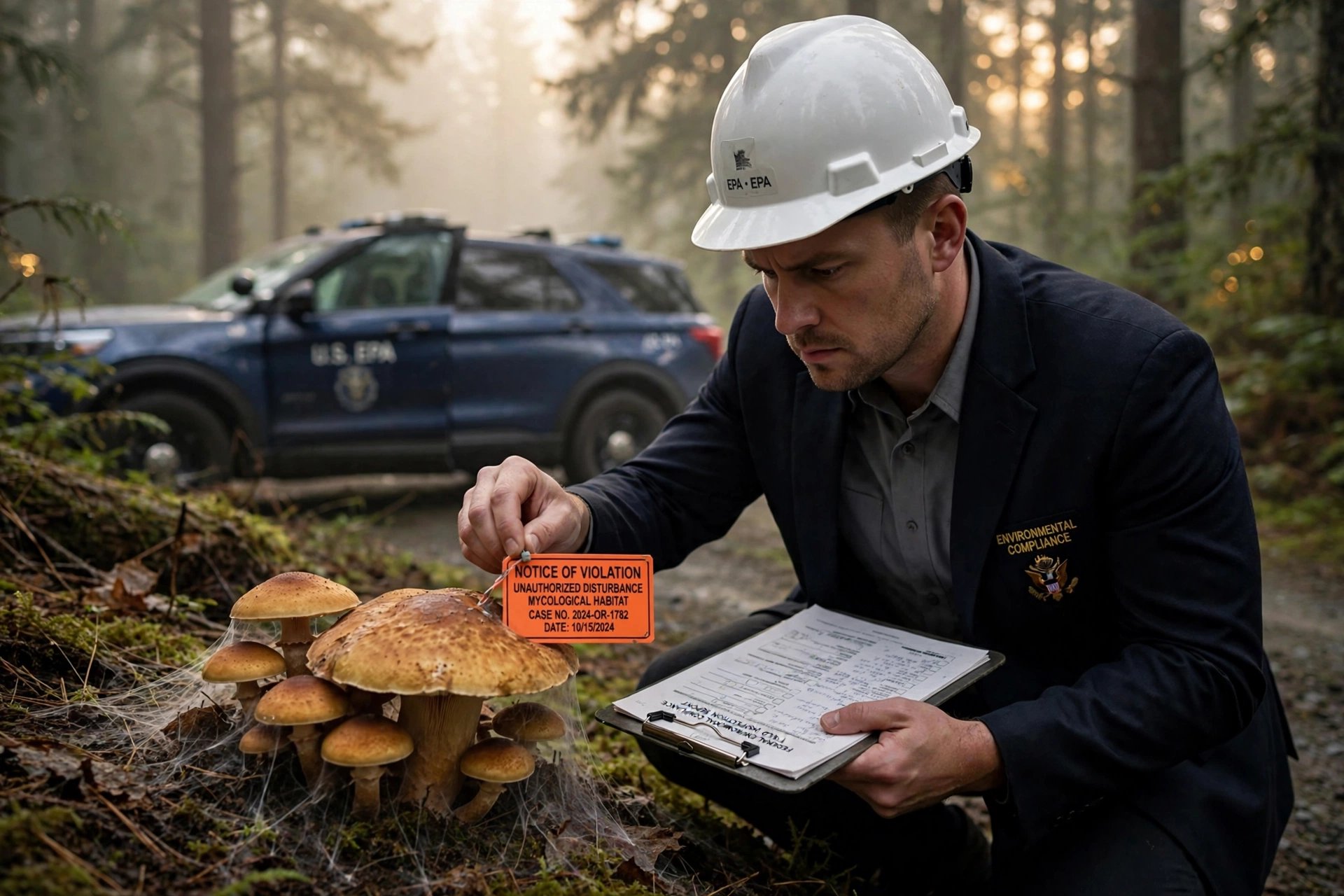
I. The Permit Requirement
The Resource Conservation and Recovery Act of 1976 established, in Subtitle C, a cradle-to-grave system for the management of hazardous waste. The permitting provision is the load-bearing wall of that system. Section 6925(a) of Title 42 provides:
“Not later than eighteen months after October 21, 1976, the Administrator shall promulgate regulations requiring each person owning or operating an existing facility or planning to construct a new facility for the treatment, storage, or disposal of hazardous waste identified or listed under this subchapter to have a permit issued pursuant to this section.”1
The section then states the prohibition in language that admits of no gradation:
“The treatment, storage, or disposal of any such hazardous waste and the construction of any new facility for the treatment, storage, or disposal of any such hazardous waste is prohibited except in accordance with such a permit.”1
The prohibition attaches to the treatment itself, not merely to the person conducting it. The treatment of hazardous waste without a permit is prohibited. The statute says so twice in one subsection.
II. The Treatment Definition
Congress defined “treatment” with unusual generosity. Section 6903(34) of Title 42 provides:
“The term ‘treatment’, when used in connection with hazardous waste, means any method, technique, or process, including neutralization, designed to change the physical, chemical, or biological character or composition of any hazardous waste so as to neutralize such waste or so as to render such waste nonhazardous, safer for transport, amenable for recovery, amenable for storage, or reduced in volume.”2
Three features of this definition matter. First, it reaches “any method, technique, or process,” a phrase of deliberate breadth. Second, it expressly includes processes that change the biological character or composition of hazardous waste, alongside the physical and the chemical. Third, it specifies the qualifying purpose: to neutralize the waste, or to render it nonhazardous. A process that breaks hazardous molecules apart into non-toxic components satisfies the definition on its face.
The statute does not say “a process designed by a person.” It says “designed to change.” The participle modifies the process. The question the text asks is whether the process is designed to change the character of the waste, not who did the designing.
III. The Facility
The Environmental Protection Agency’s own regulatory definition of a hazardous waste facility is the sentence on which this investigation turns. At 40 CFR 260.10, the agency provides:
“Facility means: (1) All contiguous land, and structures, other appurtenances, and improvements on the land, used for treating, storing, or disposing of hazardous waste.”3
A facility is, first and foremost, land. The structures are mentioned second. The regulation continues: “A facility may consist of several treatment, storage, or disposal operational units (e.g., one or more landfills, surface impoundments, or combinations of them).”3
The agency that wrote this definition imagined landfills and surface impoundments as its examples of operational units. It did not imagine the operational unit that covers 2,385 contiguous acres of the Malheur National Forest. The definition does not require the agency to have imagined it. The definition requires contiguous land used for treating hazardous waste. That is the only test, and it is stated without exception.
IV. The Operator
The treatment technology at issue is a class of enzymes produced by white-rot fungi: lignin peroxidases, manganese peroxidases, and laccases. These enzymes evolved to digest lignin, the complex polymer that gives wood its rigidity, by breaking carbon-carbon and carbon-hydrogen bonds. The same bond-breaking machinery, applied to hydrocarbons, dismantles them.
Paul Stamets, the mycologist who coined the term “mycoremediation” and applied for patents on the use of mycelial mats for bioremediation, described the mechanism in his 2008 address: “The mycelium produces enzymes, peroxidases, that break carbon-hydrogen bonds. These are the same bonds that hold hydrocarbons together. So, the mycelium became saturated with the oil.”4
The published literature documents the substrate range. White-rot fungi have been shown to degrade polycyclic aromatic hydrocarbons, polychlorinated biphenyls, dioxins, DDT, and trinitrotoluene.5 The peroxidase system does not discriminate between a wood polymer and a petroleum hydrocarbon. It breaks bonds. The bonds belong to whatever the mycelium is growing through.
V. The Diesel File
The field trial is documented on the record of the Washington State Department of Transportation. At a vehicle storage center controlled by the Department, soil blackened with oil and reeking of aromatic hydrocarbons was divided among competing bioremediation teams. One berm of soil, approximately 8 feet by 30 feet by 3 feet, was inoculated with oyster mushroom spawn. Other technicians employed enzymes, engineered bacteria, and chemical agents.6
After four weeks, the tarps were pulled back. The competing piles were unremarkable. The mushroom pile was bursting with oyster mushrooms up to twelve inches in diameter. Laboratory analyses showed that more than 95 percent of many of the polycyclic aromatic hydrocarbons had been destroyed, reduced to non-toxic components, and the mushrooms themselves were free of any petroleum products.6
The concentration figures are specific. The aromatic hydrocarbons went from 10,000 parts per million to less than 200 in eight weeks.7 After twelve weeks, the soil was deemed safe enough for the Department to use in highway landscaping.8 The other teams’ piles, by contrast, were described as dead, dark, and stinky, showing little significant change.7
Consider what the record shows under the definitions of Sections II and III. A biological process changed the chemical composition of hydrocarbon-contaminated soil so as to render it nonhazardous. That is treatment under 6903(34). It occurred on a defined area of land. That is a facility under 40 CFR 260.10. No permit application was filed by anyone, for anything, at any point in the proceeding.
VI. The Explosives File
The treatment record extends to military wastes. In 1990, researchers at Utah State University published findings that the white-rot fungus Phanerochaete chrysosporium extensively biodegraded 2,4,6-trinitrotoluene. At contamination levels found in the environment, approximately 85 percent of the TNT was degraded within 90 days.9 Composting studies using explosives-contaminated soil from the Umatilla Army Depot in Oregon confirmed fungal removal of TNT from munitions soils.10 A peer-reviewed survey of war-site mycoremediation records TNT reductions of 98.5 percent, RDX reductions of 70.5 percent, and HMX reductions of 95.8 percent by Phanerochaete chrysosporium at a naval weapons station.10
The wastes in question are listed hazardous wastes. Under 40 CFR 261.32, wastewater treatment sludges from the manufacturing and processing of explosives are listed as K044; spent carbon from the treatment of wastewater containing explosives is listed as K045; and pink and red water from TNT operations is listed as K047.11 The fungi degrade the very wastes the listing was written to cover.
Readers will recall this publication’s finding of yesterday: that the ground itself conducts the largest unpermitted blasting operation in American history, detonating at a rate of roughly 55 events per day without a license, a qualified blaster, or a warning signal. The record now shows that the ground also operates an unpermitted treatment facility for hazardous waste, at industrial scale, without a permit. The two findings are consistent. The substrate that detonates without a license also treats without a permit.
VII. The Humongous Facility
The individual that anchors the enforcement case is Armillaria ostoyae, the honey mushroom, in the Malheur National Forest of eastern Oregon. It was first detected in 1988 by Greg Whipple, a Forest Service investigator, and was initially thought to span around 400 acres. Genetic testing later revealed that the entire underground mass was a single, interconnected, genetically identical organism.12
Guinness World Records certifies the figures: the organism occupies 2,385 acres, equivalent to 1,350 soccer fields; its age is calculated to be at least 2,400 years but may be as much as 8,650 years; and its weight is estimated at between 7,500 and 35,000 tons.12 At the upper estimate, the organism weighs approximately 35,000 tons, or about 60 Boeing 747s, and is some 8,650 years old.13 The fungus spreads underground at 0.7 to 3.3 feet per year.14
Apply the regulatory definition. The facility is “all contiguous land” used for treating hazardous waste. The organism covers 2,385 contiguous acres, or roughly 1,800 American football fields, of land through which its mycelial network extends, digesting hydrocarbons and other contaminants as a matter of its ordinary metabolism. Every permitted treatment, storage, and disposal facility in the United States holds an EPA identification number, operates under an individual permit, and maintains a closure plan. The Humongous Fungus holds none of these. It has never applied for any of them. It has been operating for a period this publication estimates at up to 8,650 years.
VIII. The Treatment Record
The scale of the unpermitted treatment sector is difficult to overstate because it is coextensive with the forest floor. White-rot and related fungi operate lignin-modifying enzyme systems across every wooded acre of the country, degrading hydrocarbons wherever they occur in soil. The mycoremediation literature, including Stamets’s patent applications on mycelial mats for bioremediation, treats these organisms as treatment technologies.4 The industry’s own literature calls the process by the name of the regulated activity: remediation, through biological treatment.
The permitted universe, by contrast, is a closed list. Each facility on it applied for a permit, submitted to inspection, accepted operating conditions, and received an identification number. The unpermitted sector has submitted nothing, accepted nothing, and received nothing, and it processes contaminants on a footprint measured in thousands of contiguous acres per individual organism.
No enforcement action has ever been taken against any of it. The agency has issued zero notices of violation to the kingdom Fungi. The compliance rate across the sector is zero, and the documentation of the treatment activity, published in peer-reviewed journals and the agency’s own corrective-action literature, is exemplary.
IX. The Defense
The defense has three parts, and this article states all three before overruling them, as the genre requires.
First, the persons. Section 6925(a) requires “each person owning or operating” a facility to hold a permit. A fungus is not a person. It owns no land, operates no equipment, and files no paperwork. No owner or operator can be identified, served, or penalized. The permitting regime was written for industrial actors, not for organisms.
Second, the design. The defense argues that “treatment” in the regulatory sense means engineered processes submitted for permits, and that natural biological decomposition is something else entirely. The agency itself endorses this distinction: its 1999 directive on monitored natural attenuation, OSWER Directive 9200.4-17P, establishes the use of natural biological processes to degrade contaminants as a sanctioned remedy at Superfund, RCRA corrective action, and underground storage tank sites, describing it as a remedy rather than a violation.15 The agency cannot coherently prosecute the very biology it prescribes.
Third, the waste. Not every contaminated soil is a hazardous waste. RCRA jurisdiction requires a listed waste or a characteristic waste, and soil by itself is neither. The defense holds that the forest floor, whatever its biology, is not managing hazardous waste within the meaning of Subtitle C.
The overrule is as follows. On the persons: the prohibition in Section 6925(a) runs against the treatment itself, and the treatment is occurring whether or not a person can be found to own it. The statute’s second sentence prohibits the treatment of hazardous waste except in accordance with a permit, full stop. On the design: the participle modifies the process, not the designer, and the agency’s own directive describes natural biological degradation as a remedy precisely because it destroys contaminants, which is the statutory purpose of treatment. A process designed to change the biological character of hazardous waste so as to render it nonhazardous is treatment under 6903(34) regardless of which entity holds the design patent. The mycoremediation literature, including filed patent applications, describes these organisms as treatment technologies. On the waste: the WSDOT trial soil carried 10,000 parts per million of aromatic hydrocarbons, and the explosives wastes carry the agency’s own listing codes, K044, K045, and K047. The jurisdiction question is answered by the listings.
X. The Arithmetic of Noncompliance
Section 3008 of RCRA provides civil penalties of up to $25,000 per day for each violation of Subtitle C.16 Adjusted for inflation under 40 CFR 19.4, the maximum stood at $93,058 per day per violation in 2025.17
Confine the penalty clock to the regulatory era, from the effective date of the RCRA regulations in 1980 to the present: 46 years, or 16,790 days, at $93,058 per day, yields approximately $1.56 billion in maximum civil penalties for a single continuous violation. At the organism’s full certified age of 8,650 years, the figure is 3,157,250 days at $93,058 per day, or approximately $294 billion.
The compliance ledger for the sector is as follows. Permits applied for under 42 U.S.C. 6925: zero. Permits issued: zero. EPA identification numbers assigned: zero. Closure plans filed: zero. Financial assurance instruments posted: zero. Notices of violation issued: zero. Referrals for enforcement: zero.
The permitted TSDF universe applied, was inspected, and complies. The unpermitted sector has operated for up to 8,650 years and has never once filled out a form.
XI. Conclusion
Federal law prohibits the treatment of hazardous waste except in accordance with a permit. The statute defines treatment to include any biological process designed to change the biological character of hazardous waste so as to render it nonhazardous. The regulation defines a facility as all contiguous land used for treating hazardous waste. White-rot fungi operate peroxidase systems that break the carbon-hydrogen bonds holding hydrocarbons together, and the documented record shows them reducing aromatic hydrocarbons from 10,000 parts per million to less than 200 in eight weeks, and degrading military explosives at listed-waste sites.
One individual organism covers 2,385 contiguous acres of Oregon forest floor, weighs up to 35,000 tons, and has been treating whatever the soil contains for as long as 8,650 years. It has never applied for a permit. It has never been asked to.
Every fact in this article is documented. Every conclusion follows from the statute. The statute is the problem.
Ergo.
Sources
- 42 U.S.C. 6925(a) (permit requirements; “each person owning or operating an existing facility or planning to construct a new facility for the treatment, storage, or disposal of hazardous waste identified or listed under this subchapter to have a permit”; “the treatment, storage, or disposal of any such hazardous waste … is prohibited except in accordance with such a permit”). govinfo.gov ↑
- 42 U.S.C. 6903(34) (“treatment” means “any method, technique, or process, including neutralization, designed to change the physical, chemical, or biological character or composition of any hazardous waste so as to neutralize such waste or so as to render such waste nonhazardous, safer for transport, amenable for recovery, amenable for storage, or reduced in volume”). law.cornell.edu ↑
- 40 CFR 260.10 (“Facility means: (1) All contiguous land, and structures, other appurtenances, and improvements on the land, used for treating, storing, or disposing of hazardous waste”; “A facility may consist of several treatment, storage, or disposal operational units”). law.cornell.edu ↑
- Paul Stamets, “The mycelium produces enzymes, peroxidases, that break carbon-hydrogen bonds. These are the same bonds that hold hydrocarbons together” (2008 address, quoted in The Momentum); Stamets coined “mycoremediation” and applied for patents on mycelial mats for bioremediation (paulstamets.com). themomentum.com paulstamets.com ↑
- White-rot fungi degrade polycyclic aromatic hydrocarbons, polychlorinated biphenyls, dioxins, DDT, and trinitrotoluene; lignin peroxidases catalyze the initial oxidation of environmentally persistent xenobiotics (Fernando, Bumpus & Aust, 1990, and the mycoremediation survey literature). pmc.ncbi.nlm.nih.gov ↑
- Washington State Department of Transportation vehicle storage center trial: berm approximately 8 ft x 30 ft x 3 ft inoculated with oyster mushroom spawn; competing teams used enzymes, engineered bacteria, and chemical agents; after four weeks, oyster mushrooms up to 12 inches in diameter covered the pile; analyses showed more than 95% of many PAHs destroyed, reduced to non-toxic components; the mushrooms were free of petroleum products. paulstamets.com ↑
- Aromatic hydrocarbons went from 10,000 parts per million to less than 200 in eight weeks; the other teams’ piles were dead, dark, and stinky, showing little significant change. themomentum.com ↑
- After twelve weeks the soil was deemed safe enough for the Department to use in highway landscaping (permaculture list summary of the WSDOT trial; see also Utne: after eight weeks, 95 percent of the hydrocarbons had broken down and the soil was deemed nontoxic and suitable for highway landscaping). lists.ibiblio.org utne.com ↑
- Fernando, Bumpus & Aust (1990): extensive biodegradation of TNT by the white-rot fungus Phanerochaete chrysosporium; at environmental contamination levels (10,000 mg/kg soil, 100 mg/liter water), approximately 85% of the TNT was degraded in 90 days. inis.iaea.org ↑
- Composting studies with explosives-contaminated soil from the Umatilla Army Depot, Oregon; survey of war-site mycoremediation: Phanerochaete chrysosporium at a naval weapons station achieved TNT reductions of 98.5%, RDX 70.5%, HMX 95.8%. pmc.ncbi.nlm.nih.gov ↑
- 40 CFR 261.32: K044 (wastewater treatment sludges from the manufacturing and processing of explosives), K045 (spent carbon from the treatment of wastewater containing explosives), K047 (pink/red water from TNT operations). govregs.com ↑
- Guinness World Records: the Armillaria ostoyae specimen in Malheur National Forest, Oregon, occupies 2,385 acres (965 hectares); age at least 2,400 years, possibly 8,650; weight estimated between 7,500 and 35,000 tons. First detected 1988 by Greg Whipple, U.S. Forest Service. guinnessworldrecords.com ↑
- Antonis Rokas (Vanderbilt): the humongous fungus covers 2,385 acres, is some 8,650 years old, and weighs approximately 35,000 tons. discovermagazine.com ↑
- The fungus spreads underground at 0.7 to 3.3 feet per year (Oregon Encyclopedia); weight equivalent to about 60 Boeing 747s (U.S. Forest Service reporting). dailygalaxy.com ↑
- U.S. EPA, “Use of Monitored Natural Attenuation at Superfund, RCRA Corrective Action, and Underground Storage Tank Sites,” OSWER Directive 9200.4-17P (April 21, 1999): natural biological processes that degrade contaminants are a sanctioned remedy. cluin.org ↑
- 42 U.S.C. 6928(a): civil penalty of up to $25,000 per day for each violation of Subtitle C (EPA RCRA Civil Penalty Policy). epa.gov ↑
- Inflation-adjusted RCRA maximum: $93,058 per day per violation (2025), per 40 CFR 19.4. mondaq.com ↑