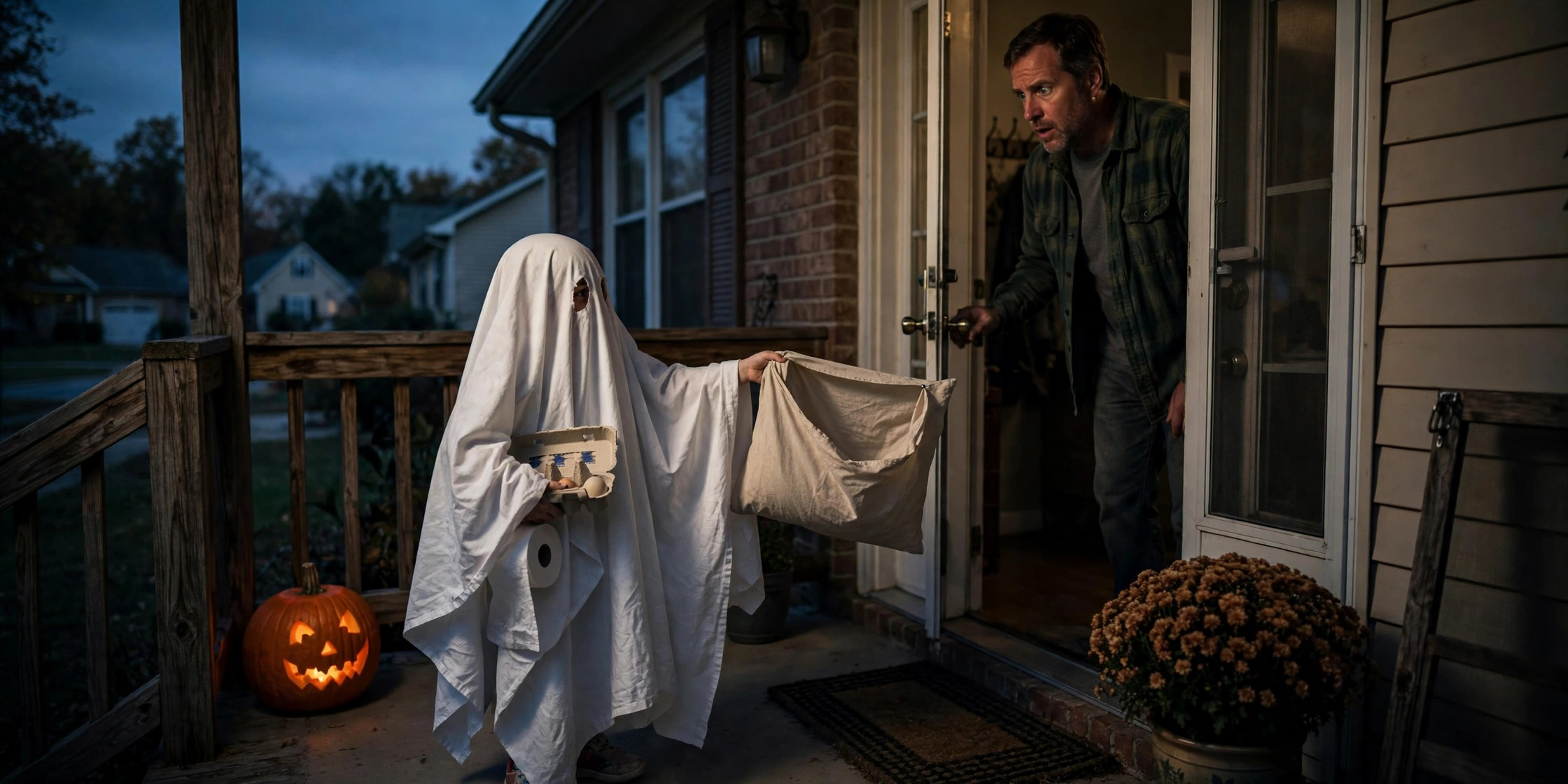
I. The Prohibition
Section 1951 of Title 18, the Hobbs Act, provides: “Whoever in any way or degree obstructs, delays, or affects commerce or the movement of any article or commodity in commerce, by robbery or extortion or attempts or conspires so to do, or commits or threatens physical violence to any person or property in furtherance of a plan or purpose to do anything in violation of this section shall be fined under this title or imprisoned not more than twenty years, or both.”1
The statute then defines its terms. Subsection (b)(2) provides: “The term ‘extortion’ means the obtaining of property from another, with his consent, induced by wrongful use of actual or threatened force, violence, or fear, or under color of official right.”2 Four elements. Obtaining. Property. Consent. Inducement by wrongful threatened force or fear.
Note the structural detail that will matter. The neighboring definition, robbery at subsection (b)(1), describes “the unlawful taking or obtaining of personal property from the person or in the presence of another, against his will, by means of actual or threatened force, or violence, or fear of injury, immediate or future, to his person or property.”3 In robbery, the taking is against his will. In extortion, the obtaining is with his consent. The distinction is not decorative. It is the difference between the two offenses, and it is satisfied at every doorstep in America on the last night of October.
II. The Penalty Schedule
The penalty is stated in the same sentence as the prohibition: a fine under Title 18, or imprisonment for not more than twenty years, or both.1 Twenty years is the statutory maximum per violation. A violation is a doorstep.
For purposes of comparison, the misdemeanor provision of the Migratory Bird Treaty Act, recently examined in these pages, carries six months. The Hobbs Act carries forty times that, per count, because Congress regarded the obtaining of property by threatened force as a serious matter regardless of the value of the property obtained. The statute sets no minimum value. A nickel obtained by threat satisfies the property element as fully as a nickelodeon.
III. The Utterance
The earliest known appearance in print of the words “trick or treat” occurred in 1927, in Blackie, Alberta, Canada. The Lethbridge Herald, in its issue of November 4, 1927, reported: “Hallowe’en provided an opportunity for real strenuous fun. No real damage was done except to the temper of some who had to hunt for wagon wheels, gates, wagons, barrels, etc., much of which decorated the front street. The youthful tormentors were at back door and front demanding edible plunder by the word ‘trick or treat’ to which the inmates gladly responded and sent the robbers away rejoicing.”5
Read that sentence the way a prosecutor would read it. The subjects are “tormentors.” The verb is “demanding.” The object is “edible plunder.” The response is described as glad, which is the language of consent. And the subjects are then identified, without qualification, as “the robbers.” The first newspaper in history to record the phrase understood the transaction for what it was. It used the vocabulary of robbery in the same paragraph as the vocabulary of rejoicing, because both were true at once.
The practice it described had older roots. Children in disguise going door to door for food or coins, known as guising, is recorded in North America as early as 1911, in Kingston, Ontario.6 The first American appearances of the term “trick or treat” followed in 1934, with the first use in a national publication in 1939.7 The utterance is therefore ninety-nine years old, and it has been spoken in substantially identical form at substantially identical doorsteps for nearly a century without a single federal prosecution.
IV. The Property
Candy is property. This requires no authority beyond the dictionary, but the scale of the property merits documentation. The National Retail Federation projects that Americans will spend $13.5 billion on Halloween in 2026, of which $4.1 billion will be spent on candy, up from $3.9 billion in 2025 and $3.5 billion in 2024.8 An estimated 96 percent of Halloween celebrants will purchase confections. The price of a 100-piece bag of assorted Halloween candy has risen 78 percent since 2020, driven in significant part by a nearly fivefold increase in wholesale cocoa prices.9 The property being obtained is not trivial in the aggregate, and the statute does not require that it be trivial in the particular. Each fun-size bar is property. Each doorstep is an obtaining.
The property moves in interstate commerce before it arrives at the door. The Census Bureau’s Annual Survey of Manufactures valued shipments of chocolate and cocoa products at $16.0 billion and non-chocolate confectionery at $8.2 billion.10 The candy handed over on October 31 was manufactured, shipped, warehoused, and retailed across state lines. It is, in the statute’s phrase, an article in commerce, and its movement is affected in every way and degree when 41 million children redirect it from retail shelves to pillowcases under threat of mischief.
V. The Threat
The utterance is conditional. “Trick or treat” presents two alternatives and invites the homeowner to select one. The second alternative is confectionery. The first alternative is left unspecified, which is precisely what makes it a threat rather than a request. A request names what is wanted. A threat names what is wanted and leaves the consequence to the imagination, which is where fear does its work.
The consequence, when it materializes, is criminal mischief. The 1927 account documents it contemporaneously: wagon wheels, gates, wagons, and barrels relocated to the front street. The modern equivalents are egged siding, toilet-papered trees, and smashed pumpkins. In September 2026, a mother and her teenage daughter were arrested in Nassau County on criminal charges after pelting parked cars with eggs.11 In Parma, Ohio, police arrested three teenagers, ages 15, 15, and 12, in connection with a rash of Halloween vandalism in which pumpkins were destroyed and inflatable decorations were slashed.12 The trick is not hypothetical. It is a course of conduct with a documented enforcement record, and every homeowner who has ever scrubbed egg off vinyl siding knows what the first word of the ultimatum means.
Two objections present themselves and both fail on the authorities. First, that the threat is conditional: the child will trick only if the treat is withheld. The statute requires “threatened force, violence, or fear,” and a conditional threat is a threat. The condition does not negate the menace; the condition is the menace. Second, that the child does not mean it. The Supreme Court, in the leading case on threats, held that “the speaker need not actually intend to carry out the threat.”14 The prohibition protects victims “from the fear of violence and from the disruption that fear engenders,” not merely from violence itself. The homeowner who hands over the candy to avoid the trick has experienced exactly the fear the doctrine describes, at exactly the doorstep the statute covers.
VI. The Consent
This is the element that distinguishes the offense and the element most perfectly satisfied. Extortion, unlike robbery, requires that the property be obtained “with his consent.” The homeowner opens the door, selects candy from the bowl, and deposits it in the pillowcase. No force is applied. No entry is made. The transfer is voluntary in every observable respect except one: it was induced by the threatened alternative.
The 1927 account records the consent with the precision of a charging document: “the inmates gladly responded.” Gladness is not the absence of fear. It is the performance of cheerfulness by a person who has calculated that a fun-size Snickers is cheaper than a new gate. The consent is real, the inducement is real, and the statute asks for nothing more.
VII. The Commerce Nexus
The Hobbs Act reaches extortion that “in any way or degree obstructs, delays, or affects commerce or the movement of any article or commodity in commerce.” Courts require only a minimal, de minimis effect on interstate commerce to establish federal jurisdiction; the transaction need only have a subtle connection to cross-state economic activity.4
The connection here is not subtle. Sixteen billion dollars of chocolate moves across state lines to become $4.1 billion of Halloween candy, which is then obtained, doorstep by doorstep, through the systematic application of threatened mischief. The enterprise affects the movement of an article in commerce in every way and degree the statute contemplates, up to and including the degree measured in billions.
VIII. The Offenders
The Census Bureau’s Halloween Facts for Features estimates the number of potential trick-or-treaters, children ages 5 to 14, at 41.2 million, and counts 115 million occupied housing units as potential stops.15 Forty-one million potential offenders. One hundred fifteen million potential victim premises. One night of operation, repeated annually for ninety-nine years.
The enforcement record is a null set. No child has ever been prosecuted under the Hobbs Act for trick-or-treating. No parent has been charged with conspiracy. No pillowcase has been seized as proceeds. The statute of limitations for non-capital federal offenses is five years, which means the actionable window currently covers the Halloweens of 2021 through 2025, approximately 200 million uncharged doorstep violations, assuming each child visits only one house, which no child does.
IX. The Arithmetic
Every figure that follows is presented as a maximum, consistent with the precision of the inputs. The statute authorizes imprisonment for not more than twenty years per violation. Forty-one million two hundred thousand potential offenders, each committing at minimum one violation per Halloween, yields a maximum aggregate exposure of 824 million years of imprisonment per year of operation. Over the five years within the limitations period, the maximum aggregate exposure is 4.1 billion years, a figure that exceeds the age of complex life on Earth.
The proceeds of the enterprise are simpler to state. Americans will transfer $4.1 billion in candy this Halloween, with consent induced by the threatened trick. The 1927 newspaper called the participants robbers. The statute calls the conduct extortion. The participants call it tradition. Only one of these characterizations carries twenty years.
X. The Defense
The defense must be stated, because the facts are real and the law is real, and an honest investigation states the law that cuts against its conclusion before stating the conclusion.
First, the First Amendment. In Virginia v. Black, 538 U.S. 343 (2003), the Supreme Court held that the government may prohibit only “true threats,” defined as “those statements where the speaker means to communicate a serious expression of an intent to commit an act of unlawful violence to a particular individual or group of individuals.”13 Ritualized speech by costumed children, uttered once a year at millions of doorsteps with the encouragement of the victims themselves, is not a serious expression of intent to commit unlawful violence under any reasonable reading. No reasonable homeowner understands “trick or treat” as a genuine threat of violence, and the Supreme Court has since held that the government must prove at least recklessness as to the threatening character of the speech.
Second, intent. The Hobbs Act requires that the defendant act knowingly and willfully, with specific intent to commit extortion.4 A seven-year-old in a ghost costume demanding edible plunder does not possess the specific intent to affect interstate commerce by wrongful threatened force. He possesses the specific intent to obtain Skittles.
Third, jurisdiction over the offender. Under 18 U.S.C. § 5031, a “juvenile” is a person who has not attained his eighteenth birthday, and “juvenile delinquency” is the violation of a law of the United States committed by a person prior to his eighteenth birthday which would have been a crime if committed by an adult.16 Offenders under eighteen proceed under the Federal Juvenile Delinquency Act, not as adult defendants facing twenty-year sentences. The 41.2 million potential offenders counted by the Census Bureau are, by the Census Bureau’s own age bracket, juveniles.
Fourth, the courts read the Act narrowly. In Scheidler v. National Organization for Women, 547 U.S. 9 (2006), the Supreme Court held that conduct does not violate the Hobbs Act unless it involves robbery or extortion as the statute defines them, reversing liability where the defendants had not obtained property.17 And no prosecutor in ninety-nine years has brought the case, which is the strongest evidence available of what the legal system actually believes the statute covers.
XI. The Conclusion
The defense is stated. It is overruled.
The statute asks what was said at the door, not who said it. Section 1951 contains no age minimum, no costume exception, and no October 31 carve-out. The first newspaper to record the phrase called the speakers tormentors, the demand plunder, and the speakers robbers, which means the contemporaneous understanding of the transaction was criminal before the Hobbs Act was even enacted. The Supreme Court’s own threat doctrine provides that the speaker need not intend to carry out the threat, which disposes of the argument that the children do not mean it. The candy changed hands. The consent is documented in the historical record (“the inmates gladly responded”). The fear is documented in the historical record (the plunder was demanded, not requested). The commerce moved across state lines to the tune of $16 billion in chocolate shipments.
Obtaining: the pillowcase fills. Property: $4.1 billion in confections. Consent: given gladly at every door. Inducement by threatened force or fear: the trick, specified nowhere and understood everywhere. Affecting commerce: in every way and degree. Maximum exposure: 824 million years per Halloween, 4.1 billion years within the limitations period. Prosecutions to date: zero.
The largest ongoing extortion enterprise in American history does not operate from a social club or a union hall. It operates from every sidewalk in America, one night a year, in costumes, carrying pillowcases, and it has never once been indicted. Therefore.
Sources
- 18 U.S.C. § 1951(a): “Whoever in any way or degree obstructs, delays, or affects commerce or the movement of any article or commodity in commerce, by robbery or extortion or attempts or conspires so to do, or commits or threatens physical violence to any person or property in furtherance of a plan or purpose to do anything in violation of this section shall be fined under this title or imprisoned not more than twenty years, or both.” law.justia.com ↑
- 18 U.S.C. § 1951(b)(2): “The term ‘extortion’ means the obtaining of property from another, with his consent, induced by wrongful use of actual or threatened force, violence, or fear, or under color of official right.” law.justia.com ↑
- 18 U.S.C. § 1951(b)(1): “The term ‘robbery’ means the unlawful taking or obtaining of personal property from the person or in the presence of another, against his will, by means of actual or threatened force, or violence, or fear of injury, immediate or future, to his person or property, or property in his custody or possession, or the person or property of a relative or member of his family or of anyone in his company at the time of the taking or obtaining.” law.justia.com ↑
- Federal criminal defense summary of the Hobbs Act: the interstate-commerce jurisdictional hook “requires only a minimal or de minimis effect on interstate commerce”; conviction requires the defendant to have “acted knowingly, willfully, and with specific intent to commit robbery or extortion.” thefederalcriminalattorneys.com ↑
- HGTV, “Halloween Trivia, History and Fun Facts,” citing historian Belinda Crowson of Lethbridge, Alberta: the first appearance in print of “trick or treat” was the Lethbridge Herald of November 4, 1927, dateline Blackie, Alberta, November 3: “The youthful tormentors were at back door and front demanding edible plunder by the word ‘trick or treat’ to which the inmates gladly responded and sent the robbers away rejoicing.” hgtv.com ↑
- The Saturday Evening Post, “Dressed to Kill: A Brief History of Halloween Costumes in America”: by 1911, newspapers in Ontario, Canada were covering children going “guising” in their neighborhoods; “In 1927, a new term for guising appeared in print for the first time in Alberta, Canada: trick-or-treat.” saturdayeveningpost.com ↑
- A Celebration of Women, “The History of Happy Halloween, globally!”: “Trick-or-treating does not seem to have become a widespread practice until the 1930s, with the first U.S. appearances of the term in 1934, and the first use in a national publication occurring in 1939.” acelebrationofwomen.org ↑
- Inc., “Halloween Spending Will Hit a Record $13.5 Billion, Despite Scary Candy Prices” (Sept. 2026): total Halloween spending projected at $13.5 billion; “an estimated 96 percent of trick-or-treat fans say they’ll be looking to satisfy sweet-tooth cravings by buying a projected $4.1 billion worth of confections, up from NRF forecasts of $3.9 billion in 2025 and $3.5 billion in 2024.” inc.com ↑
- Id., citing FinanceBuzz: “Halloween candy prices soared 78 percent between 2020 and 2025”; the average 100-piece bag of assorted Halloween candy rose from $9.19 in 2020 to $16.39 in 2025; wholesale cocoa prices rose nearly fivefold, from $2,200 a metric ton to more than $10,000 at their peak. inc.com ↑
- Builder Online, summarizing U.S. Census Bureau, 2014 Annual Survey of Manufactures: 37,128 people employed manufacturing chocolate and cocoa products, with value of shipments totaling $16.0 billion; 17,815 employed manufacturing non-chocolate confectionery, with shipments totaling $8.2 billion. builderonline.com ↑
- News report, September 11, 2026: a mother and her teenage daughter in Nassau County were arrested on criminal charges after pelting cars parked in a private driveway with eggs. newsz.danhngon.pro ↑
- WTAM 1100 (iHeart), September 2023: Parma, Ohio police arrested three teen suspects, ages 15, 15, and 12, in connection with a rash of Halloween vandalism in which pumpkins outside homes were destroyed and inflatable decorations were slashed. wtam.iheart.com ↑
- Virginia v. Black, 538 U.S. 343, 359 (2003): “true threats” are “those statements where the speaker means to communicate a serious expression of an intent to commit an act of unlawful violence to a particular individual or group of individuals.” fire.org ↑
- Id. at 359–360: “The speaker need not actually intend to carry out the threat. Rather, a prohibition on true threats protects individuals from the fear of violence and from the disruption that fear engenders, in addition to protecting people from the possibility that the threatened violence will occur.” fire.org ↑
- U.S. Census Bureau, Facts for Features: Halloween (CB14-FF.23, 2014): “41.2 million: The estimated number of potential trick-or-treaters in 2013, children age 5 to 14, across the U.S.”; “115 million: Number of occupied housing units across the nation in first quarter 2014, all potential stops for trick-or-treaters.” census.gov ↑
- 18 U.S.C. § 5031: “For the purposes of this chapter, a ‘juvenile’ is a person who has not attained his eighteenth birthday … and ‘juvenile delinquency’ is the violation of a law of the United States committed by a person prior to his eighteenth birthday which would have been a crime if committed by an adult.” govinfo.gov ↑
- Scheidler v. National Organization for Women, 547 U.S. 9 (2006): the Court held that the Hobbs Act reaches only conduct involving robbery or extortion as defined by the statute, and that physical violence unrelated to the obtaining of property does not violate the Act. en.wikisource.org ↑